How to Register for Kedarnath Yatra: Everything You Need to Know

How to Register for Kedarnath Yatra

The journey to Kedarnath is more than a trip to a temple. It is a deeply spiritual experience through the Garhwal Himalayas, where devotion meets challenging terrain and changing mountain weather. Dedicated to Lord Shiva, Kedarnath Temple attracts thousands of pilgrims every year who undertake the journey despite the long travel hours and demanding trek. Many pilgrims choose a Kedarnath Yatra package to make travel, accommodation, and other arrangements easier, especially for families and first-time visitors.

Today, a Kedarnath pilgrimage requires proper preparation and awareness of the required procedures. One of the most important steps is Kedarnath Yatra registration. Many pilgrims search for information about how to register for the Kedarnath Yatra, what documents they need, and how the online process works.

If you are planning your Kedarnath Yatra in 2027, this guide explains the Kedarnath online registration process, along with essential travel information, routes, itineraries, and safety tips. With the right preparation, you can begin your pilgrimage with greater confidence.

Why Kedarnath Registration Is Mandatory

The growing number of pilgrims visiting Kedarnath has made proper crowd and safety management increasingly important. The Uttarakhand government uses the registration system to manage pilgrim movement and improve arrangements along the route.

Kedarnath registration also supports pilgrim tracking during emergencies. In situations such as sudden weather changes, landslides, or medical emergencies, registered travel information can help authorities provide assistance more effectively.

  • Mandatory for pilgrims visiting Kedarnath
  • Helps authorities manage pilgrim movement
  • Supports emergency tracking and assistance
  • May be checked at different points along the route

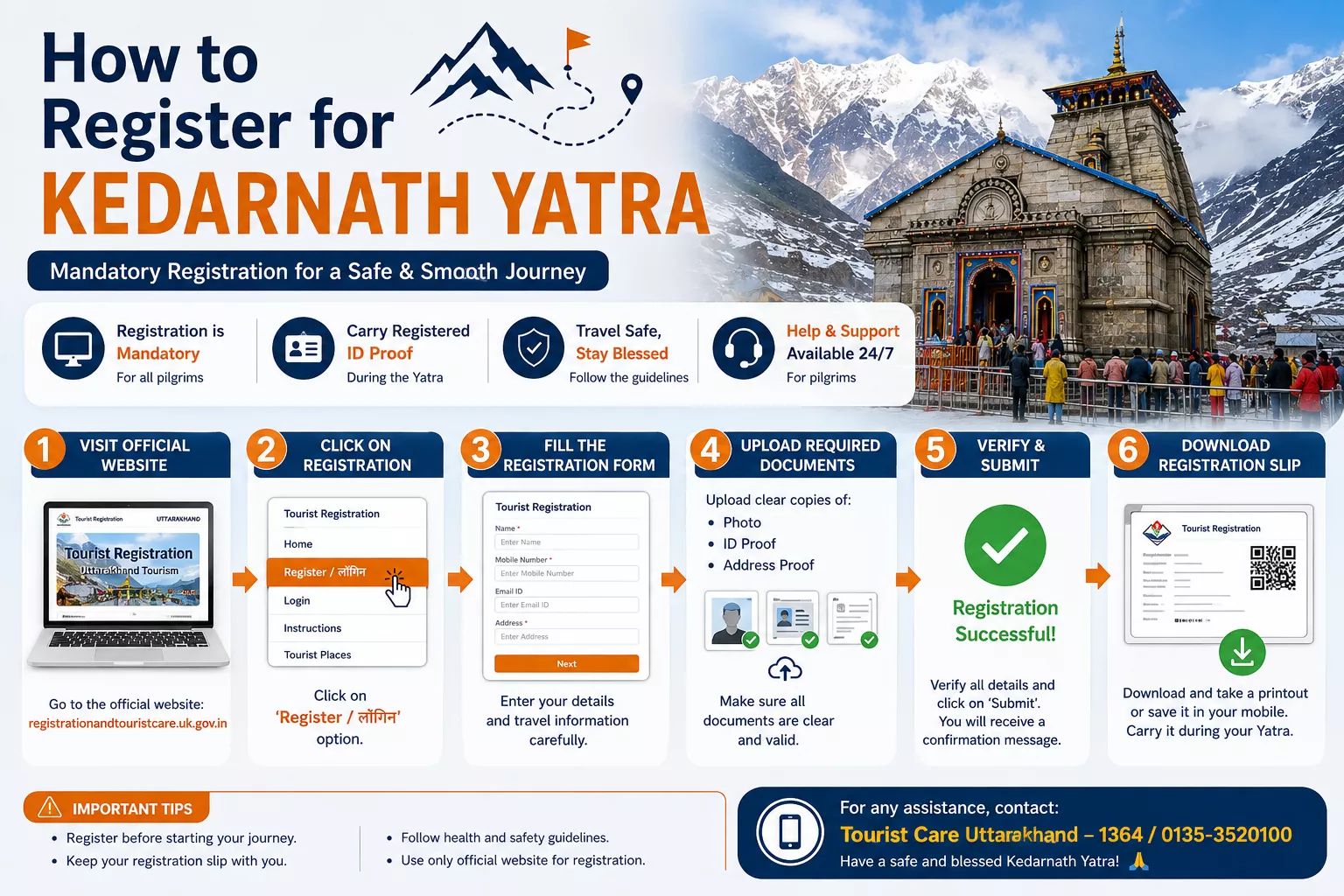
Kedarnath Yatra Registration Process

If you are searching for how to register for Kedarnath Yatra, the online process provides a convenient way to complete your registration before travelling. Pilgrims can enter their details, provide the required information, and obtain their registration confirmation online.

During the busy pilgrimage season, available registration slots can fill quickly. Completing the process in advance can help you avoid last-minute difficulties. After successful registration, keep your Yatra pass or confirmation available for verification during the journey.

  • Open the official Kedarnath registration portal
  • Register using your mobile number
  • Complete mobile verification through OTP
  • Enter your personal and identification details
  • Choose your travel date and pilgrimage destination
  • Provide the required documents
  • Submit the registration form
  • Download and save your Yatra pass or QR-coded registration confirmation

Kedarnath Yatra Biometric Registration Process

Online registration is an important part of planning the Kedarnath Yatra, while biometric verification provides an additional layer of pilgrim identification. It helps authorities verify travellers before they continue along the pilgrimage route.

Biometric verification facilities may be available at designated locations such as Haridwar, Rishikesh, and Sonprayag, depending on the arrangements for the current Yatra season. Pilgrims who have completed online registration may still need to complete verification at an assigned centre.

The system also helps authorities maintain pilgrim records and respond more effectively during emergencies or difficult weather conditions.

  • Visit the designated biometric registration centre
  • Provide your fingerprint and photograph
  • Show your valid identity document
  • Complete the verification process
  • Collect the biometric verification slip, if issued

Char Dham Yatra Registration System – TSMS Overview

The Char Dham Yatra Registration System (TSMS portal) provides a centralized platform for managing pilgrimage registration in Uttarakhand. It reduces the need for multiple registration procedures and makes it easier for pilgrims to organize their travel details.

Through the unified system, pilgrims can register for the four major shrines of the Uttarakhand circuit: Kedarnath, Badrinath, Gangotri, and Yamunotri. Whether you plan to visit Kedarnath alone or complete the full Char Dham Yatra, the system brings the registration process together in one place.

The platform also supports pilgrim management and helps authorities monitor movement along the pilgrimage routes. Registration information can assist with crowd management, safety measures, and important travel updates during the Yatra.

  • One platform for Char Dham registration
  • Supports pilgrim identification and monitoring
  • Helps authorities manage pilgrim movement
  • Provides important travel-related updates
  • Makes travel details easier to manage
  • Reduces dependence on lengthy paperwork

Documents Required for Kedarnath Registration

Keep your necessary documents ready before starting the Kedarnath Yatra registration process. Correct personal and identification details can help avoid delays during registration and verification.

It is also useful to keep copies of important documents on your phone along with physical copies for the journey.

  • Aadhaar Card, Voter ID, Passport, or Driving License
  • Active mobile number for OTP verification
  • Recent passport-size photograph, if requested
  • Medical certificate for senior citizens, where required

Kedarnath Yatra Updates & Important Dates

Kedarnath Temple remains closed during the winter because heavy snowfall and extreme cold make the high-altitude region difficult to access. The temple usually opens in spring after the traditional opening ceremony and welcomes pilgrims through the summer and autumn season.

For Kedarnath Yatra 2027, the temple is scheduled to open on 12 May 2027 (tentative). The closing date is decided according to the traditional calendar and seasonal conditions.

If you are planning a Kedarnath Yatra package, check the temple dates before booking your trip. Most Kedarnath tour packages are planned around the pilgrimage season and usually cover around 5 to 8 days, depending on the itinerary and additional destinations.

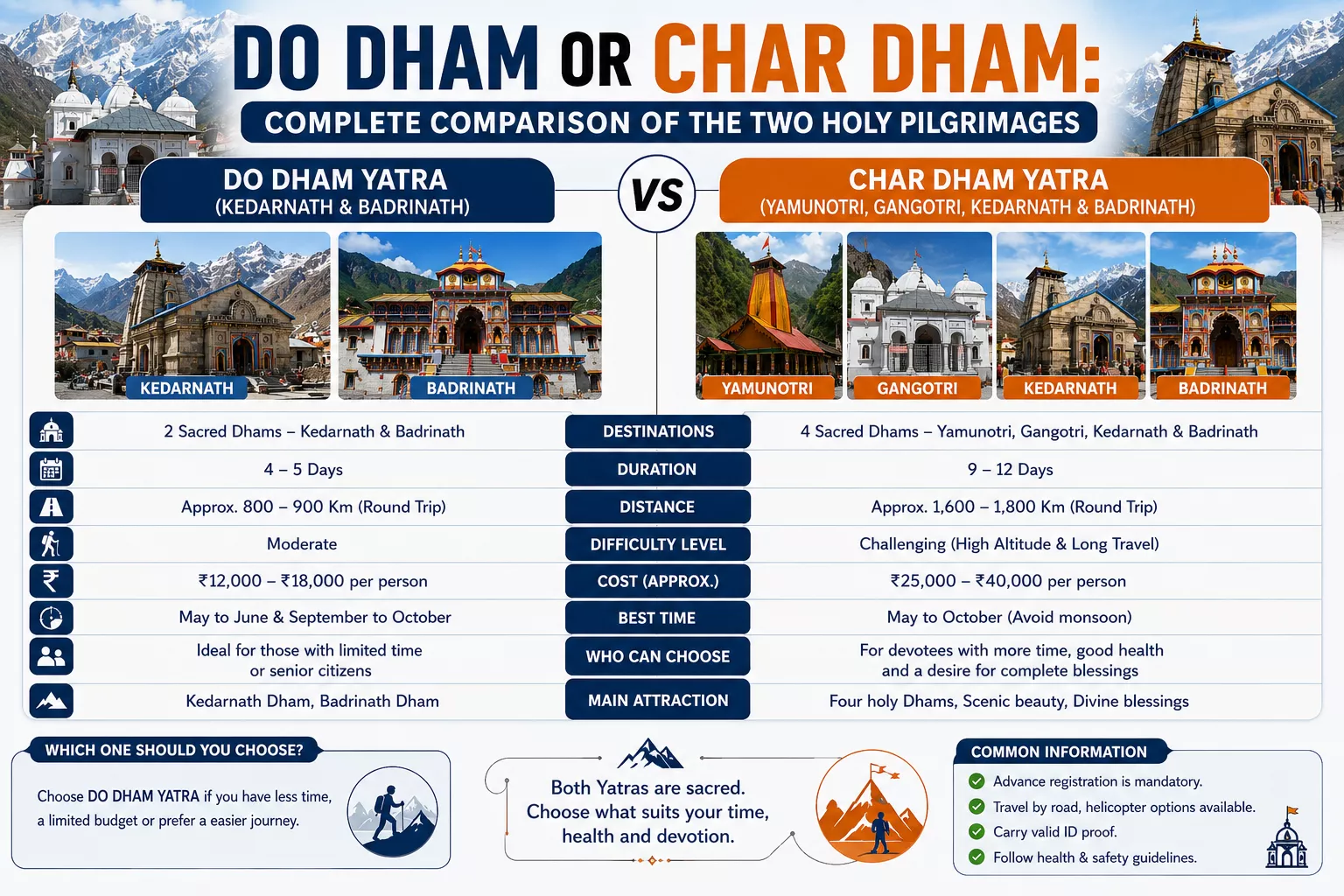
A complete Char Dham Yatra generally takes around 9 to 12 days by road. Packages may include transportation, accommodation, vegetarian meals, and assistance with the pilgrimage arrangements.

Booking early is useful during the busy May and June period, when demand for hotels, vehicles, and other travel services is high.

  • Opening: 12 May 2027 (tentative)
  • Closing: Usually October or November, according to the temple calendar
  • Registration: Complete registration before starting the Yatra
  • Recommended booking period: Plan well before the pilgrimage season
  • Peak travel months: May and June
  • Char Dham Yatra duration: Around 9–12 days
  • Typical Kedarnath Yatra package duration: Around 5–8 days

Best Time to Visit Kedarnath Temple

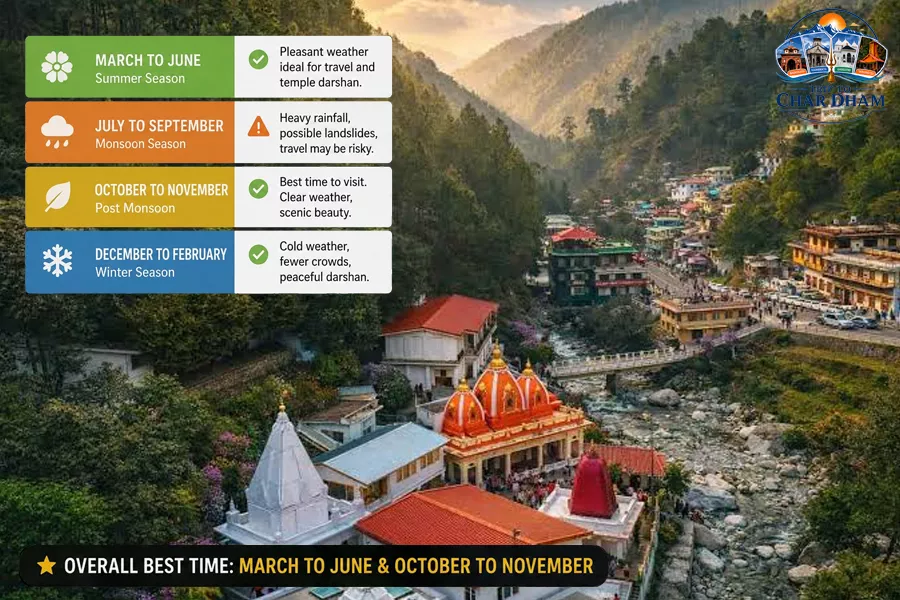
Choosing the best time to visit Kedarnath depends on weather, road conditions, crowd levels, and your preferred travel experience. Since the temple sits at a high altitude, conditions can change quickly, so seasonal planning is important.

The summer months attract the largest number of pilgrims because the temple is open and travel facilities operate at full capacity. However, May and June can be crowded, particularly around weekends and major pilgrimage periods.

The monsoon months can bring heavy rain to Uttarakhand. Landslides, roadblocks, and travel delays may affect the journey, so pilgrims should check weather and route conditions before travelling.

After the monsoon, September and October often offer clearer mountain views and a calmer pilgrimage atmosphere. However, temperatures can fall quickly, especially in the early morning and evening.

  • May–June: Temple open, generally suitable for pilgrimage, but heavy crowds
  • July–August: Frequent rainfall and possible landslides or road disruptions
  • September–October: Pleasant post-monsoon conditions and comparatively fewer crowds
  • November–April: Temple remains closed for the winter season

For most pilgrims, May–June is suitable for those who prefer better access and fully operational facilities, while September–October can be a better choice for travellers seeking clearer views and a relatively peaceful Kedarnath Yatra.

How to Reach Kedarnath – Routes & Transport Options

Reaching Kedarnath involves both road travel and a final journey toward the temple. Since vehicles cannot reach the temple directly, pilgrims need to plan their route up to the designated base point and then choose the available travel option.

The Kedarnath Yatra route passes through several important towns and beautiful Himalayan landscapes. Planning each stage in advance can help you manage travel time, rest, and darshan more comfortably.

If you are booking a Kedarnath Yatra package, the operator can usually arrange transportation, transfers, and accommodation according to the selected itinerary. Independent travellers should plan their route carefully, particularly during the busy pilgrimage season.

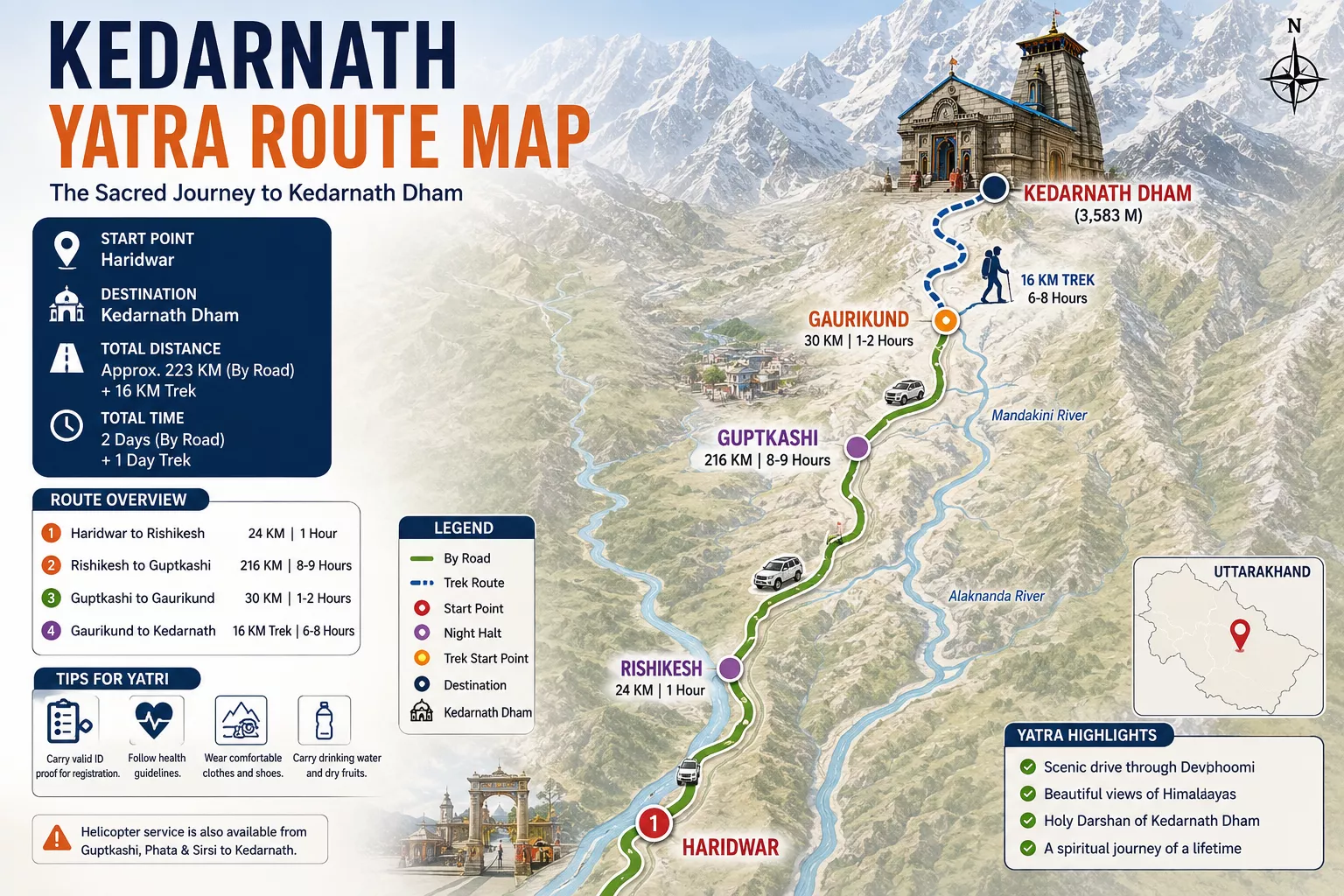
  • Reach Haridwar or Rishikesh: Both are major starting points with good rail and road connectivity.
  • Travel to Sonprayag: Continue by bus, taxi, or other permitted transport toward Sonprayag.
  • Proceed to Gaurikund: Local transport connects Sonprayag with Gaurikund, the traditional starting point for the Kedarnath trek.
  • Continue towards Kedarnath: From Gaurikund, pilgrims can choose trekking or available services such as pony, palki, or helicopter travel.

A properly planned route makes the pilgrimage easier, especially for families, senior citizens, and first-time visitors.

Kedarnath Trek & Travel Guide

The Kedarnath trek is a major part of the pilgrimage experience. The route from Gaurikund takes pilgrims through the Himalayan landscape, with mountain views, river stretches, waterfalls, and several resting points along the way.

The climb can be demanding because of the steep sections and high altitude. Travellers should maintain a comfortable pace, take regular breaks, stay hydrated, and avoid pushing themselves beyond their limits.

Pilgrims who do not want to complete the trek on foot can consider available alternatives. Pony and palki services are commonly used, while helicopter services operate from designated locations such as Phata, Sersi, and Guptkashi, subject to weather and operational conditions.

  • Distance: Approximately 16 km from Gaurikund to Kedarnath
  • Duration: Usually several hours, depending on pace, weather, and route conditions
  • Difficulty Level: Moderate to challenging because of the climb and high altitude
  • Trek Route Highlights: Himalayan landscapes, Mandakini River views, waterfalls, valleys, and resting points
  • Available Options: Trekking, pony/horse, palki (doli), and helicopter services
  • Facilities on Route: Food stalls, resting areas, drinking water, and medical assistance at designated locations

With suitable preparation and a steady pace, the Kedarnath trek can become one of the most memorable parts of the entire pilgrimage.

Kedarnath Route Map & Travel Itinerary

Planning the right Kedarnath route map and travel itinerary can make your pilgrimage easier and more comfortable. The journey includes road travel, a mountain trek, temple darshan, and time for rest. A practical schedule also helps you manage your Kedarnath Yatra registration, hotel bookings, and transport in advance.

You can choose a short itinerary if you have limited time or take a longer route for a relaxed pilgrimage. A Kedarnath Yatra package can also simplify the arrangements by combining transportation, accommodation, meals, and other essential services.

3-Day Kedarnath Itinerary (Short Trip)

This plan suits pilgrims who have limited time and want to complete the yatra quickly. Since the schedule is tight, good fitness and early departures are important.

  • Day 1: Haridwar/Rishikesh → Sonprayag → Overnight stay
  • Day 2: Sonprayag → Gaurikund → Kedarnath trek → Temple darshan → Overnight stay
  • Day 3: Kedarnath → Gaurikund trek → Drive to Haridwar/Rishikesh → Departure

5-Day Kedarnath Itinerary (Balanced Trip)

A 5-day plan gives you more time for road travel, rest, trekking, and darshan. It works well for families and pilgrims who do not want to rush the journey.

  • Day 1: Arrival in Haridwar → Drive to Guptkashi → Overnight stay
  • Day 2: Guptkashi → Gaurikund → Trek to Kedarnath → Overnight stay
  • Day 3: Kedarnath Temple darshan → Rest and local sightseeing → Overnight stay
  • Day 4: Trek back to Gaurikund → Drive towards Rishikesh/Haridwar → Overnight stay
  • Day 5: Relaxed morning → Departure

7-Day Itinerary (Kedarnath + Badrinath / Char Dham Extension)

If you have more time, you can combine Kedarnath with Badrinath or extend the trip into a wider pilgrimage circuit. This option allows more time for rest and sightseeing.

  • Day 1–2: Travel towards Guptkashi → Kedarnath trek
  • Day 3: Kedarnath darshan → Rest
  • Day 4: Return trek → Travel towards Badrinath
  • Day 5: Badrinath Temple darshan → Local sightseeing
  • Day 6: Begin the return journey → En-route sightseeing
  • Day 7: Arrival and departure

The ideal Kedarnath travel itinerary depends on your available days, budget, fitness, and preferred travel pace. A shorter itinerary saves time, while a longer plan gives you more opportunity to rest and enjoy the spiritual and Himalayan experience.

Accommodation Options in Kedarnath

Choosing suitable accommodation is an important part of planning your Kedarnath Yatra. During the busy pilgrimage season, rooms can become difficult to find, especially near popular stay points. Booking your accommodation early can help you avoid last-minute problems and give you a comfortable place to rest after a long day of travel or trekking.

Depending on your budget and itinerary, you can consider:

  • GMVN guest houses
  • Dharamshalas
  • Budget hotels in Guptkashi
  • Camps and premium accommodation

Health, Safety & Fitness Guidelines

The high altitude and demanding Kedarnath trek require proper preparation. Long travel hours, steep sections, and changing weather can make the journey tiring. Good preparation helps you manage the physical demands of the pilgrimage.

Keep these basic precautions in mind:

  • Get a medical check-up before the journey
  • Drink enough water during travel and trekking
  • Avoid alcohol and smoking
  • Carry your regular and essential medicines
  • Take regular breaks during the trek
  • Do not ignore dizziness, breathing difficulty, or unusual fatigue

Kedarnath Weather & Seasonal Travel Tips

Kedarnath experiences rapid weather changes because of its high-altitude Himalayan location. A sunny morning can quickly turn cold, windy, or rainy. Temperatures also fall considerably after sunset, even during the main pilgrimage season.

Weather conditions can affect road travel, trekking, and helicopter services. Therefore, pilgrims should check the latest forecast before starting each part of the journey and keep some flexibility in their Kedarnath Yatra itinerary.

If you are travelling with a Kedarnath Yatra package, choose an itinerary that allows extra time for possible weather-related delays. Carrying suitable clothing and essential travel items will also make the journey more comfortable.

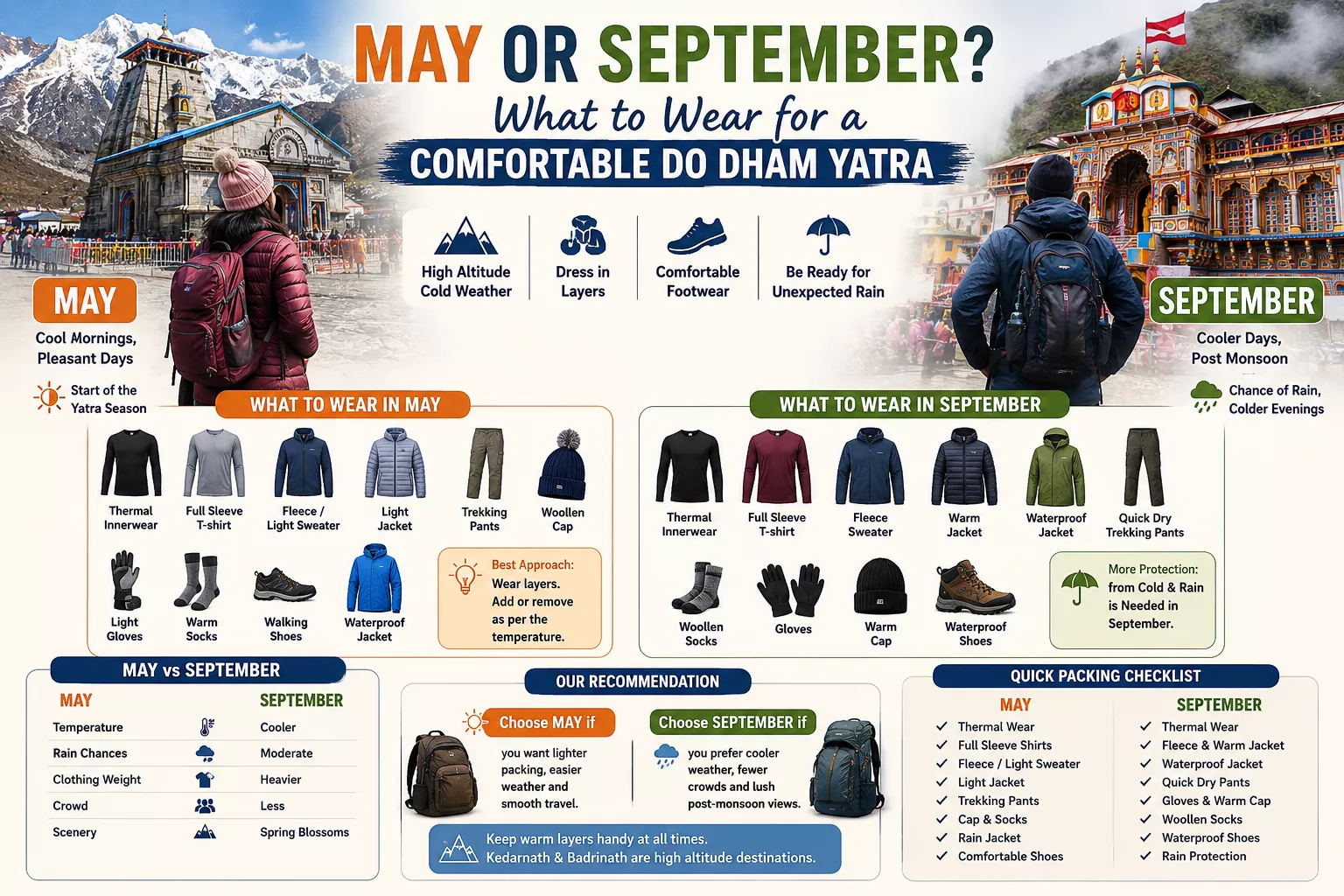
  • Carry thermal layers, a warm jacket, gloves, and a woollen cap
  • Keep a raincoat or waterproof poncho in your day bag
  • Wear comfortable trekking shoes with good grip
  • Check the weather forecast before starting the trek
  • Avoid travelling during severe weather warnings
  • Start the trek early to allow sufficient daylight
  • Carry a power bank, flashlight, and basic medicines
  • Keep your important documents and registration details safely with you

Good preparation is especially important for the Kedarnath Yatra. With suitable accommodation, basic fitness, proper clothing, and awareness of weather conditions, you can make the pilgrimage safer and more comfortable.

Mandatory Guidelines & Rules for Pilgrims

Following the rules during the Kedarnath Yatra helps keep the pilgrimage safe, organized, and respectful. The high-altitude route requires extra care, while responsible travel also helps protect the Himalayan environment.

Pilgrims should keep their registration details ready, follow the marked routes, and cooperate with local authorities. Respecting temple traditions and keeping the surroundings clean are equally important.

  • Keep your Kedarnath Yatra registration QR code or Yatra pass with you
  • Avoid plastic and dispose of waste responsibly
  • Use only designated trekking paths
  • Follow instructions from local authorities and security staff
  • Respect temple customs and local traditions
  • Follow weather and route advisories during the journey

Common Mistakes to Avoid

A little preparation can prevent many problems during the Kedarnath pilgrimage. Some travellers delay important bookings, carry too much luggage, or underestimate the physical effort required for the trek.

Avoiding these common mistakes can make your journey more comfortable and better organized.

  • Do not wait until the last minute for registration
  • Check weather updates before travelling
  • Avoid carrying unnecessary luggage
  • Prepare physically before starting the trek
  • Allow enough time for rest and acclimatization
  • Keep important documents and travel details easily accessible

Final Thoughts

The Kedarnath Yatra is a deeply spiritual journey that combines devotion with the challenges of the Himalayan landscape. Proper preparation can help you handle the trek, changing weather, and long travel days with greater confidence.

Complete your Kedarnath Yatra registration on time, prepare according to the travel conditions, and follow the guidelines throughout the journey. With thoughtful planning and a calm approach, you can experience the sacred journey to Lord Shiva’s temple with greater comfort and peace.

Frequently Asked Questions for the Kedarnath Yatra Registration

1. How to register for the Kedarnath Yatra 2027 online?

Ans: You can register through the official Uttarakhand tourism portal (registrationandtouristcare.uk.gov.in) or the “Tourist Care Uttarakhand” app. TripToChardham assists all its guests in securing these mandatory QR-coded e-passes well before their travel date to ensure a hassle-free entry.

2. Is registration mandatory for the Kedarnath Yatra?

Ans: Yes, registration is 100% compulsory for every pilgrim, regardless of whether you are traveling by foot, pony, or helicopter. TripToChardham reminds travelers that without a valid Yatra Parchi/QR pass, you will not be allowed to proceed beyond the Sonprayag checkpoint.

3. What documents are required for Kedarnath registration?

Ans: The primary documents needed are a valid Government ID (Aadhaar Card is preferred), a recent passport-size photograph, and an active mobile number for OTP verification. When booking with TripToChardham, our team double-checks your documentation to prevent any registration errors.

4. Is there any fee for Kedarnath Yatra registration?

Ans: No, the official government registration is completely free of cost. TripToChardham warns pilgrims to be cautious of fraudulent websites charging fees for registration; always use the official portal or a trusted travel partner.

5. Can I register for the Kedarnath Yatra offline?

Ans: Yes, offline registration counters are available at Haridwar, Rishikesh, and Sonprayag. However, TripToChardham strongly recommends online registration at least 15–30 days in advance to avoid long queues and ensure your slot, as daily visitor numbers are capped.

6. How to register for Kedarnath Yatra via WhatsApp?

Ans: While the government provides automated portals, the easiest way to manage your documentation is through a dedicated travel partner. You can connect with TripToChardham directly via call or WhatsApp at +91 9958647371. Our team will guide you through the latest registration requirements, verify your details, and ensure your official QR-coded Yatra pass is generated correctly before you reach the base camp.

7. What is the daily limit for Kedarnath Yatra 2027?

Ans: The government has set a daily limit of approximately 15,000 pilgrims to manage crowds and ensure safety. TripToChardham monitors these slot availabilities in real-time to help our clients pick the best dates for their journey.

8. Do helicopter passengers need separate registration for Kedarnath?

Ans: No, the registration process is the same, but it is still mandatory. You must show your QR pass even if you have a confirmed helicopter ticket. TripToChardham ensures that helicopter passengers have all their paperwork synchronized for smooth boarding at Phata or Sirsi helipads.

9. What are the common mistakes to avoid during the Kedarnath Yatra?

Ans: Common errors include carrying only digital copies of the pass (mobile signals are weak), ignoring weather alerts, and overpacking. TripToChardham provides a detailed “Preparation Checklist” to help you avoid these pitfalls and stay safe at high altitudes.

10. How to reach Kedarnath Dham from Delhi?

Ans: The most popular route is traveling by road or train from Delhi to Haridwar/Rishikesh, then driving to Sonprayag, followed by a 16 km trek. TripToChardham offers end-to-end packages starting from Delhi that cover all transport, registration, and stay-overs along the route.

Best Travel Agent for Chardham Yatra: Trusted, Verified & Safe Ground Operator

Best Travel Agent for Chardham Yatra

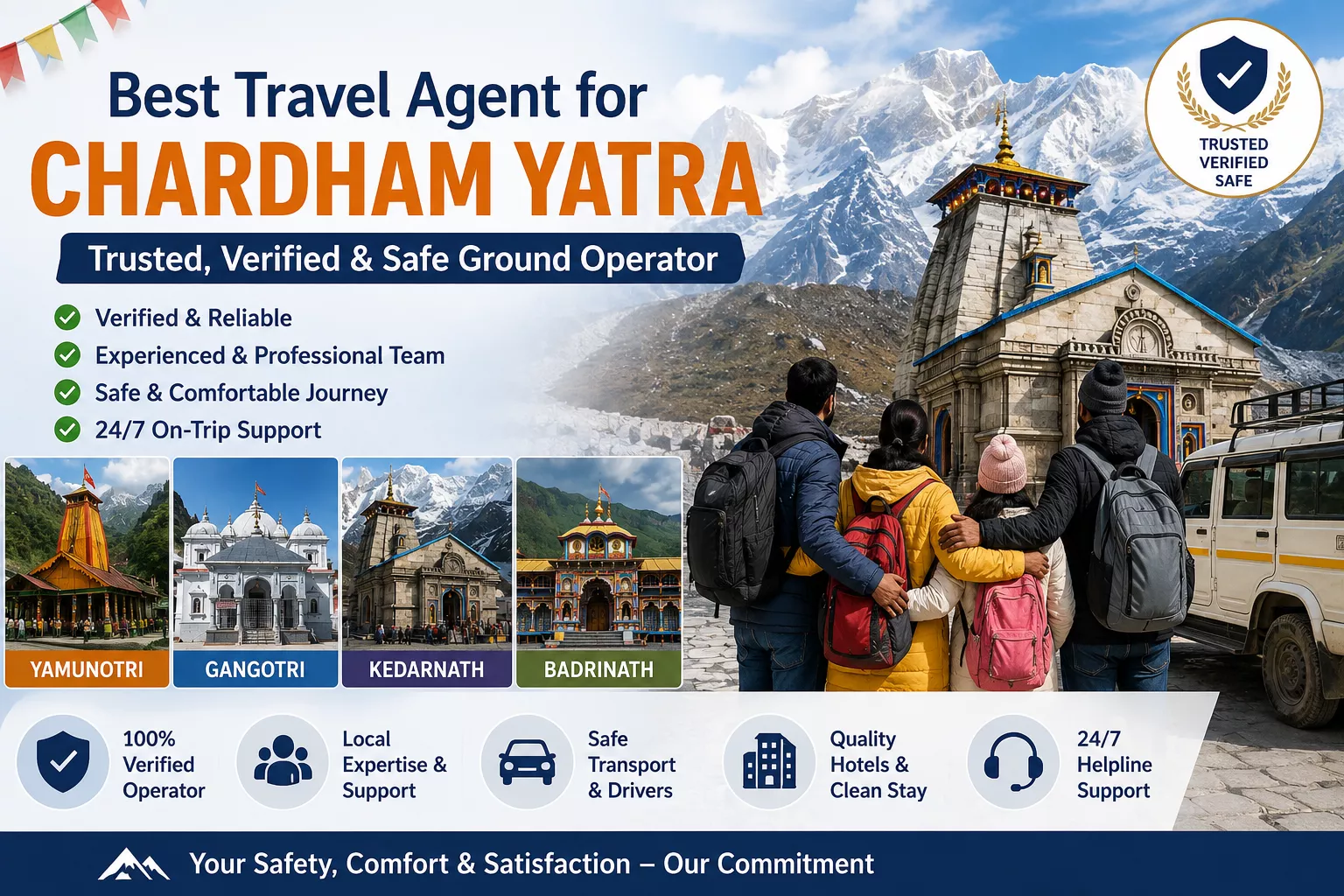
If you are searching for the best travel agent for Chardham Yatra, do not choose an operator only because of a low package price. Look for a company that understands Himalayan travel, provides suitable vehicles, experienced mountain drivers, reliable accommodation, clear pricing, registration guidance, and support throughout the journey.

TripToChardham organizes Char Dham Yatra Packages from Delhi, Haridwar, Rishikesh, and other major cities. Our team handles transportation, accommodation, itinerary planning, and travel coordination so pilgrims can focus on their spiritual journey.

For families, senior citizens, first-time pilgrims, and groups, choosing an experienced best tour operator for Chardham Yatra can make a major difference in comfort and planning.

Quick Facts

  • Char Dham Yatra covering Yamunotri, Gangotri, Kedarnath, and Badrinath
  • Road, helicopter, private, group, and customized packages
  • Departure options from Delhi, Haridwar, and other cities
  • Experienced mountain drivers
  • Pre-planned accommodation
  • Support with Yatra registration and travel coordination
  • Family and senior citizen-friendly itinerary options
  • Clear information about package inclusions and exclusions

Comparison Table: What to Check Before Choosing a Chardham Operator?

Reliable Chardham Operator vs Unverified Agent
Feature Reliable Chardham Operator Unverified Agent
Accommodation Clearly mentioned hotels or categories Hotel details may remain unclear
Vehicle Suitable vehicle for group size Vehicle may change at the last minute
Driver Experienced mountain driver Experience may vary
Pricing Inclusions and exclusions explained Extra costs may appear later
Itinerary Day-wise travel plan Basic or unclear schedule
Registration Guidance available Pilgrim handles everything alone
Support Assistance during the journey Mostly booking-stage communication
Senior Citizens Pace and comfort considered Fixed itinerary may be difficult

A good operator should give you clear information before you make the payment. Always ask for the final itinerary, hotel details, vehicle category, inclusions, exclusions, cancellation terms, and payment schedule in writing.


Introduction: Why Choosing the Best Travel Agent for Chardham Yatra Matters?

People searching for the best travel agency for Chardham tour are usually preparing for an important pilgrimage, not an ordinary holiday. The journey takes you through high-altitude Himalayan roads, remote towns, long travel stretches, changing weather, and busy pilgrimage routes.

A package may look attractive online, but the real experience depends on how well the trip is managed on the ground.

Pilgrims should therefore compare more than prices. Check the quality of accommodation, vehicle arrangements, driver experience, route planning, registration assistance, and support available during unexpected delays.

The right travel partner can reduce unnecessary stress and help you enjoy the spiritual and scenic side of the Char Dham Yatra.

Why You Should Choose an Experienced Chardham Operator?

Char Dham routes pass through mountainous areas where weather and road conditions can change quickly. Travel plans that work perfectly in the plains may not work the same way in the Himalayas.

An experienced operator understands the practical side of the journey and plans accordingly.

What a Professional Chardham Operator Should Provide?

  • Properly planned day-wise itinerary
  • Suitable vehicle according to group size
  • Experienced mountain driver
  • Comfortable accommodation
  • Clear package pricing
  • Assistance with required registration
  • Support during route delays
  • Flexible coordination during weather disruptions
  • Special consideration for senior citizens and families

The purpose is not simply to take you from one temple to another. A well-managed pilgrimage should balance travel time, rest, darshan, weather, and physical comfort.

What Makes the Best Travel Agency for Chardham Tour?

The word “best” can mean different things to different travelers. Some people want the lowest possible price, while others care more about hotel quality, privacy, comfort, or a flexible itinerary.

For a Char Dham pilgrimage, a dependable travel agency should offer a combination of experience, transparency, safety-conscious planning, and reliable support.

Important Factors to Check

1. Clear Package Details

Ask exactly what your package includes. Transportation, accommodation, meals, sightseeing, registration assistance, and other services should be clearly mentioned.

2. Suitable Vehicles

The vehicle should match your group size and luggage requirements. A comfortable vehicle becomes particularly important because several days involve long mountain drives.

3. Experienced Mountain Drivers

Mountain driving requires patience and route knowledge. Experienced drivers understand bends, steep sections, traffic conditions, weather changes, and appropriate travel timings.

4. Reliable Accommodation

Hotel quality can vary considerably between destinations. Ask for the hotel category and room-sharing arrangement before booking.

5. Transparent Pricing

A low starting price is not always the cheapest final price. Check whether tolls, parking, driver charges, meals, permits, and other applicable expenses are included.

6. Travel Support

A reliable operator should remain available during the journey, not disappear after receiving the booking amount.

7. Family and Senior Citizen Planning

Older pilgrims may need shorter travel stretches, convenient rooms, more rest, and assistance with difficult sections of the journey.

Common Chardham Booking Problems and How to Avoid Them

Many problems during pilgrimage travel begin before the journey itself. They often result from unclear package descriptions or inadequate planning.

Common Issues Include

  • Hotel category not matching the booking description
  • Poor accommodation during peak season
  • Limited hot water availability
  • Overcrowded rooms
  • Long travel days without sufficient rest
  • Vehicle changes after arrival
  • Inexperienced drivers
  • Unexpected additional charges
  • Unclear cancellation conditions
  • Confusion during road closures or weather delays
  • Lack of communication between the booking office and ground team

You can reduce these risks by asking questions before booking rather than trying to solve them after reaching Uttarakhand.

Booking Security: What Should You Check Before Paying?

A Char Dham booking often involves a significant amount of money, so pilgrims should verify the company before making an advance payment.

Check the company’s official contact details, office information, reviews, payment process, cancellation policy, and written booking confirmation.

Before Making Your Payment

  • Ask for a detailed quotation.
  • Confirm the travel dates.
  • Check the vehicle category.
  • Ask for accommodation details.
  • Confirm meal arrangements.
  • Understand the cancellation policy.
  • Check what happens if weather affects the journey.
  • Keep payment receipts and booking confirmations.
  • Avoid transferring money to an unrelated personal account without proper documentation.

A professional booking process should give you confidence and clear information rather than pressure you into making a quick payment.

Chardham Yatra Route Overview

Before choosing the best travel agent for Chardham Yatra, understand the journey you are actually booking.

The traditional sequence of the Chota Char Dham Yatra is:

Yamunotri → Gangotri → Kedarnath → Badrinath

The main road route generally passes through important base towns and travel points such as:

Haridwar/Rishikesh → Barkot → Janki Chatti → Yamunotri → Uttarkashi → Gangotri → Guptkashi/Sonprayag → Kedarnath → Guptkashi → Joshimath → Badrinath

The exact route can change because of road conditions, weather, government directions, and the selected itinerary.

The Four Dhams

  • Yamunotri: Dedicated to Goddess Yamuna
  • Gangotri: Dedicated to Goddess Ganga
  • Kedarnath: Dedicated to Lord Shiva
  • Badrinath: Dedicated to Lord Vishnu

Each Dham has different road conditions, altitude, accommodation options, and physical requirements.

Chardham Distance and Altitude Snapshot

Chardham Route – Approximate Distance & Altitude
Route / Destination Approximate Distance Approximate Altitude
Haridwar to Barkot 180 to 200 km Around 1,200 m
Barkot to Janki Chatti Around 40 to 45 km Around 2,600 m
Uttarkashi to Gangotri Around 95 to 100 km Around 3,100 m
Guptkashi to Sonprayag Around 30 km Around 1,800 m
Sonprayag to Gaurikund Around 5 km Around 2,000 m
Kedarnath Trek destination Around 3,583 m
Joshimath to Badrinath Around 45 to 50 km Around 3,133 m

Distances are approximate and can vary according to the exact starting point, road route, diversions, and local traffic conditions.


Chardham Itinerary Designed for Families and Senior Citizens

A comfortable itinerary should not try to cover every destination as quickly as possible. Long mountain drives, early departures, temple visits, and trekking can make the journey tiring.

A well-planned schedule allows sufficient time for travel and rest.

Recommended 10-Day Chardham Yatra Itinerary

10-Day Chardham Yatra Itinerary
Day Route Night Stay
Day 1 Haridwar/Rishikesh to Barkot Barkot
Day 2 Barkot to Yamunotri and back Barkot
Day 3 Barkot to Uttarkashi Uttarkashi
Day 4 Uttarkashi to Gangotri and back Uttarkashi
Day 5 Uttarkashi to Guptkashi Guptkashi
Day 6 Guptkashi to Kedarnath Kedarnath
Day 7 Kedarnath to Guptkashi Guptkashi
Day 8 Guptkashi to Badrinath Badrinath
Day 9 Badrinath and Mana Village, then onward journey Rudraprayag or nearby
Day 10 Rudraprayag to Rishikesh/Haridwar Trip ends

The itinerary can be extended depending on your departure city, travel pace, weather, and preferred accommodation.

For senior citizens, families with children, and travelers who prefer a relaxed journey, adding extra time can be a better option.


Vehicle Options for Chardham Yatra

The vehicle becomes your travel companion for several days, so selecting the right one is important.

Vehicle Selection by Group Size

Chardham Yatra – Group Size & Suitable Vehicle
Group Size Suitable Vehicle Best For
1 to 3 Sedan Couples or small groups
4 to 6 Innova / Crysta Families and small groups
7 to 12 Tempo Traveller Larger families and groups
13 to 17 Larger Tempo Traveller Large groups

The final vehicle should depend on the number of passengers, luggage, route, package, and availability.

What to Look for in Your Vehicle

  • Comfortable seating
  • Adequate luggage space
  • Properly maintained vehicle
  • Experienced mountain driver
  • Suitable vehicle size for the group
  • Regular maintenance and safety checks

Avoid choosing a vehicle based only on its appearance or price. Comfort becomes increasingly important after several hours on mountain roads.

Mountain Driver Standards

The driver plays an important role in a road-based Char Dham Yatra. Mountain roads require careful driving, especially around sharp bends, steep sections, narrow stretches, and areas affected by weather.

An Experienced Mountain Driver Should Provide

  • Careful speed management
  • Familiarity with the route
  • Safe handling on mountain roads
  • Appropriate rest and meal stops
  • Early departures where necessary
  • Good communication with passengers
  • Patience during traffic and road delays

A responsible driver should prioritize safe travel rather than trying to reach the destination as quickly as possible.

Verified Hotels and Stay Standards

Accommodation is another major part of a comfortable Char Dham journey. Hotels in the Himalayan region can differ considerably from properties in major cities.

Before booking, ask:

  • What hotel category is included?
  • Is the room on twin or triple sharing?
  • Is hot water available?
  • Are meals included?
  • Is heating available where required?
  • How far is the hotel from the main market or temple area?
  • What happens if the booked hotel becomes unavailable?

During peak pilgrimage periods, accommodation gets booked quickly. Early planning gives you more choices.

Senior Citizen Comfort Priority

Senior citizens can undertake the Char Dham Yatra, but the itinerary should match their physical condition.

Helpful Arrangements for Older Pilgrims

  • Comfortable vehicle
  • Reasonable travel hours
  • Regular rest breaks
  • Ground-floor rooms where available
  • Hot water where available
  • Easy hotel access
  • Extra time for temple visits
  • Assistance with local transfers
  • Helicopter or pony/palki options where appropriate

Anyone with a heart, respiratory, blood pressure, or other significant medical condition should speak with a qualified doctor before travelling to high-altitude areas.

Kedarnath Stay and Comfort

Kedarnath is among the most demanding parts of the Char Dham pilgrimage because of its high altitude, cold conditions, and trek.

Accommodation options around Kedarnath can be more basic than those in lower-altitude towns. Pilgrims should therefore keep realistic expectations.

Before Booking a Kedarnath Stay, Ask About

  • Type of accommodation
  • Bedding
  • Hot water availability
  • Heating arrangements, if available
  • Distance from the temple
  • Meal arrangements
  • Check-in and check-out timings

Weather and local conditions can affect available facilities, so operators should avoid making guarantees that cannot be controlled.

Medical Safety and High-Altitude Travel

Parts of the Char Dham route reach high altitudes, and some travelers may experience altitude-related symptoms.

Possible symptoms include:

  • Headache
  • Nausea
  • Dizziness
  • Unusual tiredness
  • Breathlessness
  • Loss of appetite

Do not ignore worsening symptoms. If you feel seriously unwell, seek medical assistance and follow local medical advice. Descending to a lower altitude may be necessary in serious cases.

Before the Journey

  • Consult your doctor if you have an existing medical condition.
  • Carry prescribed medicines.
  • Keep medicines in your hand luggage.
  • Stay hydrated.
  • Avoid overexertion.
  • Take adequate rest.
  • Allow your body time to adjust to altitude.

Oxygen should not be treated as a replacement for medical care. Emergency oxygen can provide temporary support, but serious symptoms require professional medical attention.

Char Dham Yatra Registration Assistance

Registration requirements can change from one pilgrimage season to another, so pilgrims should check the latest instructions issued by the Uttarakhand authorities before travelling.

A travel operator can help you understand the process and prepare the required documents.

Keep These Documents Ready

  • Government-issued identity proof
  • Mobile number
  • Passport for international travelers, where applicable
  • Travel and booking details
  • Required registration confirmation
  • Medical documents where applicable

Make sure the details entered during char dham registration match your identity documents.

How to Spot a Risky Chardham Agent

Choosing a cheap package without checking its details can create problems later.

Watch for These Warning Signs

Very low package price:

A price far below the normal market range deserves careful checking.

No written inclusions:

Ask for a proper quotation before paying.

Unclear hotel information:

“Good hotel” is not enough. Ask about the category and location.

Unclear vehicle arrangement:

Confirm the vehicle type and passenger capacity.

Last-minute upgrades:

Ask whether an upgrade could be required because of availability.

Unclear cancellation terms:

Read the cancellation and refund conditions before payment.

No emergency contact:

You should know whom to contact during the trip.

Pressure to make immediate payment:

A genuine operator should give you enough information to make an informed decision.

Direct Operator vs Standard Booking Agent

When comparing the best travel agency for Chardham Yatra, one useful question is: who will actually manage the journey after you make the booking?

Directly Managed Tour vs Resold / Outsourced Package
Service Directly Managed Tour Resold / Outsourced Package
Hotel Coordination Direct coordination May involve third parties
Vehicle Planned according to package May be outsourced
Driver Assigned according to route Experience may vary
Communication One travel team Multiple parties may be involved
Route Disruption Easier coordination Responsibility may be unclear
Package Details Can be clearly documented May vary between vendors
Customer Support Journey-focused support Often booking-focused

This does not mean every broker provides poor service. The important point is to understand who is responsible for your trip before booking.


Booking Advance and Payment Safety

There is no universal advance amount that makes one operator more trustworthy than another. Payment terms vary by company and package.

Before paying any advance, ask for:

  • Booking confirmation
  • Detailed itinerary
  • Package price
  • Inclusions
  • Exclusions
  • Hotel category
  • Vehicle details
  • Cancellation policy
  • Payment schedule
  • Company contact details

Use official payment channels and keep every receipt.

Ground Support During the Yatra

A good travel company should provide a clear communication process during the journey.

Ground support becomes especially useful when:

  • Roads are temporarily blocked
  • Weather delays travel
  • Hotel check-in takes longer than expected
  • Traffic causes delays
  • The itinerary needs adjustment
  • A passenger needs assistance
  • Local transportation arrangements change

The purpose of on-ground support is not to promise that nothing will go wrong. Mountain travel cannot be completely controlled. Its value lies in helping travelers respond properly when conditions change.

Local Connectivity and SIM Guide

Mobile connectivity varies considerably throughout the Char Dham route.

You can generally expect better connectivity in larger towns and weaker or unavailable signals in some remote mountain stretches.

What Travelers Should Expect

  • Good connectivity in many major towns
  • Weak signals in remote areas
  • Data speeds can vary
  • Weather can affect connectivity
  • Network availability can change along the route

Smart Connectivity Tips

  • Carry a power bank.
  • Save hotel and travel details offline.
  • Keep important phone numbers written down.
  • Download offline maps where possible.
  • Inform family members that network gaps are normal.
  • Carry a backup SIM if your travel requires regular communication.

Do not depend entirely on mobile internet for essential travel information.

Food Comfort Guide for Families and Senior Citizens

Most pilgrimage routes around Char Dham offer predominantly vegetarian food. Larger towns generally provide more choices, while remote destinations may have simpler menus.

Common Food Options

  • Dal and rice
  • Roti and vegetables
  • Khichdi
  • Simple North Indian meals
  • Tea and snacks
  • Local vegetarian dishes

Practical Food Tips

  • Carry dry fruits and light snacks.
  • Keep ORS or electrolyte packets.
  • Drink sufficient water.
  • Avoid very heavy meals before trekking.
  • Senior citizens should prefer simple, easily digestible food.
  • Inform your travel operator about important dietary requirements before departure.

Route Conditions and Travel Alerts

Mountain travel does not follow the same timetable as city travel. Rain, snowfall, landslides, traffic, road maintenance, and government restrictions can affect the journey.

A responsible operator should be prepared to adjust the schedule when necessary.

Why Flexible Planning Matters

  • Helps avoid unnecessary late-night travel
  • Allows time for road delays
  • Reduces pressure on senior citizens
  • Gives drivers sufficient rest
  • Allows the itinerary to respond to weather conditions
  • Helps maintain safer travel timings

Never insist on continuing through an unsafe road section simply to maintain a fixed schedule.

Chardham Tour Package Cost

The cost of a Char Dham package varies according to several factors:

  • Starting city
  • Number of days
  • Vehicle type
  • Number of travelers
  • Hotel category
  • Meals
  • Private or group travel
  • Helicopter services
  • Travel season
  • Additional services

Instead of relying on one fixed market price, compare complete package details.

Typical Package Categories

Chardham Yatra – Package Types & Pricing
Package Type Suitable For Price
Budget Group Tour Budget-conscious pilgrims Depends on departure and season
Standard Road Package Families and regular travelers Depends on hotel and vehicle
Premium Private Tour Families and comfort-focused travelers Higher than standard
Luxury Package Travelers seeking premium services Custom pricing
Helicopter Package Limited-time or comfort-focused travelers Significantly higher

Always confirm the current price directly with the operator because pilgrimage-season rates can change.


Price Transparency: What Can Increase the Final Cost?

A package that looks inexpensive may exclude services that you later need.

Before booking, ask whether the quotation includes:

  • Toll charges
  • Parking
  • Driver allowance
  • Fuel
  • State taxes or applicable road charges
  • Meals
  • Hotel upgrades
  • Pony or palki
  • Helicopter tickets
  • Personal expenses
  • Additional sightseeing

The more clearly these items are explained before booking, the easier it is to compare two packages fairly.

What Should Be Included in the Best Chardham Package?

A package should clearly explain what you are paying for.

Common Inclusions

  • Accommodation according to the selected category
  • Transportation
  • Experienced driver
  • Pickup and drop as agreed
  • Meals mentioned in the itinerary
  • Sightseeing listed in the itinerary
  • Travel coordination
  • Registration guidance where offered

Common Exclusions

  • Personal shopping
  • Laundry
  • Tips
  • Pony and palki charges
  • Helicopter charges unless specifically included
  • Personal medical expenses
  • Travel insurance
  • Any service not mentioned in the package

Always read the final quotation before making the booking.

Medical Fitness for Kedarnath

Kedarnath requires special attention because of its altitude and physically demanding route.

The trek distance and available routes can change with official arrangements and conditions, so pilgrims should check the current instructions before travel.

Practical Health Preparation

  • Begin light physical preparation before the trip.
  • Walk regularly before departure.
  • Discuss existing medical conditions with your doctor.
  • Carry prescribed medicines.
  • Stay hydrated.
  • Avoid excessive physical exertion.
  • Take breaks during the journey.
  • Do not ignore unusual symptoms.

Senior citizens should plan the journey according to their medical fitness rather than trying to match the pace of younger travelers.

Safety Gear Checklist for Char Dham Yatra

Weather in the Himalayas can change quickly. Layering is one of the simplest ways to stay comfortable.

Three-Layer Clothing System

Base Layer:

Thermal innerwear to retain body warmth.

Middle Layer:

Fleece or woollen sweater for insulation.

Outer Layer:

Waterproof or wind-resistant jacket to protect against rain and cold winds.

Must-Carry Essentials

  • Warm socks
  • Woollen cap
  • Gloves
  • Comfortable trekking shoes
  • Raincoat or poncho
  • Small backpack
  • Water bottle
  • Power bank
  • Torch
  • ORS/electrolytes
  • Personal medicines
  • Basic first-aid supplies
  • Government ID
  • Yatra registration details
  • Hotel and transport confirmations

Best Daily Travel Timing

Mountain travel is generally more comfortable when journeys begin early. Early departures can help avoid some traffic and allow travelers to reach the next destination before evening.

A Practical Daily Routine

  • Start: Around 5:30 AM to 7:00 AM, depending on the route
  • Breakfast: Around 8:00 AM to 9:30 AM
  • Main travel: Morning and early afternoon
  • Destination: Preferably before evening
  • Rest: Evening
  • Sleep: Early night

Exact timings should always depend on the day’s route, weather, temple timings, road conditions, and local instructions.

Why Trip To Chardham Is a Trusted Choice for Chardham Yatra

Choosing a travel company is ultimately a personal decision. At Trip To Chardham, our focus is on making the practical side of the pilgrimage easier for travelers.

We organize Char Dham journeys from Delhi, Haridwar, Rishikesh, Dehradun, and other cities, with options for different group sizes, budgets, and travel preferences.

What You Can Expect?

  • Char Dham Yatra Packages by road
  • Helicopter Yatra options
  • Private Char Dham tours
  • Group departures
  • Family-friendly packages
  • Senior citizen-friendly planning
  • Accommodation coordination
  • Experienced mountain drivers
  • Transportation arrangements
  • Registration guidance
  • Customized itineraries
  • Travel assistance during the journey

Our role is to coordinate the travel arrangements so pilgrims can spend more time focusing on the religious experience.

Final Conclusion

Choosing the best travel agent for Chardham Yatra should not be based on a title, the cheapest quotation, or a long list of promises. The better choice is an operator that gives you clear information, suitable transportation, reliable accommodation, experienced drivers, practical itinerary planning, and support throughout the journey.

If you are comparing the best travel agency for Chardham Yatra, look carefully at what each company actually provides. Compare the complete package rather than comparing only the headline price.

For travelers searching for the best travel agency for Chardham tour, Trip To Chardham offers road, helicopter, private, group, family, senior citizen, and customized pilgrimage options from Delhi, Haridwar, and other locations.

And if your priority is finding the best tour operator for Chardham Yatra, choose a company that understands Himalayan travel and gives you complete clarity before you begin.

A well-planned Char Dham Yatra is not about rushing from one destination to another. It is about travelling safely, allowing enough time for rest and darshan, and experiencing the spiritual significance of Yamunotri, Gangotri, Kedarnath, and Badrinath with peace of mind.

About the Author

Raunak is an experienced Chardham travel specialist with over a decade of expertise in planning pilgrimages across Uttarakhand. His deep understanding of the region comes from spending six months in the Kedarnath Valley, where he gained firsthand knowledge of mountain routes, local stays, travel conditions, and the practical challenges pilgrims face. Through TripToChardham’s expert team, he helps travelers plan well-organized journeys with reliable accommodations, suitable travel arrangements, and on-ground assistance throughout their pilgrimage.

FAQs for Best Travel Agency for Char Dham

1. Who is the best travel agent for Chardham Yatra?

The best travel agent for Chardham Yatra is one that provides clear package details, suitable transportation, experienced mountain drivers, reliable accommodation, registration guidance, and support during the journey. Travelers should compare these factors rather than choosing an operator only on price.

2. What makes the best travel agency for Chardham Yatra?

A reliable travel agency should provide transparent pricing, suitable vehicles, experienced drivers, planned accommodation, a practical itinerary, and assistance when weather or road conditions affect the journey.

3. Why should I choose a travel agency for Chardham tour instead of planning independently?

Independent travel is possible, but you need to arrange hotels, vehicles, routes, meals, registration, and daily schedules yourself. A package combines these arrangements and can be particularly useful for families, senior citizens, groups, and first-time pilgrims.

4. What should I check before booking the best tour operator for Chardham Yatra?

Check the company’s experience, hotel category, vehicle type, driver experience, package inclusions, exclusions, cancellation policy, registration support, payment terms, and emergency contact process.

5. Does a Chardham travel agency help with registration?

Many travel agencies provide registration guidance, but the exact service depends on the package and current government process. Pilgrims should also verify the latest registration requirements through official Uttarakhand government sources.

6. Is Char Dham Yatra suitable for senior citizens?

Yes, many senior citizens complete the pilgrimage with proper planning. However, the high altitude and physically demanding sections require careful preparation. Comfortable accommodation, suitable transportation, adequate rest, and medical advice can make the journey easier.

7. How can I avoid hidden charges in a Chardham package?

Ask for written inclusions and exclusions before paying. Specifically check tolls, parking, driver allowance, meals, hotel upgrades, pony or palki charges, helicopter services, and personal expenses.

8. What type of vehicle is best for Char Dham Yatra?

The right vehicle depends on your group size and luggage. A sedan may work for a small group, while an Innova/Crysta is suitable for many families. Tempo Travellers are useful for larger groups. Comfort and vehicle condition are more important than choosing the cheapest option.

9. Is helicopter travel better than road travel for Char Dham?

Helicopter travel can save time and reduce long road journeys, making it attractive to some senior citizens and time-conscious travelers. Road travel costs less for many travelers and provides a more extensive experience of the Himalayan landscape. The better option depends on your budget, health, available time, and preferences.

10. What is the traditional sequence of Char Dham Yatra?

The traditional sequence of the Chota Char Dham Yatra is:

Yamunotri → Gangotri → Kedarnath → Badrinath

This is the sequence followed by many pilgrims and commonly used for organized Char Dham itineraries.

11. What is the best time for Char Dham Yatra?

The main pilgrimage season generally runs from late spring to autumn, depending on the annual temple opening and closing dates. May and June are popular but can be crowded. September and October often offer clearer post-monsoon conditions, although weather can still change quickly in the mountains.

12. How many days are required for Char Dham Yatra?

A road-based Char Dham Yatra commonly takes around 10 to 12 days, depending on the starting point, itinerary, weather, road conditions, and rest requirements. A helicopter itinerary can be considerably shorter.
What is the Correct Sequence of Char Dham Yatra?

What is the Correct Sequence of Char Dham Yatra?

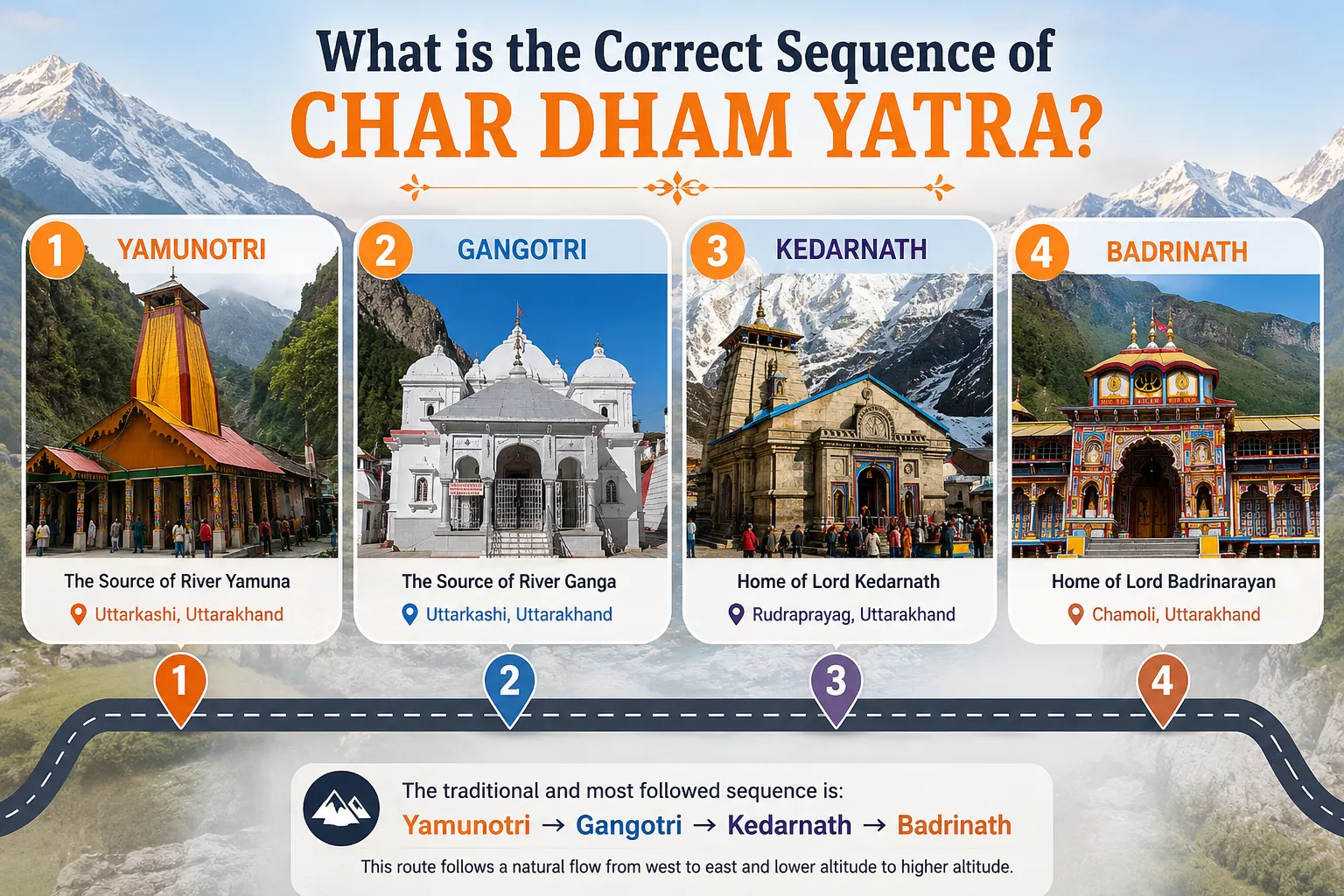
The correct sequence of Char Dham Yatra is:

Yamunotri → Gangotri → Kedarnath → Badrinath

This order has been followed for centuries and is considered the traditional route of the Chota Char Dham Yatra in Uttarakhand. Pilgrims begin their journey from Yamunotri, continue to Gangotri, then visit Kedarnath, and finally complete the pilgrimage at Badrinath.

Following this sequence is not only rooted in Hindu tradition but also makes the journey more practical from a travel perspective, as the temples are covered in a logical west-to-east direction across the Garhwal Himalayas.

Why Is This the Traditional Order?

According to Hindu beliefs, the Char Dham Yatra should be completed in a clockwise direction, also known as Parikrama. This sequence represents a gradual spiritual journey, allowing devotees to seek blessings at each sacred shrine before concluding the pilgrimage at Badrinath.

The traditional order also follows the natural geography of Uttarakhand, making travel more organized and reducing unnecessary backtracking.

1. Yamunotri

The pilgrimage begins at Yamunotri Temple, the source of the holy River Yamuna. Dedicated to Goddess Yamuna, this temple symbolizes purity and protection from untimely death.

Pilgrims usually begin their spiritual journey here by offering prayers and taking blessings before moving to the next Dham.

Altitude: 3,293 metres

2. Gangotri

After Yamunotri, devotees travel to Gangotri Temple, dedicated to Goddess Ganga. According to Hindu tradition, this is the place where the sacred River Ganga descended to Earth through the locks of Lord Shiva.

Pilgrims offer prayers and often take a holy dip in the Bhagirathi River before entering the temple.

Altitude: 3,100 metres

3. Kedarnath

The third destination is Kedarnath Temple, one of the twelve Jyotirlingas of Lord Shiva. It is also the most physically demanding part of the pilgrimage because devotees must complete a trek from Gaurikund to reach the temple.

Kedarnath holds immense religious significance and attracts millions of Shiva devotees every year.

Altitude: 3,583 metres

4. Badrinath

The pilgrimage concludes at Badrinath Temple, dedicated to Lord Vishnu. Located on the banks of the Alaknanda River, it is one of the most sacred Vaishnav temples in India and marks the completion of the Char Dham Yatra.

Before entering the temple, devotees traditionally take a holy dip in Tapt Kund.

Altitude: 3,133 metres

Char Dham Yatra Route

The traditional road route follows this sequence:

Haridwar / Rishikesh → Barkot → Yamunotri → Uttarkashi → Gangotri → Guptkashi → Kedarnath → Joshimath → Badrinath → Rishikesh / Haridwar

This route allows pilgrims to visit all four shrines comfortably while following the traditional pilgrimage order.

Can You Visit the Temples in a Different Order?

Yes, it is possible to visit the temples in a different order due to weather conditions, helicopter schedules, or travel arrangements. However, from a religious perspective, devotees generally prefer to follow the traditional sequence:

Yamunotri → Gangotri → Kedarnath → Badrinath

Tour operators also recommend this order because it aligns with both pilgrimage traditions and the most practical road route.

Why Should You Follow the Traditional Sequence?

Following the traditional order offers several advantages:

  • It follows centuries-old Hindu pilgrimage traditions.
  • The route is geographically practical and minimizes unnecessary travel.
  • It allows gradual acclimatization to higher altitudes.
  • Most Char Dham Yatra itineraries are planned according to this sequence.
  • It provides a smooth and spiritually fulfilling pilgrimage experience.

Final Words

The correct sequence of Char Dham Yatra is Yamunotri, Gangotri, Kedarnath, and Badrinath. This traditional order has been followed by devotees for generations and remains the most recommended way to complete the sacred pilgrimage. Whether you travel by road or helicopter, following this sequence helps you experience the spiritual significance of each Dham while making your journey more organized and memorable.

Mana Village

Mana Village

Mana Village is famous as the last village of India, located just a few kilometres from the sacred Badrinath Temple in Uttarakhand. Nestled in the majestic Himalayas near the Indo-Tibetan border, this charming village is known for its rich mythology, ancient heritage, breathtaking landscapes, and vibrant local culture. Every year, thousands of pilgrims and travellers visit Mana to explore its spiritual landmarks and experience the simple lifestyle of the Himalayan people.

More than just a border village, Mana Village is closely connected with the Mahabharata, several ancient legends, and important pilgrimage sites. Before planning your visit, it’s worth learning about its fascinating history, attractions, and travel essentials to make the most of your journey.

About Mana Village

The residents of Mana Village have maintained a deep spiritual connection with Badrinath Dham for generations. One of the most cherished traditions takes place just before the temple closes for winter, when the unmarried girls of the village weave a sacred woollen blanket that is ceremonially offered to Lord Badrinarayan. This centuries-old custom continues to be an important part of the temple’s closing rituals.

Most villagers belong to the Bhotia community, a tribe known for its rich cultural traditions and seasonal migration. During winter, many families move to lower-altitude regions because of heavy snowfall and return to Mana once the weather becomes favourable. Historically, the Bhotia people were engaged in trade between India and Tibet before the border was closed.

Quick Information

  • Location: Chamoli District, Garhwal, Uttarakhand
  • Distance from Badrinath: Approximately 4 km
  • Altitude: 3,200 metres above sea level
  • Nearest Railway Station: Rishikesh Railway Station
  • Nearest Airport: Jolly Grant Airport, Dehradun

Where Does the Name “Mana” Come From?

According to local belief, the name Mana originated from Manibhadra Ashram, an ancient hermitage believed to have existed in this region. The village is closely associated with Manibhadra, who is regarded as the guardian deity of the area. As per local folklore, Manibhadra is believed to have lived near the holy confluence of the Alaknanda and Saraswati rivers at Keshav Prayag, not far from Mana Village.

History of Mana Village

Pandavas in Mana

According to local tradition, Mana Village is closely linked to the Mahabharata. It is believed that the Pandavas passed through this village while undertaking their final journey towards heaven, known as the Swargarohini Yatra.

Bheem Pul

One of the village’s most famous attractions is Bheem Pul, a massive natural rock bridge spanning the Saraswati River. According to legend, Bhima placed this enormous stone across the river so that Draupadi could safely cross during the Pandavas’ journey.

Vyas Gufa

Vyas Gufa is believed to be the cave where Maharishi Ved Vyasa composed the Mahabharata. According to tradition, Lord Ganesha wrote down the epic while Vyasa dictated each verse without interruption.

The Hidden Saraswati River

The Saraswati River flows visibly for a short distance near Mana before disappearing underground. Local beliefs associate this mysterious phenomenon with an ancient legend connected to Maharishi Ved Vyasa, making the site one of the village’s most fascinating attractions.

Sacred Land

Mana is much more than the last village near the border. It is a place where mythology, spirituality, Himalayan culture, and spectacular natural beauty come together, making it one of Uttarakhand’s most unique destinations.

Places to Visit in Mana Village

Saraswati River

The Saraswati River flows with tremendous force near Mana before disappearing beneath the rocks. According to Hindu tradition, the river represents Goddess Saraswati, the goddess of wisdom, learning, and knowledge. The roaring sound of the river and its dramatic landscape make this spot truly unforgettable.

Vyas Gufa & Ganesh Gufa

Vyas Gufa is one of the most sacred places in Mana Village. Devotees believe that Maharishi Ved Vyasa composed many of the ancient scriptures here. Nearby is Ganesh Gufa, where Lord Ganesha is believed to have written the Mahabharata as Vyasa narrated it.

After exploring these sacred caves, many visitors enjoy a simple cup of hot tea and freshly prepared Maggi from the local stalls, a popular experience among travellers visiting Mana.

Bhim Pul

Bhim Pul is one of the most visited attractions in Mana Village. The giant rock bridge naturally stretches across the rushing Saraswati River and is deeply connected with the Mahabharata. According to legend, Bhima placed this massive stone to help Draupadi continue the Pandavas’ final journey.

Handicrafts of the Village

The women of Mana are highly skilled in traditional weaving and handicrafts. Visitors can purchase beautifully handcrafted shawls, woollen sweaters, carpets, mufflers, scarves, caps, and other local products directly from the artisans. These handmade items make meaningful souvenirs while supporting the village’s local economy.

Treks to Try from Mana Village

The Trek to Vasudhara Falls

One of the most popular short treks from Mana leads to the magnificent Vasudhara Falls. According to local belief, the waterfall’s sacred water touches only those with a pure heart. Along the trail, visitors enjoy spectacular Himalayan scenery, making this trek both spiritually and visually rewarding.

The Trek to Satopanth Lake

The trail to the sacred Satopanth Lake begins from Mana Village. Surrounded by towering Himalayan peaks, the lake holds great religious significance. According to Hindu beliefs, Lord Brahma, Lord Vishnu, and Lord Shiva are believed to visit this sacred lake. The trek also passes the beautiful Sahastradhara Falls, offering breathtaking mountain views throughout the journey.

The Trek to Charanpaduka

The Charanpaduka Trek takes visitors to a sacred rock believed to bear the footprints of Lord Vishnu. Besides its religious importance, the viewpoint offers magnificent views of the Nar and Neelkanth peaks, making it one of the most rewarding short hikes near Badrinath.

Best Time to Visit

The best time to visit Mana Village is between May and June and again from September to October. During these months, the weather remains pleasant, roads stay open, and nearby attractions can be explored comfortably.

Winter is extremely harsh because of heavy snowfall, and Badrinath Temple also remains closed during this period. Most villagers temporarily relocate to lower-altitude regions until the pilgrimage season begins again.

Weather

From November to April, Mana experiences severe winter conditions with temperatures often falling below freezing. Heavy snowfall covers the region, making travel difficult.

During the summer months, temperatures generally range between 15°C and 20°C, creating ideal conditions for sightseeing, trekking, and exploring the surrounding Himalayan landscape.

How to Reach Mana Village

By Road

Mana Village is located around 3–4 km from Badrinath and is easily accessible by road. Visitors can hire a shared taxi or private cab from Badrinath to reach the village. The route is well connected by national highways from Haridwar, Rishikesh, Dehradun, Delhi, and other major North Indian cities.

By Rail

The nearest railway station is Rishikesh Railway Station, located about 290 km from Mana Village. Haridwar Railway Station is another major railhead with better connectivity to cities across India. From either station, buses and taxis are available for Badrinath and Mana.

By Air

The nearest airport is Jolly Grant Airport, Dehradun, approximately 310–320 km from Mana Village. From the airport, travellers can hire taxis or board buses towards Badrinath. During the pilgrimage season, helicopter services are also available to Badrinath from Sahastradhara Helipad in Dehradun.

Distance from Major Cities

  • Delhi: Approximately 520 km
  • Dehradun: Around 320 km
  • Rishikesh: Approximately 290 km
  • Himachal Pradesh: Around 380 km
  • Uttar Pradesh: Approximately 550 km

Frequently Asked Questions

Q1. What are the top places to visit in Mana Village?

Ans: Popular attractions include Vyas Gufa, Ganesh Gufa, Bhim Pul, Saraswati River, Vasudhara Falls, Neelkanth Peak, Tapt Kund, and Mata Murti Temple.

Q2. What is the easiest way to reach Mana Village?

Ans: The easiest way is by road from Badrinath, located only about 4 km away. Shared taxis and private cabs are readily available during the pilgrimage season.

Q3. Which wildlife can be seen near Mana Village?

Ans: The surrounding Himalayan region is home to species such as the Himalayan Monal, Himalayan Tahr, Musk Deer, Himalayan Black Bear, and numerous mountain birds.

Q4. Is any permit required to visit Mana Village?

Ans: No. Indian tourists generally do not require a special permit to visit Mana Village. However, visitors should always follow local administrative guidelines during the pilgrimage season.

Conclusion

Mana Village is far more than the last village of India. It is a destination where mythology, spirituality, culture, and Himalayan beauty come together in a truly unforgettable way. From sacred places like Vyas Gufa, Ganesh Gufa, and Bhim Pul to scenic treks leading to Vasudhara Falls and Satopanth Lake, every corner of the village has a story to tell.

With its peaceful surroundings, welcoming locals, and rich cultural heritage, Mana offers an experience that stays with visitors long after their journey ends. Plan your visit during the summer or post-monsoon season to enjoy the best weather and fully experience everything this remarkable Himalayan village has to offer.

Mana Village Infographic

Mansa Devi Temple

Mansa Devi Temple

Mata Mansa Devi Temple is one of the most revered temples in Haridwar, dedicated to Goddess Mansa Devi, who is worshipped as the fulfiller of sincere wishes. Perched atop Bilwa Parvat in the Shivalik Hills, the temple is an important stop on the Panch Tirth (Five Sacred Pilgrimage Sites) of Haridwar. Every year, thousands of devotees visit this sacred shrine to seek the blessings of the goddess and enjoy the peaceful atmosphere along with panoramic views of Haridwar and the surrounding hills.

The temple’s hilltop setting creates a perfect blend of spirituality and natural beauty. Although several temples dedicated to Mata Mansa Devi are found across India, the Haridwar shrine holds special religious significance and remains one of the city’s most visited pilgrimage destinations.

About Mansa Devi Temple Haridwar

A visit to Mansa Devi Temple is considered an essential part of the Haridwar pilgrimage. For generations, devotees have followed the tradition of offering prayers at this sacred shrine before completing their religious journey. The temple is well known for its spiritual importance, scenic surroundings, and peaceful environment.

Inside the temple are two revered idols of Goddess Durga. One idol has three faces and five arms, while the other is depicted with eight arms, symbolising the goddess’s divine power and protection. These sacred idols attract devotees from across the country throughout the year.

Surrounded by the lush greenery of Rajaji National Park, the temple also offers breathtaking views of Haridwar and the Ganga plains. A visit here combines devotion with the beauty of nature, making it a memorable experience for pilgrims and tourists alike.

History

Mansa Devi is revered as the Hindu goddess associated with snakes and is widely worshipped in West Bengal, Jharkhand, Assam, and Uttarakhand. Devotees pray to her for protection from snakebites, family well-being, prosperity, and fertility.

According to Hindu mythology, Mansa Devi is the sister of Vasuki, the king of the Nagas, and the wife of the sage Jaratkaru. She is also regarded as the mother of Astika, the sage credited with stopping King Janamejaya’s great serpent sacrifice. In many scriptures, the goddess is honoured as Vishahari, meaning the remover of poison, and Nitya, the eternal one.

Some ancient texts also describe her as the daughter of Sage Kashyapa. Over time, devotees came to worship her as a compassionate goddess who blesses sincere prayers while encouraging faith, devotion, and righteousness.

Architecture

The architecture of Mansa Devi Temple reflects simplicity and traditional North Indian temple design. Painted in vibrant red, the temple stands prominently on Bilwa Parvat, creating a striking contrast against the dense green forests of the Shivalik Hills.

Like many Shakti temples, the shrine features a sacred Garbhagriha (inner sanctum) where the main idol of Mata Mansa Devi is enshrined. Pilgrims gather here to offer prayers, flowers, coconuts, and sacred threads while seeking the blessings of the goddess.

Although the temple is modest in design, its peaceful surroundings and spiritual atmosphere make it one of the most significant pilgrimage sites in Haridwar.

Temple Timing

Mansa Devi Temple welcomes devotees every day.

  • Temple Timings: 8:00 AM to 5:00 PM
  • Prasad: Usually available between ₹20 and ₹50, depending on the offering selected.

During major festivals such as Navratri and Kumbh Mela, the temple receives a large number of devotees, so arriving early is recommended for a smoother darshan experience.

Best Time to Visit

The best time to visit Mansa Devi Temple Haridwar is from October to March, when the weather remains pleasant and comfortable for sightseeing and temple visits. Clear skies and cooler temperatures make climbing to the temple or exploring nearby attractions much more enjoyable.

Many visitors also combine their temple visit with activities such as river rafting, camping, and sightseeing around Haridwar and Rishikesh during this season.

The monsoon months (July to September) bring moderate to heavy rainfall, which can make the walking path slippery and occasionally affect travel plans. Summer months can also become quite hot during the afternoon, so early morning or evening visits are generally more comfortable.

Read about: What is the best time to visit Haridwar?

How to Reach

Located on Bilwa Parvat, opposite Chandi Devi Temple across the Ganga, Mansa Devi Temple can be reached by both trekking and ropeway.

By Ropeway

A well-maintained 3 km pedestrian route leads to the temple for devotees who wish to walk. Those looking for a quicker and more comfortable option can use the famous Udan Khatola Ropeway, which usually operates between 8:00 AM and 5:00 PM. The ropeway is especially convenient for senior citizens, children, and pilgrims who prefer to avoid the climb.

By Trek

Pilgrims choosing the walking route should be prepared to climb around 850 steps before reaching the temple.

By Rail and Road

Reaching Haridwar itself is convenient through all major modes of transport. The city has excellent railway connectivity with Delhi and other major Indian cities. Regular buses and taxis also operate from Delhi, Haryana, Punjab, Uttar Pradesh, and neighbouring states. Private vehicles and cab services make travelling to Haridwar comfortable and convenient for pilgrims.

Travel Tips

  • Wear comfortable walking or trekking shoes, especially if you plan to climb to the temple.
  • Carry a knee support or pain relief spray if you have difficulty walking long distances.
  • Before using the ropeway, ensure you are comfortable with travelling at heights, especially if you experience vertigo or anxiety.
  • Carry a camera or binoculars to enjoy the spectacular views of Haridwar and the surrounding hills.
  • Stay at a hotel near the Upper Road or Har Ki Pauri area for convenient access to the temple and other major attractions.
  • Visit the temple early in the morning to avoid long queues and experience the peaceful atmosphere.
  • Carry drinking water, particularly if you plan to trek during warmer months.
  • Respect the temple customs and help keep the premises clean by avoiding littering.

Mansa Devi Temple Infographic

The Char Dham Yatra – Complete Guide to the Sacred 4 Dham of Uttarakhand

The Char Dham Yatra

The Char Dham Yatra is one of the most sacred pilgrimages in India and holds immense importance in Hinduism. Every year, millions of devotees travel to the beautiful Garhwal Himalayas of Uttarakhand to seek the blessings of the four holy shrines: Yamunotri, Gangotri, Kedarnath, and Badrinath. Together, these temples form the Char Dham of Uttarakhand, also known as the Chota Char Dham Yatra.

For centuries, devotees have believed that completing this sacred pilgrimage helps cleanse past sins, strengthens faith, and brings them closer to spiritual liberation, known as moksha. The journey is not only about visiting temples but also about experiencing devotion amidst the peaceful Himalayan mountains, flowing rivers, and ancient traditions that have been followed for generations.

Today, travelling to these holy shrines has become far more convenient than in the past. Improved roads, better accommodation, helicopter services, and well-planned Char Dham Yatra Packages have made the pilgrimage comfortable for families, senior citizens, solo travellers, and devotees visiting from across India and abroad.

Whether you are planning your first pilgrimage or returning for another spiritual journey, this Char Dham Yatra Complete Guide provides everything you need to know. From the history of the pilgrimage and temple significance to the route map, itinerary, registration process, travel costs, best time to visit, and practical travel tips, this guide will help you prepare for a safe, comfortable, and spiritually fulfilling experience.

The Origin of Char Dham Yatra

The spiritual tradition of the Char Dham Yatra dates back to the 8th century when the great Hindu philosopher and saint Adi Shankaracharya introduced the concept of four sacred pilgrimage centres. His vision was to strengthen Hindu philosophy and unite devotees through a shared spiritual path that represented different parts of the country.

Over time, the Himalayan pilgrimage in Uttarakhand became widely known as the Chota Char Dham Yatra, distinguishing it from the original Char Dham circuit spread across different regions of India.

The four sacred temples included in the pilgrimage are:

  • Yamunotri Temple
  • Gangotri Temple
  • Kedarnath Temple
  • Badrinath Temple

Pilgrims traditionally visit these shrines in a clockwise order, beginning with Yamunotri, followed by Gangotri, then Kedarnath, and finally Badrinath. This sequence is deeply rooted in religious customs and has been followed by devotees for generations.

About the Char Dham of Uttarakhand

The Char Dham of Uttarakhand, commonly known as the Chota Char Dham Yatra, represents four of the most revered Hindu pilgrimage sites in the Himalayas. Each temple is dedicated to a different deity and is closely connected with one of India’s sacred rivers. Together, these shrines symbolise purity, devotion, faith, and spiritual awakening.

Every destination offers a unique religious experience while showcasing the natural beauty of Uttarakhand’s mountains, valleys, glaciers, and rivers. Completing the pilgrimage is considered one of the most rewarding spiritual journeys for Hindu devotees.

1. Yamunotri Dham

Yamunotri Temple

Situated at an altitude of approximately 3,293 metres, Yamunotri Temple is dedicated to Goddess Yamuna, the divine source of the Yamuna River. According to Hindu beliefs, worshipping Goddess Yamuna protects devotees from untimely death and helps purify both the mind and soul.

Before entering the temple, pilgrims traditionally take a holy dip in the natural hot water springs, especially Surya Kund, where rice and potatoes are often cooked as sacred offerings. Inside the temple, devotees worship the beautiful black marble idol of Goddess Yamuna while seeking blessings for good health, happiness, and a prosperous life.

The peaceful surroundings, snow-covered mountains, and flowing river create a deeply spiritual atmosphere that leaves a lasting impression on every visitor.

2. Gangotri Dham

Gangotri Temple

Located at an altitude of around 3,042 metres, Gangotri Temple is dedicated to Goddess Ganga, one of the most sacred deities in Hinduism.

According to ancient scriptures, this is the place where Goddess Ganga descended from heaven to Earth after the intense penance performed by King Bhagirath. The temple stands on the banks of the holy Bhagirathi River, surrounded by magnificent Himalayan peaks and dense forests.

Pilgrims visit Gangotri to offer prayers, perform rituals for their ancestors, and seek spiritual purification. The peaceful environment, fresh mountain air, and sacred river make the temple one of the most spiritually uplifting destinations of the Char Dham Yatra.

3. Kedarnath Dham

Kedarnath Temple

Perched at an altitude of approximately 3,583 metres, Kedarnath Temple is one of the twelve sacred Jyotirlingas of Lord Shiva and holds exceptional significance in Hindu mythology.

The temple is closely associated with the Mahabharata, where the Pandavas are believed to have sought Lord Shiva’s blessings after the Kurukshetra War. Today, thousands of devotees undertake the challenging trek from Gaurikund to Kedarnath as an act of devotion and faith.

Surrounded by towering snow-covered Himalayan peaks, the temple offers a remarkable spiritual experience. The peaceful atmosphere, ancient stone architecture, and evening aarti create unforgettable memories for pilgrims visiting this sacred shrine.

4. Badrinath Dham

Badrinath Temple

Located at an elevation of around 3,133 metres on the banks of the Alaknanda River, Badrinath Temple is dedicated to Lord Vishnu and is regarded as one of the holiest Vaishnav temples in India.

The temple houses the sacred black stone idol of Lord Badrinarayan seated in a meditative posture. Before entering the temple, devotees traditionally bathe in the naturally heated Tapt Kund, which is believed to purify the body before darshan.

As the final destination of the Char Dham Yatra, Badrinath represents the completion of a sacred spiritual journey. Surrounded by breathtaking Himalayan landscapes and centuries-old traditions, the temple provides a profound sense of peace and devotion that remains with pilgrims long after the journey ends.

Char Dham Yatra Season

The Char Dham Yatra is conducted only for a limited period each year because the temples remain closed during winter due to heavy snowfall and extreme weather conditions in the Himalayas. Once the routes become safe after winter, the temple doors are ceremonially opened, welcoming lakhs of devotees from across the country.

Planning your pilgrimage according to the temple opening and closing dates is essential for a smooth and hassle-free journey.

Char Dham Yatra Season at a Glance

Kedarnath Temple Opening & Closing Season
Season Details
Opening Period April or May, usually on the auspicious occasion of Akshaya Tritiya.
Closing Period October or November, around the festivals of Diwali or Bhai Dooj.
Peak Season May and June, when the weather is pleasant and most pilgrims undertake the yatra.
Best Season September and October, offering clear skies, comfortable temperatures, and comparatively fewer crowds.
Monsoon Season July and August, when heavy rainfall may lead to landslides and road disruptions.

Although the daytime weather remains comfortable during the pilgrimage season, temperatures can drop significantly after sunset, especially around Kedarnath. Carrying warm clothing is advisable even if you are travelling during the summer months.

Best Time to Visit Char Dham Yatra

Choosing the right time for your Char Dham Yatra depends on your travel preferences, weather conditions, and the type of experience you are looking for. Every season offers a different atmosphere, but some months provide better road conditions and more comfortable travel.

May to June

This is the best time to visit Char Dham Yatra. The temples have recently opened, the weather remains pleasant, and all major routes are operational. Families, first-time pilgrims, and group travellers usually prefer this period.

Since it is the busiest season, hotels, transport, and Char Dham Yatra Packages should be booked well in advance to avoid last-minute inconvenience.

September to October

Many experienced travellers consider September and October the ideal months for the pilgrimage. After the monsoon, the mountains appear fresh and green, the skies remain clear, and visibility is excellent.

Another advantage of travelling during this period is the relatively smaller crowd. Pilgrims often enjoy shorter waiting times for darshan and a more peaceful spiritual experience.

July to August

Travelling during the monsoon season is generally not recommended. Heavy rainfall can trigger landslides, road closures, and unexpected travel delays in several parts of Uttarakhand.

If travelling during these months becomes unavoidable, pilgrims should closely monitor weather forecasts and follow official travel advisories before beginning their journey.

Proper planning always makes the pilgrimage safer, more comfortable, and spiritually rewarding.

Char Dham Yatra Route Map

The traditional Char Dham Yatra by road follows a fixed sequence that has been followed by pilgrims for generations. This route not only follows religious customs but also provides the most practical travel order through the Garhwal Himalayas.

Traditional Char Dham Yatra Route

Haridwar / Rishikesh → Barkot → Yamunotri → Barkot → Uttarkashi → Gangotri → Uttarkashi → Guptkashi / Sonprayag → Gaurikund → Kedarnath → Gaurikund → Guptkashi → Joshimath → Badrinath → Rishikesh → Haridwar

Route Overview

  • Total Travel Distance: Approximately 1,500 to 1,600 kilometres.
  • Journey Duration: Usually 10 to 12 days by road.
  • Travel Experience: Passes through scenic mountain valleys, sacred rivers, forests, traditional villages, and important religious towns.

Along the route, pilgrims also get opportunities to visit several important spiritual destinations, including:

  • Devprayag
  • Rudraprayag
  • Karnaprayag
  • Vishnuprayag
  • Sonprayag
  • Guptkashi
  • Joshimath
  • Mana Village

These sacred places add immense spiritual value to the pilgrimage, making the Char Dham Yatra a memorable journey through the divine landscapes of Uttarakhand.

Detailed Char Dham Itinerary from Haridwar

A well-organised Char Dham Package from Haridwar allows pilgrims to complete the sacred journey comfortably while spending sufficient time at each destination for darshan and rest. Since Haridwar serves as one of the primary gateways to the Char Dham circuit, most organised tours begin from here.

Following a planned itinerary also reduces unnecessary travel stress and helps pilgrims adjust to changing altitudes throughout the journey.

Day 1: Haridwar to Barkot

Your sacred pilgrimage begins early in the morning from Haridwar. The drive passes through Dehradun and the scenic hill station of Mussoorie. If time permits, you may stop at the famous Kempty Falls before continuing towards Barkot.

Nestled along the banks of the Yamuna River, Barkot offers a peaceful setting to relax before visiting the first dham. After checking into your hotel, enjoy dinner and prepare for the next day’s journey.

Day 2: Barkot to Yamunotri and Back

Start your day before sunrise and drive to Janki Chatti, the base point for the Yamunotri trek.

From here, pilgrims can reach the temple using any of the following options:

  • On foot
  • Pony service
  • Palki
  • Doli

After reaching Yamunotri Temple, take a holy dip in the sacred hot springs, offer prayers to Goddess Yamuna, and spend some time experiencing the peaceful surroundings before returning to Barkot for an overnight stay.

Day 3: Barkot to Uttarkashi

After breakfast, continue your journey towards Uttarkashi, an important pilgrimage town situated on the banks of the Bhagirathi River.

On the way, many pilgrims visit Prakateshwar Mahadev Temple, a peaceful cave temple dedicated to Lord Shiva.

Upon arrival in Uttarkashi, check into your hotel and spend the evening exploring the local market or attending evening prayers at nearby temples.

Day 4: Uttarkashi to Gangotri and Return

Leave early in the morning for Gangotri Temple.

The drive offers spectacular Himalayan views, including:

  • Snow-capped mountains
  • Dense forests
  • Waterfalls
  • Mountain streams

After reaching the temple, devotees take a holy dip in the Bhagirathi River before offering prayers to Goddess Ganga.

While returning to Uttarkashi, many pilgrims also visit the famous Kashi Vishwanath Temple before retiring for the night.

Day 5: Uttarkashi to Guptkashi

After breakfast, begin the long yet scenic drive towards Guptkashi.

Throughout the journey, travellers witness:

  • Beautiful mountain landscapes
  • River valleys
  • Traditional Himalayan villages
  • Scenic viewpoints

Upon arrival, check into your hotel and take adequate rest before preparing for the sacred Kedarnath pilgrimage.

Day 6: Guptkashi to Kedarnath

Wake up early and drive to Sonprayag, the last major stop before beginning the journey to Kedarnath. From Sonprayag, take a local shuttle to Gaurikund, which marks the starting point of the trek.

The trek to Kedarnath Temple covers approximately 16 to 18 kilometres and can be completed on foot. Pilgrims who prefer additional support can choose from the following options:

  • Walking
  • Pony service
  • Palki
  • Pithu service

As you move along the trail, you’ll be surrounded by snow-clad peaks, flowing streams, waterfalls, and breathtaking Himalayan scenery. The peaceful atmosphere and chants of devotees create a truly spiritual experience that makes every step memorable.

After reaching Kedarnath, visit the temple for darshan and, if possible, attend the evening aarti. The devotional atmosphere during the evening prayers leaves a lasting impression on every pilgrim.

Spend the night near Kedarnath Temple to experience the serenity of the sacred surroundings.

Day 7: Kedarnath to Guptkashi

Begin your morning with another visit to Kedarnath Temple before the crowd gathers. Many devotees prefer early morning darshan as it offers a peaceful and spiritually uplifting experience.

After seeking blessings, begin the return trek to Gaurikund. From there, continue your journey back to Guptkashi by road.

Once you reach your hotel, take adequate rest after the physically demanding trek. A relaxing evening will help prepare you for the remaining part of the pilgrimage.

Day 8: Guptkashi to Joshimath or Pipalkoti

After breakfast, leave Guptkashi and continue towards Joshimath or Pipalkoti.

The route passes through:

  • Beautiful mountain valleys
  • Scenic river routes
  • Traditional Himalayan villages
  • Picturesque viewpoints

Upon arrival, complete the hotel check-in and spend the evening relaxing amidst the peaceful mountain surroundings.

A good night’s rest is important before visiting the final dham of the pilgrimage.

Day 9: Badrinath Darshan and Mana Village Sightseeing

Start your morning by taking a holy dip in Tapt Kund, the natural hot water spring located near Badrinath Temple. According to tradition, devotees cleanse themselves here before entering the temple.

Offer prayers to Lord Badrinarayan and spend some time inside the temple complex to experience its peaceful spiritual atmosphere.

After completing your darshan, visit Mana Village, the last Indian village before the Indo-Tibetan border. This historic village is home to several important religious and mythological sites.

Popular attractions include:

  • Vyas Gufa
  • Ganesh Gufa
  • Bhim Pul
  • Saraswati River
  • Origin point of the Saraswati River

These places are closely associated with the Mahabharata and continue to attract devotees and history enthusiasts throughout the pilgrimage season.

Return to your hotel in the evening for dinner and an overnight stay.

Day 10: Joshimath to Rishikesh to Haridwar

After breakfast, begin your return journey towards Rishikesh and Haridwar.

On the way, stop at Devprayag, where the Alaknanda and Bhagirathi rivers meet to form the holy River Ganga. This sacred confluence is considered one of the most important pilgrimage sites in Uttarakhand.

Upon reaching Rishikesh, you may visit some of its famous spiritual attractions, including:

  • Ram Jhula
  • Laxman Jhula
  • Geeta Bhavan
  • Triveni Ghat

If your schedule allows, attend the evening Ganga Aarti at Triveni Ghat before continuing to Haridwar.

With this, your sacred Char Dham Yatra comes to a memorable conclusion, leaving you with lifelong spiritual memories and blessings from the four holy shrines.

Option: Char Dham Yatra by Helicopter

For pilgrims who wish to complete the pilgrimage in a shorter duration, the Char Dham Yatra by Helicopter offers a comfortable and time-saving alternative.

Most helicopter packages complete the journey within 4 to 6 days, making them an excellent choice for:

  • Senior citizens
  • Families with elderly members
  • Busy professionals
  • Devotees who prefer minimal physical exertion

A helicopter package generally includes:

  • Helicopter transfers between destinations
  • Comfortable accommodation
  • VIP darshan assistance
  • Local transportation
  • Meals according to the itinerary
  • Ground support throughout the journey

Since the Kedarnath trek is one of the most physically demanding parts of the pilgrimage, helicopter services provide significant convenience while allowing devotees to complete the yatra comfortably.

Although helicopter packages cost more than road tours, many travellers choose them because they save time and reduce physical strain without compromising the spiritual significance of the pilgrimage.

Char Dham Yatra Registration

Registration is mandatory for every pilgrim undertaking the Char Dham Yatra. The Uttarakhand Government introduced this system to improve safety, manage pilgrim movement, and provide timely assistance during emergencies.

Pilgrims should complete the registration process before beginning their journey to avoid delays during verification at various checkpoints.

Registration Options

Pilgrims can register through:

Online registration is generally recommended because it saves time and allows travellers to complete the process before arriving in Uttarakhand.

Documents Required

Keep the following documents ready during registration:

  • Valid government-issued identity proof
  • Active mobile number
  • Travel details
  • Passport-size photograph (if required)

After successful registration, pilgrims receive their Yatra confirmation, which must be carried throughout the journey.

The registration system also enables authorities to monitor pilgrim movement and provide quick assistance whenever required, making the pilgrimage safer for everyone.

Note: Before starting your journey, complete the mandatory registration. If you’re unsure about the process, read our Char Dham Yatra Registration Guide for step-by-step instructions.

Char Dham Yatra Cost Breakdown

The cost of a Char Dham Yatra Package depends on several factors, including the type of accommodation, transportation, travel duration, and services included in the package. Whether you are planning a budget-friendly pilgrimage or looking for a premium travel experience, there are options available to suit different requirements.

Understanding the estimated cost before booking allows you to plan your budget more effectively and avoid unexpected expenses during the journey.

Budget Char Dham Yatra Package

A budget package is ideal for pilgrims who want an affordable yet comfortable pilgrimage experience.

Estimated Cost: ₹25,000 to ₹35,000 per person

These packages generally include:

  • Accommodation at standard hotels or guest houses
  • Transportation throughout the journey
  • Daily meals according to the itinerary
  • Sightseeing mentioned in the package
  • Driver allowance, toll tax, and parking charges

Budget packages are popular among families, groups, and pilgrims looking for an economical travel option.

Deluxe and Family Package

Travellers seeking additional comfort often choose deluxe packages.

Estimated Cost: ₹40,000 to ₹65,000 per person

These packages usually offer:

  • Better quality hotels
  • Spacious and comfortable vehicles
  • Improved meal options
  • Professional tour assistance
  • Better overall travel experience

Deluxe packages are well suited for families with children, elderly travellers, and pilgrims who prefer extra comfort during long road journeys.

Char Dham Yatra by Helicopter Cost

For travellers who want maximum convenience and minimum travel time, the Char Dham Yatra by Helicopter is an excellent option.

Estimated Cost: ₹2,20,000 to ₹2,50,000 per person

Most helicopter packages include:

  • Helicopter transfers
  • Premium accommodation
  • VIP darshan assistance
  • Local transportation
  • Meals
  • Dedicated ground support

Although the cost is higher than road packages, many pilgrims consider it worthwhile because it saves time and significantly reduces physical effort.

Families travelling with senior citizens often prefer helicopter packages for a smoother and more comfortable pilgrimage.

Char Dham Yatra by Road vs Helicopter

Choosing between a Char Dham Yatra by Road and a Char Dham Yatra by Helicopter depends on your budget, available time, health condition, and travel preferences.

Both options allow devotees to visit Yamunotri, Gangotri, Kedarnath, and Badrinath, but the overall travel experience is quite different.

Char Dham Yatra by Road vs Helicopter
Feature Char Dham Yatra by Road Char Dham Yatra by Helicopter
Duration 10 to 12 Days 4 to 6 Days
Cost Budget-friendly Premium
Travel Experience Scenic mountain roads, rivers, valleys, and traditional villages Spectacular aerial views of the Himalayas
Physical Effort Includes long drives and the Kedarnath trek Minimal walking required
Best For Families, groups, and spiritual travellers Senior citizens, busy professionals, and luxury travellers
Comfort Standard to deluxe, depending on package Premium comfort with VIP services
Spiritual Experience Traditional pilgrimage experience Comfortable and time-efficient pilgrimage

If your priority is experiencing the Himalayan landscape, interacting with fellow pilgrims, and following the traditional pilgrimage route, travelling by road is an excellent choice.

If you have limited time, wish to avoid long road journeys, or require additional comfort, the helicopter option provides a convenient alternative while preserving the spiritual essence of the pilgrimage.

Do’s and Don’ts for Char Dham Yatra

Proper preparation helps ensure a safe, comfortable, and memorable pilgrimage.

Do’s

  • Carry warm clothing, even during summer.
  • Keep a raincoat or waterproof jacket with you.
  • Stay hydrated throughout the journey.
  • Follow temple customs and local traditions.
  • Carry essential medicines and a basic first-aid kit.
  • Wear comfortable trekking shoes with good grip.
  • Book your Char Dham Yatra Package well in advance.
  • Keep valid identity proof throughout the journey.
  • Respect local culture and religious sentiments.
  • Follow official weather and travel advisories.

Don’ts

  • Avoid alcohol, smoking, and non-vegetarian food during the pilgrimage.
  • Never throw plastic or litter in the Himalayan region.
  • Do not ignore symptoms of altitude sickness.
  • Avoid taking shortcuts during trekking.
  • Do not overexert yourself if you feel unwell.
  • Avoid travelling during severe weather warnings.
  • Do not leave children or elderly travellers unattended during the journey.

Responsible travel helps protect the fragile Himalayan environment while ensuring a safer pilgrimage for everyone.

Why Book a Char Dham Yatra Package with Trip To Chardham?

Planning a Char Dham Yatra independently may seem straightforward, but managing hotel bookings, transportation, registration, changing weather conditions, and mountain travel often becomes challenging, especially during the peak pilgrimage season.

Booking a professionally managed Char Dham Yatra Package allows pilgrims to focus on their spiritual journey while experienced travel professionals take care of the arrangements.

With years of experience in organising Himalayan pilgrimages, Trip To Chardham offers well-planned itineraries designed to provide a comfortable, safe, and hassle-free travel experience.

When you book your Char Dham Yatra Package with Trip To Chardham, you can expect:

  • Comfortable accommodation at every destination
  • Experienced drivers familiar with Himalayan roads
  • Well-planned travel schedules
  • Assistance with registration and travel formalities
  • Dedicated customer support throughout the journey
  • Emergency assistance whenever required
  • Comfortable transportation for the entire pilgrimage

Whether you are travelling with family, senior citizens, or a larger group, a professionally organised pilgrimage allows you to enjoy the spiritual experience without worrying about travel arrangements.

Final Words

The Char Dham Yatra is much more than a religious tour. It is a journey of faith, devotion, self-reflection, and spiritual fulfilment.

From the sacred temples of Yamunotri and Gangotri to the divine presence of Kedarnath and the peaceful surroundings of Badrinath, every destination offers a unique spiritual experience that remains with pilgrims for a lifetime.

Whether you choose the traditional Char Dham Yatra by Road or the convenient Char Dham Yatra by Helicopter, careful planning and proper preparation will help make your pilgrimage safe, comfortable, and meaningful.

If you are planning your next spiritual journey, choose a trusted Char Dham Yatra Package that offers reliable services, experienced guidance, and complete support from the beginning of your pilgrimage until your safe return home.

Your journey to the sacred Himalayas is not only about reaching four temples. It is about strengthening your faith, embracing centuries-old traditions, and creating memories that will stay with you forever.

Char Dham Yatra Budget: How Much Should I Save?

Budget Chardham Yatra Packages

Planning the Char Dham Yatra is an exciting step for every devotee. Along with preparing physically and spiritually, it is equally important to plan your budget. Many pilgrims often ask, “How much should I save for the Char Dham Yatra?” The answer depends on your travel style, the duration of your journey, the type of accommodation you choose, and whether you travel independently or book a tour package.

A well-planned budget helps you avoid unnecessary expenses and lets you focus on your pilgrimage without financial stress. Whether you are traveling with family, senior citizens, or a group of friends, understanding the expected costs in advance allows you to make informed decisions.

This detailed guide explains every major expense involved in the Char Dham Yatra, including transportation, accommodation, meals, registration, sightseeing, and additional costs. By the end of this guide, you will have a realistic estimate of how much you should save before starting your sacred journey.

Why Budget Planning Matters for the Char Dham Yatra?

The Char Dham Yatra covers four holy shrines in Uttarakhand:

  • Yamunotri
  • Gangotri
  • Kedarnath
  • Badrinath

The journey takes pilgrims through mountainous roads, remote villages, and high-altitude regions where facilities are limited. Since the route involves multiple destinations, your expenses can vary depending on the travel season and the services you select.

Planning your budget in advance offers several benefits.

  • Helps avoid unexpected expenses.
  • Makes it easier to choose suitable hotels.
  • Allows you to compare transportation options.
  • Prevents overspending during the trip.
  • Helps families and senior citizens travel comfortably.

Instead of worrying about money during the pilgrimage, you can concentrate on seeking blessings and enjoying the spiritual atmosphere.

Average Char Dham Yatra Budget Per Person

The overall cost of the Char Dham Yatra depends on the level of comfort you prefer. Some pilgrims travel economically using shared transport and budget hotels, while others prefer premium accommodations with private vehicles.

Here is a general estimate.

Estimated Char Dham Yatra Budget Per Person
Travel Style Estimated Budget Per Person
Budget Travel ₹18,000 to ₹22,000
Standard Tour ₹24,000 to ₹25,000
Deluxe Tour ₹28,000 to ₹35,000
Luxury Tour ₹55,000 to ₹95,000+
Helicopter Tour ₹2,25,000 to ₹2,50,000

These estimates may change depending on travel dates, accommodation availability, and transportation choices.

Main Expenses You Should Include in Your Budget

Before deciding how much money to save, it is important to understand where your money will be spent.

Transportation

Transportation usually forms one of the biggest parts of the Char Dham Yatra budget.

Your expenses may include:

  • Travel from your hometown to Haridwar, Rishikesh, or Dehradun.
  • Taxi or private cab.
  • Shared vehicle.
  • Bus tickets.
  • Local transfers.
  • Parking charges.
  • Fuel costs if traveling in your own vehicle.

Pilgrims traveling from distant cities such as Delhi, Mumbai, Bengaluru, Chennai, Hyderabad, or Kolkata should also include airfare or train tickets in their total budget.

Private vehicles offer greater flexibility but cost more than shared transportation.

Accommodation Costs

Accommodation prices vary according to the destination and the travel season.

During the peak Char Dham Yatra months, hotel rates generally increase due to high demand. Booking your stay well in advance often helps you secure better prices and preferred locations.

You can choose from:

  • Budget guest houses
  • Dharamshalas
  • Standard hotels
  • Deluxe hotels
  • Luxury resorts

Budget travelers can find clean and comfortable accommodation without spending too much, while families looking for additional comfort may prefer premium hotels with better facilities.

When selecting accommodation, consider factors such as cleanliness, hot water availability, meal options, parking, and proximity to the temple.

Food Expenses During the Journey

Food is another essential part of your travel budget.

Most restaurants along the Char Dham route serve simple vegetarian meals, keeping in line with the spiritual nature of the pilgrimage.

Common meal options include:

  • North Indian thali
  • Rice
  • Dal
  • Chapati
  • Seasonal vegetables
  • Tea
  • Snacks
  • Fruits

On average, food expenses remain affordable throughout the journey. If your tour package includes breakfast and dinner, your daily spending becomes even lower.

Carrying light snacks, dry fruits, water bottles, and energy bars is useful, especially while travelling towards Kedarnath and Yamunotri.

Char Dham Registration Charges

Registration for the Char Dham Yatra is mandatory for all pilgrims.

The registration process is generally available without any registration fee through the official government portal. However, if you use travel agencies or assistance services, there may be a small service charge depending on the provider.

Before travelling, complete your registration by following our Char Dham Yatra Registration Guide.

Always complete your registration before starting the journey to avoid delays at various checkpoints.

Kedarnath Trek Expenses

Among all four shrines, Kedarnath usually involves the highest additional expenses because pilgrims need to cover a trekking route.

Depending on your preference, you may choose:

  • Walking
  • Pony
  • Palki
  • Porter
  • Helicopter services

Each option comes with different charges, so your total budget can increase significantly if you choose assisted travel.

Senior citizens, children, and pilgrims with health concerns often prefer pony, palki, or helicopter services for added comfort.

Medical and Emergency Expenses

Although many pilgrims complete the Char Dham Yatra without any issues, it is wise to keep a separate emergency fund.

You may need money for:

  • Medicines
  • Health checkups
  • Oxygen support if required
  • Rain gear
  • Warm clothing
  • Mobile charging
  • Unexpected transportation changes

Keeping an emergency reserve helps you handle unforeseen situations without affecting your overall travel experience.

Should You Book a Char Dham Yatra Package?

Many first-time pilgrims wonder whether booking a package is more economical than planning everything independently.

In most cases, a well-designed Char Dham Yatra Package offers better value because it combines accommodation, transportation, meals, sightseeing, and local assistance into one itinerary. Instead of managing multiple bookings, pilgrims can enjoy a smoother and more organized journey.

Choosing the right package also helps avoid unexpected expenses and saves valuable time during the pilgrimage.

Accommodation Choices and Their Impact on Your Budget

Your accommodation selection has a significant effect on the total Char Dham Yatra budget. Every destination offers different types of stays, from simple dharamshalas to premium hotels. Choosing the right option depends on your comfort level, travel companions, and overall budget.

Budget Accommodation

Pilgrims looking to reduce expenses can choose budget hotels, guest houses, or dharamshalas. These accommodations usually provide clean rooms with basic amenities such as beds, attached bathrooms, and hot water at specific times.

Budget stays are suitable for:

  • Solo travelers
  • Student groups
  • Budget-conscious families
  • Pilgrims spending most of their time visiting temples

Standard Hotels

Standard hotels are the most popular choice among Char Dham pilgrims. They offer comfortable rooms, better hygiene, in-house dining, and helpful staff. Many tour operators include this category in their standard packages.

These hotels provide a good balance between comfort and affordability.

Deluxe and Luxury Hotels

If you prefer a more comfortable pilgrimage, deluxe and luxury hotels offer spacious rooms, modern facilities, parking, Wi-Fi, room service, and scenic mountain views.

Luxury stays are especially suitable for:

  • Senior citizens
  • Couples
  • Families with children
  • Travelers celebrating a special occasion

Although these hotels increase your overall budget, they make the journey more relaxing after long hours of road travel and temple visits.

Transportation Costs During the Char Dham Yatra

Transportation is one of the largest expenses during the pilgrimage. The amount you spend depends on where you begin your journey and the mode of travel you choose.

Shared Vehicles

Shared taxis and buses are the most economical option. They help reduce travel costs while allowing pilgrims to travel with others on the same route.

This option is ideal for:

  • Solo travelers
  • Small groups
  • Budget travelers

The only drawback is that departure times and sightseeing schedules are fixed.

Private Taxi

Hiring a private taxi provides greater flexibility. You can stop at scenic viewpoints, temples, restaurants, and local markets whenever you like.

Private taxis are recommended for:

  • Families
  • Senior citizens
  • Large groups
  • Travelers carrying extra luggage

Although private transportation costs more than shared vehicles, many pilgrims consider it worthwhile because of the added convenience.

Self-Drive Vehicle

Some pilgrims prefer driving their own car. This option gives complete freedom over the itinerary, but it also requires confidence in driving through steep mountain roads.

If you choose to drive yourself, remember to include:

  • Fuel expenses
  • Toll charges
  • Parking fees
  • Vehicle servicing
  • Emergency repair costs

Kedarnath Trek Budget

Among all four temples, Kedarnath requires additional planning because pilgrims must travel from Gaurikund to the temple.

There are several options available.

Trekking on Foot

Walking to Kedarnath is the most economical option. Many pilgrims prefer trekking because it allows them to experience the natural beauty of the Himalayas while enjoying a spiritually fulfilling journey.

Although walking saves money, it requires good physical fitness.

Pony Service

Pilgrims who are unable to complete the trek on foot can hire a pony. This option is commonly chosen by elderly devotees and those with limited mobility.

The charges vary every year based on government-approved rates.

Palki Service

A palki is another convenient option for senior citizens and pilgrims who cannot walk long distances. It offers a comfortable way to reach Kedarnath, though it is more expensive than a pony.

Helicopter Service

Helicopter services are the fastest and most convenient way to reach Kedarnath. They significantly reduce travel time and are ideal for senior citizens, pilgrims with health concerns, or travelers with limited time.

Since seats are limited during the Yatra season, advance booking is highly recommended.

Food Expenses Along the Route

Food during the Char Dham Yatra is generally simple, fresh, and vegetarian. Most restaurants and hotels serve meals suitable for pilgrims.

You can expect to find:

  • Dal and rice
  • Chapati
  • Seasonal vegetables
  • Paneer dishes
  • Khichdi
  • Tea and coffee
  • Fresh fruits
  • Light snacks

If your tour package includes breakfast and dinner, your daily food expenses will be considerably lower.

Many experienced pilgrims also carry:

  • Dry fruits
  • Glucose biscuits
  • Energy bars
  • ORS packets
  • Reusable water bottles

These items are especially helpful during long road journeys and the Kedarnath trek.

Temple Donations and Religious Offerings

Many devotees like to make offerings at each temple during the Char Dham Yatra. While these donations are completely voluntary, it is a good idea to include them in your travel budget.

You may wish to spend on:

  • Temple donations
  • Prasad
  • Puja materials
  • Special prayers
  • Religious souvenirs

There is no fixed amount. Pilgrims can contribute according to their personal beliefs and budget.

Shopping Expenses

The Char Dham route has many local markets where pilgrims purchase spiritual and regional items as keepsakes.

Popular purchases include:

  • Rudraksha malas
  • Woollen shawls
  • Prayer beads
  • Religious books
  • Temple idols
  • Local handicrafts
  • Herbal products
  • Dry fruits

Shopping is optional, but setting aside a small amount can help you avoid overspending while enjoying the local markets.

Mobile Network and Digital Payments

Although digital payments are accepted at many hotels and shops, network connectivity can be unreliable in some high-altitude areas.

It is advisable to carry:

  • Sufficient cash for small purchases
  • UPI payment options
  • Debit or credit cards for larger expenses

Keeping multiple payment methods ensures you are prepared if internet connectivity becomes unavailable.

Is Booking a Char Dham Yatra Package More Cost-Effective?

For many pilgrims, especially first-time visitors, booking a Char Dham Yatra Package is often the most practical choice. A package combines transportation, accommodation, meals, sightseeing, and local assistance into one itinerary, making it easier to manage both expenses and travel logistics.

Instead of arranging hotels, taxis, and daily schedules separately, you receive a well-planned itinerary with transparent pricing. This not only saves time but also helps reduce unexpected costs during the pilgrimage.

In the next section, we will look at sample budgets for different types of travelers, hidden expenses to consider, practical money-saving tips, common budgeting mistakes, and answers to frequently asked questions.

Sample Char Dham Yatra Budget for Different Types of Travelers

Every pilgrim has different travel preferences. Some prioritize saving money, while others value comfort and convenience. The following sample budgets will give you a better idea of how much you should save based on your travel style.

Budget Traveler

This option is suitable for solo pilgrims, students, and small groups looking to minimize expenses.

Estimated Budget: ₹20,000 to ₹30,000 per person

This typically includes:

  • Shared transportation
  • Budget hotels or guest houses
  • Basic vegetarian meals
  • Temple visits
  • Char Dham registration
  • Limited shopping

A budget trip requires careful planning and advance bookings, especially during the peak pilgrimage season.

Standard Traveler

This is the most popular option among families and first-time pilgrims.

Estimated Budget: ₹30,000 to ₹45,000 per person

It generally includes:

  • Comfortable hotel accommodation
  • Private or shared transportation
  • Breakfast and dinner
  • Sightseeing
  • Driver allowances
  • Parking and toll charges

Many pilgrims choose this category because it offers a comfortable experience without significantly increasing the total cost.

Deluxe Traveler

Pilgrims seeking additional comfort often choose deluxe packages.

Estimated Budget: ₹45,000 to ₹70,000 per person

This budget usually covers:

  • Deluxe hotels
  • Private vehicle
  • Better room amenities
  • Flexible sightseeing schedule
  • Comfortable travel experience

This option is ideal for families with elderly members or young children.

Luxury Traveler

Luxury Char Dham tours focus on comfort and premium services.

Estimated Budget: ₹70,000 to ₹1,20,000 or more per person

Luxury packages may include:

  • Premium hotels
  • Spacious vehicles
  • Personalized assistance
  • Priority services
  • High-quality accommodation
  • Exclusive travel arrangements

These packages reduce travel fatigue and provide a smoother pilgrimage experience.

Hidden Expenses Many Pilgrims Forget

Many travelers calculate only the major expenses and overlook smaller costs that can increase the total budget.

Some commonly overlooked expenses include:

  • Raincoats or ponchos
  • Warm clothing
  • Walking sticks
  • Porter services
  • Battery charging fees
  • Bottled drinking water
  • Snacks during long drives
  • Extra blankets
  • Medical supplies
  • Emergency transportation
  • ATM withdrawal charges in remote areas

Keeping an additional emergency fund helps you manage these expenses comfortably.

Practical Tips to Save Money During the Char Dham Yatra

Saving money does not mean compromising on your pilgrimage experience. With proper planning, you can reduce unnecessary expenses while enjoying a comfortable journey.

Book Early

Hotel prices and transportation charges usually increase as the pilgrimage season approaches.

Booking your tour in advance can help you:

  • Get better hotel options
  • Secure preferred travel dates
  • Benefit from competitive package prices
  • Avoid last-minute availability issues

Choose a Complete Tour Package

Instead of booking hotels, taxis, and meals separately, many pilgrims find that a Char Dham Yatra Package offers better overall value.

Packages often include:

  • Accommodation
  • Transportation
  • Meals
  • Sightseeing
  • Driver charges
  • Toll taxes
  • Parking

This makes budgeting easier and reduces the risk of unexpected expenses.

Travel in a Group

Group travel is one of the simplest ways to reduce costs.

Sharing transportation and accommodation allows pilgrims to lower individual expenses while enjoying the journey together.

Carry Essential Items from Home

Purchasing travel essentials in hill towns may cost more than buying them before your trip.

Pack items such as:

  • Medicines
  • Reusable water bottle
  • Torch
  • Power bank
  • Umbrella
  • Raincoat
  • Woollen clothing
  • Personal toiletries

Being prepared can save both money and time during the pilgrimage.

Avoid Peak Holiday Rush

If your schedule is flexible, consider avoiding weekends and major holiday periods when hotels and transport services are in highest demand.

Traveling during relatively less crowded dates may offer:

  • Better accommodation choices
  • More comfortable sightseeing
  • Competitive pricing
  • Shorter waiting times

Common Budgeting Mistakes to Avoid

Even experienced travelers sometimes underestimate their expenses. Avoiding these common mistakes can help ensure a smoother journey.

Ignoring Weather Conditions

Weather in Uttarakhand can change quickly. Unexpected rain or cold temperatures may require additional clothing or rain gear.

Planning for different weather conditions helps prevent last-minute purchases.

Not Keeping Emergency Cash

Although digital payments are widely accepted, internet connectivity can be inconsistent in remote areas.

Carrying sufficient cash for small expenses is always a good idea.

Delaying Hotel Bookings

Waiting until the last minute can lead to higher accommodation costs and limited availability.

Advance reservations usually provide better choices and greater peace of mind.

Underestimating Kedarnath Expenses

Many pilgrims forget to budget for transportation options to Kedarnath, such as ponies, palkis, or helicopter services.

Including these costs in advance helps avoid financial surprises during the journey.

How Much Should You Save Before the Char Dham Yatra?

The ideal amount depends on your travel preferences, but as a general guideline:

Recommended Savings for Char Dham Yatra
Traveler Type Recommended Savings
Budget Pilgrims Around ₹20,000 per person
Comfort Travelers ₹30,000 to ₹40,000 per person
Luxury Travelers ₹55,000 or more per person
Helicopter Travelers Plan a significantly higher budget based on current fares

It is also wise to keep an additional emergency reserve of 10% to 15% of your estimated budget for unexpected situations, medical needs, or itinerary changes.

A well-planned budget allows you to focus on the spiritual significance of the Char Dham Yatra rather than worrying about expenses throughout the journey.

Frequently Asked Questions About the Char Dham Yatra Budget

How much money should I save for the Char Dham Yatra?

The amount depends on your travel preferences. A budget trip generally requires ₹20,000 to ₹30,000 per person, while a comfortable journey usually costs between ₹30,000 and ₹45,000 per person. Deluxe and luxury trips require a higher budget due to premium accommodation and private transportation.

Is it cheaper to book a Char Dham Yatra Package?

Yes, in many cases. A well-planned Char Dham Yatra Package often combines accommodation, transportation, meals, and sightseeing into one itinerary. This can help you manage expenses more efficiently and reduce the hassle of making multiple bookings.

Are meals included in Char Dham tour packages?

Many tour packages include breakfast and dinner. However, inclusions vary depending on the package you choose. Always review the itinerary and package details before confirming your booking.

Do I need extra cash during the pilgrimage?

Yes. Although digital payments are accepted at many locations, internet connectivity may be unreliable in some areas. Carrying enough cash for local transport, snacks, shopping, and emergency expenses is recommended.

Is the Char Dham registration free?

The Char Dham Yatra registration is generally provided free of cost through the official government portal. If you use a travel agency for registration assistance, they may charge a service fee.

Which destination usually costs the most?

For many pilgrims, Kedarnath is the costliest part of the journey because of the trek and optional services such as ponies, palkis, porters, or helicopter travel.

Can senior citizens complete the Char Dham Yatra on a reasonable budget?

Yes. Many senior citizens successfully complete the pilgrimage every year. Choosing a well-organized tour package, comfortable hotels, and suitable transportation options can make the journey safer and more convenient while helping manage overall expenses.

Should I purchase travel insurance?

Although it is not mandatory, travel insurance can provide financial protection against medical emergencies, trip cancellations, baggage loss, or unexpected travel disruptions. It is worth considering, especially for elderly pilgrims and families.

Final Budget Planning Checklist

Before starting your Char Dham Yatra, make sure your budget includes:

  • ✔ Transportation to and within Uttarakhand
  • ✔ Hotel accommodation
  • ✔ Daily meals
  • ✔ Temple visits and sightseeing
  • ✔ Kedarnath trek expenses
  • ✔ Local transportation
  • ✔ Shopping and souvenirs
  • ✔ Medical supplies
  • ✔ Emergency cash
  • ✔ Rain gear and warm clothing
  • ✔ Mobile charging accessories and power bank

Keeping a checklist helps you avoid missing important expenses and ensures a smoother pilgrimage.

Final Thoughts

If you are looking for a well-planned pilgrimage, explore our Budget Char Dham Yatra Package with comfortable hotels, experienced drivers, and dedicated travel assistance. A clear understanding of your expected expenses allows you to travel with confidence, avoid unnecessary financial stress, and focus on the spiritual significance of visiting Yamunotri, Gangotri, Kedarnath, and Badrinath.

Whether you choose an economical journey or a premium experience, careful planning can make your pilgrimage more comfortable and enjoyable. Booking accommodation in advance, comparing transportation options, carrying essential travel items, and maintaining an emergency fund are simple yet effective ways to manage your expenses wisely.

If you are travelling with family, senior citizens, or first-time pilgrims, selecting a professionally managed Char Dham Yatra Package can simplify the entire journey. With transportation, accommodation, meals, and sightseeing arranged in advance, you can spend more time experiencing the divine atmosphere of the Himalayas and less time worrying about travel logistics.

Above all, remember that the Char Dham Yatra is more than a holiday. It is a journey of devotion, faith, and self-discovery. A well-planned budget allows you to experience this sacred pilgrimage with peace of mind while creating memories that will stay with you for a lifetime.

You May Also Like

Is Kedarnath Trek Difficult? Distance, Altitude and Difficulty Explained

Is Kedarnath Trek Difficult?

Many pilgrims ask the same question before they travel. Is the Kedarnath trek hard? This is one of the most searched questions for anyone planning a trip to Kedarnath Temple. Many travelers also book a Kedarnath Yatra package to make the trip easier to plan. Kedarnath sits high in the Garhwal Himalayas. It is a holy place, but it is also a real Himalayan trek. The walk tests your body and your will power. Every year, thousands of people take on this trek as part of the Kedarnath Dham Yatra. Faith brings people here, but the physical side of the trek is real too.

The trek means long hours of walking uphill. You gain a lot of height, and mountain weather can change fast. But with the right prep, most healthy people can manage it well. In this guide, we cover the distance and the difficulty level. We also cover safety points and how to plan your trek, plus how a Kedarnath Yatra package can make your trip easier.

Kedarnath Trek Overview

The Kedarnath Trek starts at Gaurikund. This is the last point you can reach by road. From here, you walk about 16 to 18 kilometers uphill to reach the temple. The temple sits at 3,583 meters above sea level. The path is clear and easy to follow. It was rebuilt after the 2013 floods, so it is now wider and better marked than before.

You do not need any special climbing skills for this trek. But the steady uphill walk still makes it tough on the body. Along the way, you pass pretty valleys, river crossings, and some steep sections. You will find food stalls, rest shelters, and medical camps all along the path. In short, the Kedarnath Trek is a moderate trek. It takes real effort, but you can do it with the right prep.

Key Highlights of the Kedarnath Trek

  • Total Distance: 16 to 18 km (one way)
  • Starting Altitude: 1,982 meters
  • Temple Altitude: 3,583 meters
  • Average Trek Time: 6 to 9 hours
  • Difficulty Level: Moderate
  • Best Season: May to June and September to October

These facts together decide if a person finds the trek easy or hard.

Understanding Kedarnath Trek Distance and Time

Distance matters a lot when it comes to difficulty. On flat ground, 16 kilometers feels easy. But the same distance uphill, at high altitude, feels much more tiring. The time it takes depends on your fitness, the weather, and how many people are on the path. Most fit adults finish the trek in 6 to 7 hours. Beginners often take 8 to 9 hours, with rest breaks along the way. Senior citizens often need more time, or they choose help like a pony or palki. The route is split into a few sections. The climb keeps going the whole way. The last part before the temple is the steepest part, so it feels the most tiring. Knowing this ahead of time helps you avoid pushing your body too hard.

Approximate Distance Breakdown

Kedarnath Trek Route Distance Chart
Section Distance
Gaurikund to Jungle Chatti 4 km
Jungle Chatti to Bheembali 3 km
Bheembali to Linchauli 4 km
Linchauli to Kedarnath 5–6 km

This breakdown helps you get ready for each part of the climb.

Altitude and Its Impact on Difficulty

Altitude is often the real reason people worry about this trek. You gain more than 1,500 meters of height in just one day. Higher up, there is less oxygen in the air. This can make you feel out of breath and tired. Even people who are fit at sea level may feel slow and heavy while climbing. Some trekkers get mild altitude symptoms. These can be a headache, dizziness, or an upset stomach. Walking slowly and taking breaks often helps your body get used to the thin air. Drink enough water, and do not rush your pace. Altitude, more than the ground itself, is what makes this trek feel hard.

Common Effects of High Altitude

  • Less stamina
  • A faster heartbeat
  • Feeling out of breath on steep parts
  • Getting tired faster
  • Mild headaches for some people

Most of these effects do not last long. They get better with a slow, steady pace.

Kedarnath Trek Condition and Route Quality

Today’s Kedarnath trek route is much better and safer than it was years ago. After the terrible floods in 2013, the government rebuilt the path. This made it safer and easier to use. The trail is now wider, and many parts are made stronger. Railings stand along the steep spots to help prevent falls. Medical camps and safety staff wait at points along the way. Still, the weather is something no one can control. In the monsoon, heavy rain can make the path slippery. This raises the risk of landslides. So both the trail itself and the time of year you go affect how hard the trek feels.

Seasonal Trek Conditions

  • Summer (May to June): Steady weather, mild cold, big crowds
  • Monsoon (July to August): Slippery paths, higher landslide risk, best avoided
  • September to October: Clear skies, colder nights, fewer pilgrims

Picking the right season makes both the walk and the safety side much easier.

Is Kedarnath Trek Difficult for Beginners?

If you have never trekked before, the Kedarnath Trek can feel a bit scary at first. But it is not an extreme trek, and you do not need any special gear. The main challenge is walking uphill for many hours in a row. People who do not move around much in daily life may find it hard at first. But they can still finish it with some prep. A simple fitness plan for 4 to 6 weeks before the trip can help a lot. Try brisk walking, climbing stairs, and light jogging to build up your stamina. Your mindset matters too. Staying patient helps. A steady pace stops you from wearing out too fast.

Beginner Preparation Checklist

  • Walk 4 to 5 km every day before the trip
  • Practice climbing stairs often
  • Build up your breathing with light cardio
  • Wear in your trekking shoes before you travel
  • Eat healthy food in the weeks before you leave

Good prep turns a hard trek into one you can truly manage.

Planning Kedarnath Trek for Families and Senior Citizens

The Kedarnath Yatra draws people of every age, including older travelers. You do not have to walk the full 16 to 18 km on foot. There are a few ways to get help along the route. Pony and mule rides run the whole way. Palki, or doli, service lets trained porters carry senior citizens safely. Helicopter rides from nearby towns can cut travel time by a lot.

Many travelers pick a Kedarnath yatra package that covers rooms, transport, and help with booking. Good planning means age does not have to stop anyone from completing the Kedarnath Dham Yatra.

Assisted Travel Options

  • Pony or mule ride
  • Palki (doli) service
  • Helicopter ride from Phata or Guptkashi
  • A full Kedarnath yatra package

These choices make the trip possible even for those who cannot walk long distances.

Is the Kedarnath Trek Dangerous?

People often think this trek is risky just because it sits in the Himalayas. In truth, under normal weather, the trek is safe and well watched over. The government sends security staff, rescue teams, and medical help along the route. But the risk goes up during heavy rain, or if trekkers ignore the safety rules. Pushing your body too hard can also cause problems. So can not drinking enough water, or poor planning. These are all problems you could avoid.

cCheck the weather before you leave. Skip the trip during monsoon season to lower your risk. So, is the Kedarnath trek dangerous? It is safe, as long as you go with care and stay aware.

Safety Tips for Risk Reduction

  • Start your trek early in the morning
  • Skip trekking in heavy rain
  • Follow the official trail rules
  • Do not rush or push too hard
  • Carry basic medicines with you

Staying aware and staying disciplined are what keep a trek safe.

Expert Tips for a Smooth Kedarnath Trek

Good planning lowers the strain on your body and makes the whole trek better. Starting early helps you skip the afternoon tiredness and the biggest crowds. Keeping a slow, steady pace saves your energy for the whole walk. Pack only what you truly need, so you are not carrying extra weight. Wear clothes in layers, since it gets cold near the temple. Good shoes with a strong grip help stop you from slipping. Spend a night in Guptkashi before you trek. This lets your body get used to the height. These simple steps make the trek feel much easier.

Essential Items to Carry

  • A warm jacket and gloves
  • A raincoat or poncho
  • Comfy trekking shoes
  • Energy snacks and a water bottle
  • Your personal medicines

Good prep has a direct effect on how comfortable and safe you feel.

Trek Route and Suggested Itinerary for Beginners

A clear day by day plan helps beginners use their energy well.

First Day: Reach Guptkashi or Sitapur and rest well. A good night’s sleep before the trek is key for stamina.

Second Day: Get to Gaurikund early and start the climb. Take several short breaks instead of a few long ones. Once you reach Kedarnath, go for temple darshan and rest for the night.

Third Day: Walk back down with care, since going downhill can strain your knees. Booking a Kedarnath yatra package makes transport and rooms much easier to arrange.

The 4-Day Itinerary

Kedarnath Trek 4-Day Itinerary
Day Plan
Day 1 Arrival and acclimatization
Day 2 Trek to Kedarnath
Day 3 Return trek
Day 4 Departure

This clear plan cuts down on stress and guesswork.

Final Verdict: Is Kedarnath Trek Difficult?

We looked at the distance, the altitude, the ground, and safety. Based on all this, the Kedarnath Trek comes out as moderately hard. It is not a light stroll, but it is not an extreme Himalayan trip either. Healthy adults with some basic prep can finish it without much trouble. Beginners can manage it too, with training and a steady pace. Senior citizens have several helpful options if walking the full way is too much.

The real test here is stamina and getting used to the height, not skill. So, is the Kedarnath trek hard? Yes, it takes real effort, but you can do it with planning, prep, and patience.

Frequently Asked Questions for Kedarnath Trek Difficulty

1. Is the Kedarnath trek difficult for beginners?

The Kedarnath trek is seen as moderately hard. Beginners with basic fitness can finish it. Walk at a steady pace, take rest breaks, and start early in the day.

2. How long is the Kedarnath trek distance, and how many hours does it take?

The trek runs about 16 to 18 km from Gaurikund to the temple. Most pilgrims take 6 to 10 hours, depending on their fitness, the weather, and how fast they walk.

3. Can senior citizens complete the Kedarnath trek safely?

Yes, many senior citizens finish the trek safely with the right prep. Pony rides, palki service, and helicopter rides are also there for those who want to skip the long walk.

4. What is the altitude of the Kedarnath trek, and does it cause breathing problems?

Kedarnath Temple sits at about 3,583 meters. Some travelers feel a little short of breath, since the air has less oxygen up high. Walk slowly and drink enough water.

5. Is the Kedarnath trek safe for families and kids?

Yes, the trek is generally safe for families and older kids when you plan it well. Parents should keep a slow pace and make sure kids stay warm and drink enough water.

6. What is the condition of the Kedarnath trek route and path quality?

The trek route is well kept. It has paved paths, railings, rest points, medical camps, and food stalls along the way. The weather can still affect how comfortable the walk feels.

7. How to prepare physically for the Kedarnath trek?

Start walking or doing light cardio at least 3 to 4 weeks before your trip. Practice climbing stairs, build up your stamina, and work on your breathing to handle the altitude better.

8. What are expert tips for a smooth Kedarnath trek?

Start early, walk slowly, and carry light luggage. Drink enough water and wear proper trekking shoes. Do not push too hard on the high altitude sections.

9. What is the day-wise itinerary for the Kedarnath trek for beginners?

Day 1, reach Guptkashi or Sonprayag. Day 2, travel to Gaurikund and start the trek to Kedarnath. Day 3, temple darshan and rest. Day 4, trek back to Gaurikund and carry on with your return trip.

10. Which is harder, the Kedarnath trek or other Himalayan pilgrim treks?

The Kedarnath trek is easier than many high altitude Himalayan treks, but harder than short pilgrim walks. Most travelers with average fitness can manage it well.

Most Famous Glaciers in Uttarakhand

Most Famous Glaciers in Uttarakhand

Glaciers cover close to a tenth of the Earth’s land surface and hold more fresh water than any other reservoir on the planet, releasing it slowly as meltwater across temperate, alpine, and polar regions alike. India’s share of this frozen network sits almost entirely in the Himalayas, and a large concentration of it lies within Uttarakhand, a state so identified with its glacial rivers that it’s officially styled Devbhumi, the land of the gods. Uttarakhand is home to an estimated 1,439 glaciers spanning roughly 14,060 square kilometres, and beyond their ecological weight, many are pilgrimage sites in their own right, drawing devotees and trekkers alike. Here are ten of the most significant.

1. Gangotri Glacier

Gangotri Glacier - Most Famous Glaciers in Uttarakhand

At around 30 km long, Gangotri is the second-largest glacier in India after Siachen, and the primary source of the Bhagirathi River — the headstream that becomes the Ganga once it merges with the Alaknanda at Devprayag. The glacier’s snout, Gaumukh, sits roughly 19 km beyond Gangotri town at an elevation of about 4,023 metres, while the town itself, one of the four Char Dham sites, sits lower at around 3,100 metres. The trek from Gangotri to Gaumukh is a well-worn pilgrim route, and the area doubles as a base camp for mountaineers attempting Shivling and the Bhagirathi peaks.

2. Yamunotri Glacier

Yamunotri Glacier

Formally called the Champasar Glacier, this ice mass on the southwestern slopes of the Bandarpoonch massif sits at roughly 4,421 metres and feeds the Yamuna, one of Hinduism’s most revered rivers. Unlike many glaciers on this list, Champasar itself is largely off-limits to trekkers due to its difficult approach; most visitors instead trek toward Saptarishi Kund, a frozen lake fed by the glacier’s meltwater, passing through snow-laden forest and past several smaller lakes en route.

3. Bandarpunch Glacier

Bandarpunch Glacier

Named for the “monkey’s tail” silhouette of the peaks above it, Bandarpunch sits below a summit that rises to 6,316 metres in the western Garhwal region of Uttarkashi district, and feeds both Ruinsara Tal and the Hanuman Ganga, tributaries that ultimately join the Yamuna. The trek begins at Taluka, reachable by jeep, and passes through forests of walnut, willow, and chestnut before reaching Osla village — the same settlement known for its unusual temple to Duryodhana — after which the trail steepens toward Ruinsara Lake, a natural camping site just below the glacier’s snout.

4. Pindari Glacier

Pindari Glacier

The trek to Pindari runs roughly 90 km round trip from Loharkhet to Zero Point and back, following the Pindar River through oak and rhododendron forest past waterfalls and open views of Nanda Devi, Nanda Kot, Panwali Dwar, and Maiktoli. It’s rated moderate and typically takes six days, making it accessible even to first-time high-altitude trekkers. The route passes through Dhakuri before reaching Khati, the last inhabited village on the trail, after which snow and ice dominate the landscape all the way to Zero Point.

5. Kafni Glacier

Kafni Glacier

Kafni sits on the left flank of the Pindar Valley at around 3,800 metres in Bageshwar district, framed by Nanda Kot and Nanda Devi, and feeds the Kafni River, which eventually joins the Pindar and then the Ganga system. Reaching it means first following the Pindari trail as far as Dwali, from which point Kafni is a feasible one-day round trip — the payoff being a wide-open view across the main Himalayan range.

6. Milam Glacier

Milam Glacier - Most Famous Glaciers in Uttarakhand

The largest glacier in the Kumaon region by surface area, at roughly 37 square kilometres, Milam sits in Pithoragarh district between the Trishuli and Hardeol peaks and feeds the Gori Ganga, a tributary of the Kali river. The trek from Munsiyari covers about 60 km one way and takes ten to fifteen days round trip, rated moderate despite its length. The route was closed to civilians for over three decades after the 1962 Indo-China war and only reopened in 1994; it remains walkable only between May and October.

7. Nanda Devi Group of Glaciers

Nanda Devi Group of Glaciers

This is a cluster of seven glaciers inside the Nanda Devi Biosphere Reserve, a UNESCO World Heritage Site in Chamoli district built around Nanda Devi, India’s second-highest peak. Nanda Devi North and Nanda Devi South, the two glaciers closest to the summit itself, feed the streams that become the Rishi Ganga, later joining the wider Ganga system. The most common route into the group is the trek to Nanda Devi East Base Camp, which shares its early stages with the Milam trek out of Munsiyari before branching off near Rilkot toward the Panchu Glacier.

8. Khatling Glacier

Khatling Glacier

Sitting at around 3,717 metres in Tehri district, roughly 50 km from Gaumukh as the crow flies, Khatling is boxed in by the Jogin group, Sphetic Pristwar, Barte Kauter, Kirti Stambh, and Meru peaks, and is the source of the Bhilangna River, a major tributary of the Bhagirathi. All three approach routes demand prior high-altitude trekking experience; the most common, from the village of Ghuttu, takes around ten days and ends at Gaurikund — the same trailhead used for the Kedarnath temple trek.

9. Doonagiri Glacier

Doonagiri Glacier

Part of the sprawling Dhauliganga glacier system, which includes more than 500 individual glaciers of varying size, Doonagiri stretches about 5.5 km and tops out near 5,000 metres. Its meltwater feeds a stream that joins the Dhauliganga River, itself a tributary of the Alaknanda. The trek starts at Juma village, 43 km from Joshimath, reaching Doonagiri village in a single day, with the glacier itself reachable — and campable — within a further day’s walk.

10. Satopanth Glacier

Satopanth Glacier - Most Famous Glaciers in Uttarakhand

This 13 km glacier on the northwest side of Neelkanth peak, fed by the eastern slopes of the Chaukhamba massif, is the source of the Alaknanda, the river that flows past Badrinath and later merges with the Bhagirathi to form the Ganga. The trek begins at Badrinath, passing through Mana — India’s last village before the Tibetan border — and Vasundhara Falls en route to Chakratirtha, framed by views of Chaukhamba, Neelkanth, Satopanth, and Balakun. Satopanth Tal itself, a triangular glacial lake five kilometres further, is revered as the spot where Brahma, Vishnu, and Shiva are each said to have meditated at one corner. Experienced trekkers sometimes continue beyond the lake to the Swargarohini Glacier base camp via Chandrakunda and Surajkund, following the route mythology assigns to the Pandavas on their final ascent to heaven.

Frequently Asked Questions

Is the Gaumukh trek difficult?

It sits between moderate and difficult. The trail crosses genuinely rough, high-altitude terrain – rocky sections, occasional boulder fields, and thinner air – so you don’t need mountaineering experience, but you do need real stamina and endurance.

What route does the Pindari Glacier trek follow?

Kathgodam → Kharkiya → Khati → Dwali → Phurkia → Zero Point → Pindari Glacier, then back the same way. The trek itself effectively begins from Khati village.

What’s the legend behind Bandarpoonch Parvat?

The name translates to “monkey’s tail.” Local legend holds that after his tail was set alight in Lanka, Hanuman came to this mountain to extinguish the flames – a fire, the story goes, that could be put out here and nowhere else.

How many glaciers does Uttarakhand actually have?

Around 1,439, spread across an estimated 14,060 square kilometres and organised into groups including the Gangotri, Nanda Devi, Kamet, Satopanth, Dhauliganga, and Bandarpoonch clusters.

How do I reach Johar Valley?

On foot only – the trek starts at Munsiyari, which is reachable by road from Delhi via Kathgodam and Almora.

Which is the longest glacier in the Himalayas?

Siachen, at roughly 76 km, in the Karakoram range – the longest glacier in the Himalayan system outside the polar regions, and famously the world’s highest militarised zone.

Is Gangotri really the smallest glacier in India?

No — it’s the opposite. At around 30 km, Gangotri is one of the largest glaciers in the country, second only to Siachen, and by far the largest in Uttarakhand.

Which river originates from the Satopanth Glacier?

The Alaknanda, which flows past Badrinath temple, meets the Saraswati at Mana village, and continues on to join the Bhagirathi at Devprayag to form the Ganga.

What’s the legend of Dronagiri Mountain?

In the Ramayana, when Lakshman lay wounded, Hanuman was sent to fetch the Sanjeevani herb from the Himalayas. Unable to identify the correct plant, he carried back the entire mountain – Dronagiri – so that the right medicine could be found.

Are there other glaciers near Kafni Glacier worth exploring?

Yes – Pindari, Maiktoli, and Milam are all within reach of the same general trekking corridor in the Bageshwar and Pithoragarh region.

[ Click Here to Enquiry for Char Dham Tour Packages ]

Hotels in Gangotri

Hotels in Gangotri

Gangotri is a town in the Uttarkashi district of Uttarakhand. It is a holy place for Hindus. It is also one of the starting points of the Ganges River. Many pilgrims and trekkers visit this town. Because of this, Gangotri has many kinds of places to stay.

Some hotels here are run by the government. They are simple and basic. There are also ashrams and dharamshalas for pilgrims. You can find budget hotels and guest houses too. If you want more comfort, you can pick a three star or four star hotel. A few luxury resorts near Gangotri offer an even better stay.

Most hotels in Gangotri open only for part of the year. Rooms tend to be simple. These hotels mainly serve pilgrims and trekkers going into the high hills. They are not built for five star luxury.

The price of a room depends on its type and quality. Some rooms cost as little as 1,000 rupees a night. Other, nicer rooms can cost up to 8,000 rupees a night. This gives travelers many choices, from simple rooms to comfy ones.

List of Hotels near Gangotri Temple

Several dharamshalas and ashrams in Gangotri provide neat rooms and food facilities for devotees. Check the best accommodation options and book Hotels in Gangotri easily with TripToChardham.

1. Hotel Bhagirathi Sadan

  • Location: Gangotri, Uttarkashi district, Uttarakhand
  • Category: 2 Star
  • Overview: Guests rate this hotel 4.5 out of 5 from 45 reviews. Rooms are clean and simple, with breakfast and restaurant service on site.
  • Price: ₹3,500/-
  • Amenities: Breakfast, restaurant, parking, free WiFi

Hotel Manisha

  • Location: Gangotri, Uttarkashi district, Uttarakhand
  • Category: 2 Star
  • Overview: Guests rate this hotel 4.5 out of 5 from 45 reviews. It offers simple rooms, good for pilgrims who want an easy, no frills base in town.
  • Price: On request
  • Amenities: Breakfast, restaurant, parking, free WiFi

Hotel Shwetambara

  • Location: Gangotri, Uttarkashi district, Uttarakhand
  • Category: 3 Star
  • Overview: Guests rate this hotel 4.7 out of 5 from 52 reviews. It is known for a peaceful stay, with food and parking on site.
  • Price: ₹3,600/-
  • Amenities: Breakfast, restaurant, parking, free WiFi

Hotel Gayatri Niketan

  • Location: Gangotri, Uttarkashi district, Uttarakhand
  • Category: 4 Star
  • Overview: Guests rate this hotel 4.6 out of 5 from 47 reviews. It is known for its valley views, a good pick for comfort along with scenery.
  • Price: ₹2,700/-
  • Amenities: Breakfast, restaurant, parking, free WiFi

Hotel Tapovan Resort (listed as Tranquil Woods Cottage, by Bansal)

  • Location: Gangotri, Uttarkashi district, Uttarakhand
  • Category: Not listed in the source data
  • Overview: No guest rating was listed for this property. It currently shows a Semi Deluxe room at 18 percent off.
  • Price: On request
  • Amenities: Breakfast, restaurant, parking, free WiFi

Hotel Comfort Inn (listed as Hotel Kirtilok)

  • Location: Gangotri, Uttarkashi district, Uttarakhand
  • Category: Not listed in the source data
  • Overview: No guest rating was listed for this property. It currently shows a Semi Deluxe room at 10 percent off.
  • Price: On request
  • Amenities: Breakfast, restaurant, parking, free WiFi