Explore Affordable Badrinath Yatra Package for 2027 – Book Now!
Our Badrinath yatra packages are truly special. We give devotees a beautiful and peaceful experience when they travel to the holy Badrinath Dham. We design our pilgrimage tour packages for pilgrims who want comfort, easy travel through the tough Himalayan mountains, special help for senior citizens, VIP Darshan, great places to stay close to the temple, tasty meals, and safe rides. When you travel with us, you feel calm and happy throughout your entire sacred journey.
About Badrinath Dham
Badrinath Dham holds a very important place in the hearts of Hindu devotees as one of the four Chardham sites. Hindus dedicate this temple to Lord Vishnu. It also belongs to the group of 108 Divya Desams of Lord Vishnu, making it one of the most special places for Vaishnavites to visit. People call it a blissful place where one can find Moksha, which means freedom from the cycle of birth and death. The temple stays open for six months every year, and millions of devotees from all over the world come here to pray and receive the blessings of Badri Vishal.
Why Choose TripToChardham for Badrinath Temple Packages?
Badrinath Dham sits at the top of the list of sacred pilgrimage sites, and every Hindu must visit it at least once in their lifetime. But reaching Badrinath on your own can feel very hard and tiring.
- You face steep mountain roads, difficult terrain, and the challenge of booking good rooms near the temple and finding safe transport.
- Many pilgrims lose their excitement when they worry about getting the right facilities and proper accommodation before they even start their trip. With a TripToChardham Badrinath Yatra Package from Haridwar, you never have to stress about any of these things.
- We take care of everything, from booking the best hotels, meals, and guides to giving you the finest darshan experience. You only need to focus on making your pilgrimage special and memorable.
- We bring more than 15 years of experience in this industry, and we truly understand what a pilgrim needs and feels. We create many different itineraries and plans that suit every budget, from Badrinath by helicopter packages to luxury Badrinath pilgrimage journeys.
Best Badrinath Tour Packages from Haridwar and Rishikesh
Haridwar and Rishikesh serve as the two main starting points for anyone who wants to enter the holy land of Badrinath, which sits between the grand Nar and Narayan mountain ranges. Pilgrims who plan a Do Dham Yatra, Badrinath tours, or Chardham Yatra usually begin their sacred journey from one of these two cities.
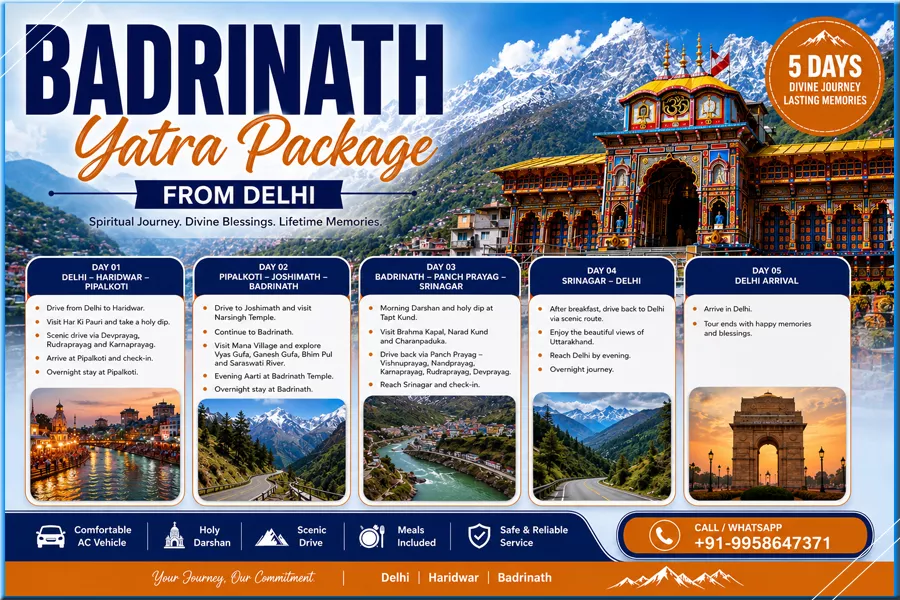
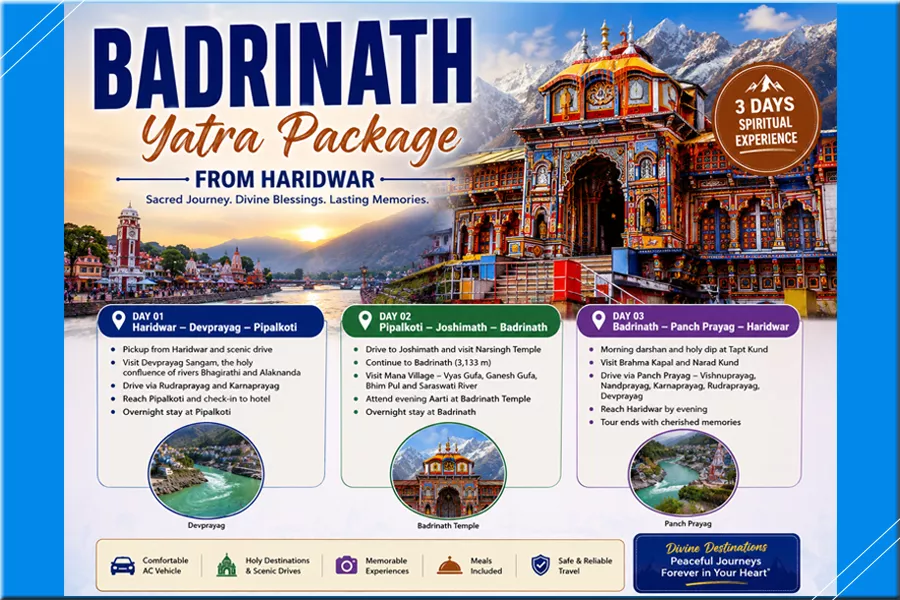
Both Haridwar and Rishikesh offer good transport options. You can find buses, private cars, and shared taxis that take you comfortably to Badrinath Dham. A Badrinath Yatra Package from Haridwar or Rishikesh gives you the most relaxed and comfortable way to start your Badrinath journey. You first explore the famous places of Haridwar and Rishikesh at the foothills of the Himalayas, and then you slowly climb up into the high-altitude Himalayan areas. This route helps your body adjust to the altitude and makes your journey safe and enjoyable.
Interesting Facts about Badrinath
- Badrinath Dham is the only temple among the Bada Chardham pilgrimage sites that sits in the Himalayas surrounded by snow-covered mountains.
- Badrinath Dham belongs to the group of 108 Divya Desams of Lord Vishnu, praised by twelve Tamil poet-saints called Alvars who lived between the 6th and 9th centuries C.E.
- Lord Vishnu once meditated at a spot where a berry tree called Badri gave him shade — this is why the place is called Badrinath. Another story says Goddess Laxmi herself took the form of a Badri tree to shield Lord Vishnu from the cold.
- Saint Adi Shankaracharya found the idol of Badrinath in the Alaknanda River and placed it inside a cave near Tapt Kund. Later, Ramanujacharya moved and installed the idol within the temple grounds.
- The sacred Brahma Kamal is a rare Himalayan flower that blooms only once every year during the monsoon season, and devotees offer it to Lord Vishnu at Badrinath Temple.
- A sacred Akhand Jyoti burns near the temple continuously for centuries without any fuel source. People believe that the Fire God Agni himself keeps this flame alive.
- The self-manifested idol of Lord Badrinath sat in the Alaknanda River for centuries without showing any sign of damage or erosion — devotees consider this a divine miracle.
Best Time to Plan Badrinath Temple Pilgrimage Yatra
The Badrinath Temple closes for six months every winter from November to April because of heavy snowfall and extreme cold. You should also avoid visiting during the monsoon months of July and August, as heavy rainfall causes landslides that block roads and make travel very risky.
The best time to plan your Badri Vishal Yatra falls between May to June and September to October. The temperature ranges from 12°C to 20°C during these months. The Badrinath Dham portal opens on the auspicious occasion of Akshaya Tritiya, which falls on 19 April 2027. The main temple, however, opens two days after that.
Badrinath Temple Yatra by Helicopter
Badrinath by helicopter gives every devotee a truly luxurious way to seek Darshan in total comfort. It saves you a lot of travel time and completely removes the need to drive through long, rough, and winding mountain roads. Helicopter travel also suits devotees who have limited time or face physical challenges due to age or health issues.
A helicopter takes you from Sahastradhara Helipad in Dehradun to the Badrinath Helipad in just about one hour. The Badrinath Helipad sits only 1 km away from the Badrinath Temple. During the helicopter ride, you enjoy breathtaking views of Himalayan peaks, snowy mountains, green valleys, and flowing rivers from high above in the sky.
History of Badrinath Temple
Physical Establishment
- The 8th century philosopher and saint Adi Shankaracharya established the Badrinath Dham after he discovered a black stone idol of Lord Vishnu in the Alaknanda River.
- He placed the idol, now known as Badri Vishal, inside a cave near the Tapt Kund. Over many years, people moved the shrine to its present location.
- The temple went through several repairs and restorations to fix damage caused by natural disasters, cold weather, and the passage of time. Even today, the Badrinath Temple stands strong with its traditional Garhwali-style architecture and bright, colorful exterior.
Mythological Establishment
- According to Hindu legend, Lord Vishnu once sat in deep meditation at Badrinath. To save him from the bitter Himalayan cold, Goddess Laxmi took the form of the Badri tree and sheltered him.
- Touched by her devotion and love, Lord Vishnu named the place ‘Badrika Ashram’ and called himself ‘Badrinath,’ meaning the husband of Badri.
Places to Visit in Badrinath Tour Packages
Badrinath Temple and Tapt Kund
Visit the highly sacred Badrinath Temple and take a dip in the nearby hot spring known for its healing properties. Feel amazed by the beautiful temple architecture and soak in the powerful spiritual energy that fills the entire place.
Brahma Kapal
If you want to perform rituals for loved ones who have passed away, make sure you visit Brahma Kapal. Many families carry out Pind Daan, Shradh, and other ancestral rituals here. People also believe that at this very spot, Lord Shiva prayed to seek Lord Brahma’s forgiveness after cutting off one of his heads.
Neelkanth Peak
People name this snow-covered peak after Lord Shiva and consider it his symbolic form in the mountains. It gives you amazing panoramic views from all sides and is especially famous for its stunning sunrise. The tall peak also forms the perfect backdrop for the Badrinath Temple.
Alaknanda River
This river makes a wonderful addition to your Badrinath trip. You can sit by the river and enjoy the peaceful surroundings with the gentle sound of flowing water. The calm atmosphere helps you relax and feel a deep sense of spirituality around this sacred river.
Joshimath
Joshimath sits just a few kilometers away from the Badrinath Temple and serves as a great base for outdoor activities like skiing, spiritual visits to the Shankaracharya Math, and exciting trekking adventures.
Tapovan
This place is a paradise for trekkers. It has natural geothermal activity and several hot springs. Despite sitting at a very high altitude, this meadow offers stunning views of the Himalayan landscape all around.
Top Things to Do on Your Badrinath Trip
1. Seek Blessings at Badrinath Temple
Walk through the colorful gates of the Lord Vishnu shrine and receive the Darshan of Badri Vishal. Offer prayers and Aarti to the deity, perform sacred rituals, and ask for God’s blessings. You will feel divine energy filling the air all around you and experience deep spiritual peace.
2. Take a Dip in Tapt Kund
This natural hot spring sits right next to the grand temple. Its warm waters soothe your tired body and people believe it also heals many health problems. Pilgrims traditionally take a few dips in the Kund before they enter the Badrinath Temple.
3. Explore Mana Village
After you complete your spiritual activities, take time to relax and enjoy the nearby Mana Village. Whether you fall in love with the village’s charming rustic beauty or the stunning natural scenery all around, Mana Village will leave a lasting impression on your heart.
4. Visit Vasudhara Falls
Take a short trekking trip from Mana Village to the beautiful Vasudhara Falls. The cascading water, the sounds of the stream, and the green surroundings will fill you with fresh energy. People believe that the falling water only touches those who carry a pure soul.
5. Marvel at Charan Paduka
According to Hindu belief, when Lord Vishnu came down to earth, he first placed his feet on a large boulder and left his footprints on it. This ancient rock formation, known as Charan Paduka, holds those sacred marks, and thousands of devotees come to see it with great devotion.
6. Gorge on Local Cuisine
Enjoy the spicy, nutritious, and truly delicious food of Uttarakhand during your Badrinath Yatra:
- Mandua Roti: A flatbread made from a healthy mix of lentils and vegetables.
- Jhangora: A warm and comforting porridge made from wholesome barnyard millet.
- Chainsoo: Roasted black gram cooked with several spices, rich and earthy in taste.
- Aloo Ke Gutke: Sauteed potatoes with savory Himalayan spices, served beautifully with Poori.
- Thechwani: Crushed radish and potato cooked with tangy spices that give it a wonderful flavor.
7. Go Souvenir Shopping
A market near the Badrinath Temple and another one in Mana Village give you great options for shopping. Here is a list of things to buy:
- Religious Items: Idols and figurines, Rudraksha beads, incense and camphor
- Handwoven Woolen Garments: Shawls and stoles, sweaters and caps
- Handicrafts and Art: Wooden carvings, traditional Garhwali artwork, paintings of Himalayan landscapes
- Local Edibles: Herbal teas and spices, Buransh juice, organic honey
- Books and Literature: Books on Hindu scriptures, local folklore of the Garhwal region
- Jewellery and Accessories: Traditional silver jewellery and semi-precious stones with spiritual significance
Travel Tips for Safe Badrinath Journey for Pilgrims
- Choose the Peak Months: Always plan your Badrinath trip during mid-April to June or September to October for the best weather.
- Accommodation Booking: Book your hotels well in advance because rooms fill up quickly during the busy pilgrim season.
- Physical Fitness: Start practicing breathing exercises and daily walking well before your trip, as the journey involves a fair amount of trekking.
- Wear Modest Clothes: Always wear covered and decent clothing in Badrinath. Revealing clothes show disrespect toward the sacred religious traditions of this holy place.
Badrinath Yatra Essential Packing List
- Full sleeve T-shirts and thermal wear
- Trekking pants (comfortable fit)
- Sturdy trekking boots with good ankle support
- Flip flops for shared washrooms
- Woolen socks and gloves
- Woolen sweaters
- UV water purifier and 1 liter insulated water bottle
- Anti-fungal cream and mosquito repellent
- Energy bars, glucose powder, dry fruits and nuts
- Waterproof cases or covers
- Solar charger and high-capacity power bank
Weather-Specific Clothes
- Summer visits: Light cotton clothes, light jackets, light gloves, a windcheater, hats, and sunglasses.
- Autumn visits: Thermal layers, one or two heavy down jackets, scarves, socks, and gloves.
Prohibited Items in Badrinath Dham
- Alcohol, drugs, or non-vegetarian food items are never allowed.
- Cooking gas cylinders and any inflammable substances are strictly prohibited.
- Leather items or any weapons must not be carried into the temple premises.
Religious Items to Carry
- Small diya and matchbox
- Container for holy water
- Roli and Kumkum
- Agarbatti (incense sticks) and camphor
- Prayer book and chanting beads for meditation
Frequently Asked Questions about Badrinath Tour Packages
Q1. How to register for Badrinath Yatra?
Visit the official Chardham Yatra portal and register yourself. Fill in your personal details, select Badrinath as your destination, choose your travel dates and mode of travel, and upload your ID proof such as an Aadhaar Card. After submission, you will receive an e-pass with a unique Yatra Registration ID. Download and save this e-pass as you will need it at several checkpoints during your journey.
Q2. Is Badrinath Yatra by helicopter safe?
Yes, the helicopter trip to Badrinath is very safe. Skilled and experienced pilots handle all helicopter flights. The flying crew trains specifically to navigate the challenging Himalayan terrain.
Q3. When does the Badrinath Yatra start in 2027?
The Badrinath Dham opens on 24 April 2027.
Q4. What is the price of the Badrinath Yatra by helicopter?
The Badrinath Dham Yatra Package by helicopter ranges from Rs. 30,000 to Rs. 1 Lakh. The price depends on your starting point, the services included, the level of luxury, and the duration of travel.
Q5. How to plan Badrinath Yatra?
Decide whether you want to travel by road or helicopter. Choose your dates and plan your route from Haridwar through Devprayag, Srinagar, Rudraprayag, Joshimath, and then Badrinath. Book accommodation in advance, create a detailed itinerary covering nearby attractions, and pack warm clothes, medicines, and ID proof.
Q6. How much time will I get for VIP Darshan?
Helicopter Yatris get three hours for VIP Darshan.
Q7. How far is the Badrinath helipad from the main temple?
The Badrinath helipad sits about 1 km away from the main temple entrance.
Q8. Which helipad is best for Badrinath Helicopter Yatra?
Sahastradhara Helipad is the most convenient and closest helipad for Badrinath Helicopter Yatra.
Q9. Is there any helicopter service from Delhi to Badrinath?
All helicopter trips to the Dham temples start from Sahastradhara Helipad in Dehradun.
Q10. How far is Badrinath from Rishikesh by road?
Badrinath is approximately 294 km from Rishikesh by road.
Q11. What is the best time to visit Badrinath?
May to June and September to October are the best months to plan your Badrinath trip.
Q12. How can I go to Badrinath?
- By Flight: Jolly Grant Airport in Dehradun is the nearest airport to Badrinath.
- By Railways: Rishikesh Railway Station is the nearest railway station, with trains connecting from many cities.
- By Roadways: Buses run daily from nearby cities, and private taxis and cabs are also available.
Q13. Can we go to Badrinath in our own car?
Yes, you can drive to the holy shrine of Lord Badri in your own car. However, the mountain roads can be very challenging, so we recommend booking a trusted travel company for a safer and smoother Badrinath Yatra.
Q14. What is Badrinath famous for?
Badrinath is famous for its powerful spiritual energy, its beautiful location deep in the Himalayas, and its connection to Lord Badri. The temple also sits near Mana Village, the last Indian village before the Tibet border.
Q15. What is the significance of Badrinath Yatra?
Badrinath stands as one of the most important pilgrimage sites in both the Chota Chardham and Char Dham Yatra circuits. Hindus strongly believe that seeking the blessings of Lord Badri fills their lives with lasting prosperity, happiness, and spiritual wealth.
Q16. How do I get to Joshimath from Badrinath?
The distance between Joshimath and Badrinath is 46 km by road. Direct cabs travel regularly between the two destinations, making the journey easy and convenient.
Badrinath is 45 kms from Joshimath and one can hire taxi/ cab easily from Joshimath to reach Badrinath Dham. Joshimath is the one of the best place to stay during Badrinath Yatra.
The distance from Haridwar to Badrinath is 320 kms and the route is completely hill road. So average time to reach from Haridwar to Badrinath is 8-9 Hrs.
The opening date of Badrinath Dham decided on Basant Panchmi each year. The closing date of Badrinath Dham is declared on Vijaydashmi.
Badrinath Opening & Closing Dates
It takes about 1-2 hours for darshan at Badrinath Dham as per queue and Pooja performed. There are number of Pooja at Badrinath Temple which one can perform at Badrinath Dham.
Badrinath Dham has accommodation facilities of 15000-20000 pilgrims at a time. There are number of Dharamshalas & Hotels in Badrinath. Pilgrims can book accommodations from number of Chardham Yatra websites or through travel agents.
Badrinath Dham is located in Uttarakhand, 320 kms from Haridwar. Badrinath Dham is well connected by road and could be reach by bus or car. Badrinath Dham is open for darshan from Apr-May to Oct-Nov.
Lord Vishnu is the diety of Badrinath Dham. He is being worshiped as Badrinarayana in Badrinath Temple. There are other Gods & Goddess including Kuber, God of wealth, sage Narada, Uddhava, Nar and Narayan, Goddess Lakshmi, Garuda (the vahana of Lord Vishnu), and Navadurga are also worshiped in Badrinath Dham.
The name of Badrinath Dham as Badrikasharam is mentioned in Hindu Vedic Scriptures. Badri word originated from local wild berry. Many believed that whne Lord Vishnu is on meditation in the mountains, Goddess Lakshmi took the form of Badri tree and put her shade on Lord Vishnu. When the Lord saw that he named this place as Badrinath.
As per Vaman Puran, the sages Nar-Narayan perform penances here and then this place called Badrinath. The Nar-Narayan sages are fifth avatar of Lord Vishnu.
Badrinath Dham has been mentioned as Badrikasharam (Badri-Ka-Ashram) in vedic Hindu scriptures including Bhagwat Purana. Badrinath Dham was looted many times by Tibetan looters and Indian Kings protect it from invaders. Fearing of invaders once the priests thrown the holy Lord Vishnu scriptures in Narad Kund at Alaknanda river to keep it safe. In 8th century, Adi Shankarcharya, a great saint brought back the scriptures and re-established Badrinath Dham. Now Badrinath Dham is a mega form of then Badrikashram.
Other Packages: Amarnath Package | Adi Kailash Package | Kainchi Dham Package
