
Is Amarnath trek difficult?
If you are planning the Amarnath Yatra for the first time, one question usually comes before everything else: is Amarnath trek difficult?
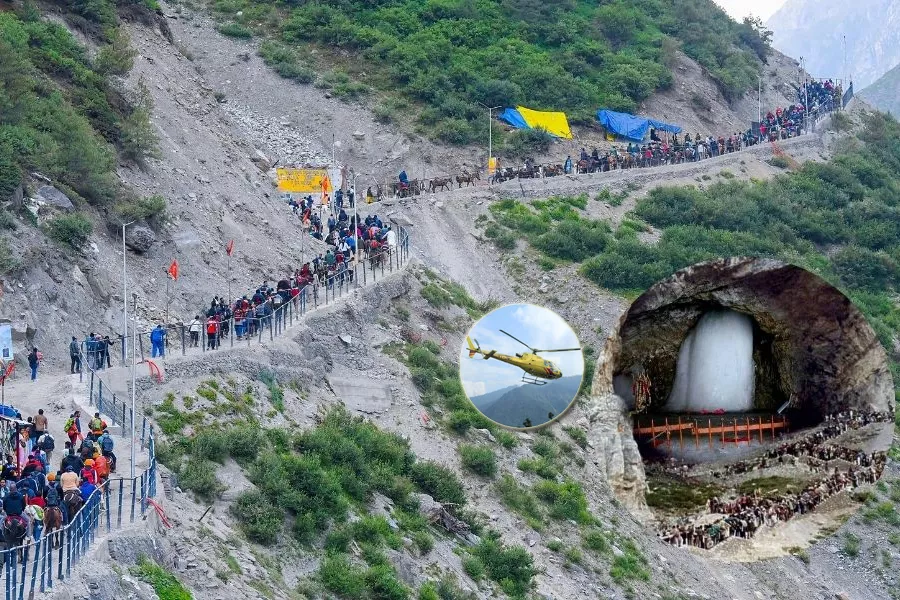
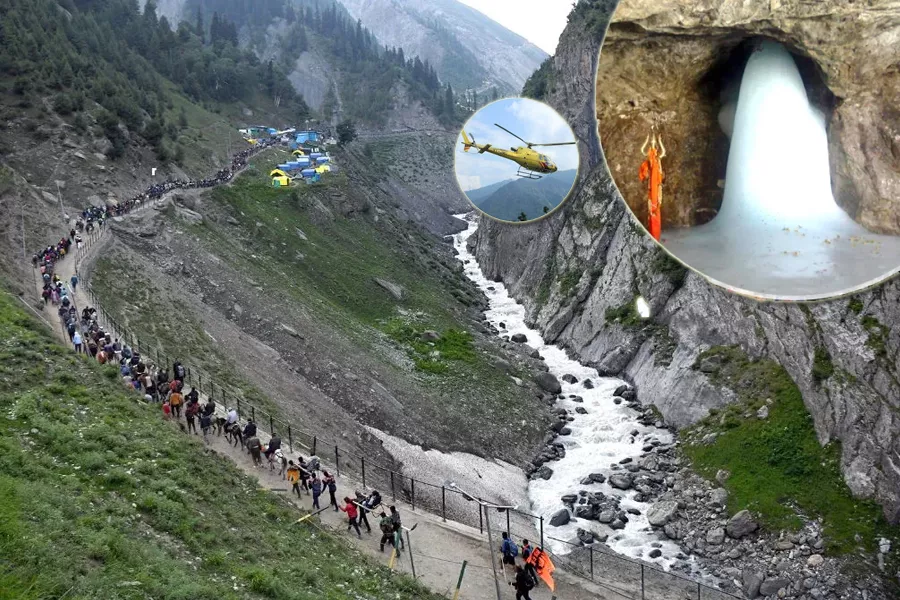
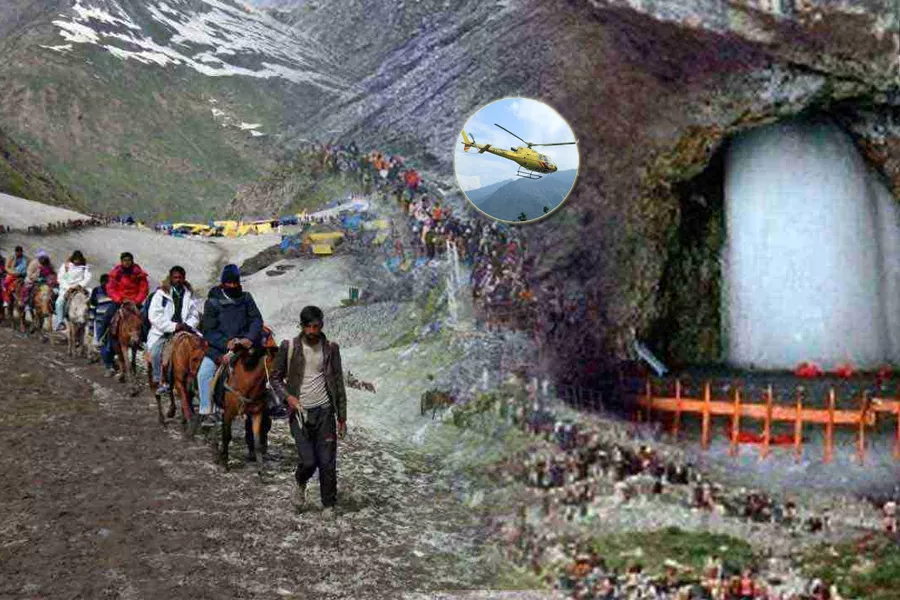
The honest answer is yes, it can be physically demanding, but the difficulty depends on much more than the distance. High altitude, steep sections, uneven ground, weather changes, cold, long walking hours and your own fitness all affect how the journey feels.
A strong trekker may manage the route comfortably with preparation. Someone who rarely walks long distances may find the same trail exhausting. The route you choose also makes a major difference.
For most travelers, the better question is not simply, “Is Amarnath easy or difficult?” It is:
“Which route, pace and travel option match my fitness and physical ability?”
Quick Answer: Is Amarnath Trek Difficult?
The Amarnath trek is best treated as a moderate to challenging high-altitude pilgrimage, rather than a normal sightseeing walk.
The challenge comes from a combination of:
- Long walking distances
- Steep climbs and descents
- High altitude
- Uneven and sometimes slippery terrain
- Cold, rain and sudden weather changes
- Reduced oxygen availability at altitude
- Crowds and slower movement on busy sections
- Consecutive hours of physical effort
The Baltal route is much shorter but steeper. The Pahalgam route involves a longer approach, but the walking effort is spread over several stages. This means a shorter route is not automatically an easier route.
Your age, walking ability, previous trekking experience, health, preparation, backpack weight and walking pace all matter.
Featured snippet answer
The Amarnath trek can be physically demanding because of high altitude, steep sections, long walking distances, uneven terrain and changing Himalayan weather. Difficulty varies by route and fitness. Baltal is shorter but steeper, while the Pahalgam route spreads the walking over a longer journey.
How Difficult Is the Amarnath Yatra Overall?
There is no official government grading such as “easy,” “moderate” or “hard” for the entire Amarnath Yatra. Any such rating is an editorial assessment.
For practical planning, I would place the walking pilgrimage in the moderate-to-challenging range.
That does not mean every traveler will experience it in the same way.
A reasonably active person who regularly walks, carries a light bag and follows a controlled pace may find the journey manageable. A person with little walking experience can struggle even if the distance looks manageable on paper.
Editorial difficulty framework
| Factor | Practical difficulty | Why it matters |
| Walking distance | Moderate to high | Long periods on your feet create cumulative fatigue |
| Elevation | High | The Holy Cave is at about 3,888 metres |
| Steepness | Moderate to high | Some sections require sustained uphill and downhill effort |
| Terrain | Moderate | Uneven, narrow or wet sections can slow you down |
| Weather | High variability | Rain, cold and wind can change trail conditions |
| Altitude | High | Reduced oxygen availability can affect even fit travelers |
| Endurance | High | The challenge is sustained effort, not just one climb |
| Beginner suitability | Possible with preparation | Fitness and route selection matter more than trekking history alone |
This is a planning framework, not an official classification.
What Makes the Amarnath Trek Difficult?
The difficulty comes from several factors working together.
1. Altitude
The Holy Cave is around 3,888 metres above sea level. The route also reaches higher terrain before descending toward Panchtarni on the traditional Pahalgam axis.
At altitude, physical effort can feel harder than it would at low elevation. You may breathe harder during an uphill section and need more rest.
Fitness helps with endurance, but it does not eliminate altitude-related risk.
2. Long walking
Distance matters because fatigue builds over time.
Walking for several hours on a mountain trail is very different from walking the same distance on a flat city road.
3. Steep sections
The route includes climbs and descents. Baltal is particularly important here because the official Shrine Board describes its 14 km route to the Holy Cave as a steep trek.
4. Uneven terrain
Mountain trails can include rocky, pebbled, muddy or wet sections. Your footwear and balance therefore matter.
5. Weather
The weather can change quickly in the mountains. Rain can make sections slippery, while cold wind can make exposed areas uncomfortable.
6. Crowds
A busy pilgrimage route does not always allow you to walk at your preferred speed. Crowding can cause stops and slow movement.
7. Recovery
The physical challenge is not only about reaching the cave. You also have to consider the return journey and your recovery afterward.
How Long Is the Amarnath Trek?
This is one area where online information often creates confusion because people use different starting points when calculating distance.
The Shrine Board currently describes the two main routes as approximately:
- Pahalgam route: around 32 km
- Baltal route: around 14 km
These figures refer to the pilgrimage routes toward the Holy Cave, not necessarily every road kilometre from the town where you stay.
On the Pahalgam side, Pahalgam to Chandanwari is about 16 km by road, and Chandanwari is the access-control point for the walking route. So you should not automatically interpret every “Pahalgam route” distance online as 32 km of walking from the town of Pahalgam.
The traditional route runs through:
Chandanwari → Pissu Top → Sheshnag → Panchtarni → Holy Cave
The Baltal route follows a different alignment toward the cave.
Walking time also varies. A person’s pace, rest breaks, weather, crowd movement, physical condition and route conditions can change the total time considerably.
For this reason, planning by a fixed number of hours can be misleading.
Pahalgam Route vs Baltal: Which Is More Difficult?
This is probably the most useful comparison for someone deciding whether they can manage the Amarnath Yatra.
| Factor | Pahalgam Route | Baltal Route |
| Approximate pilgrimage route | Around 32 km | Around 14 km |
| Starting access point | Chandanwari for the trek | Baltal |
| Walking profile | Longer, spread across stages | Shorter but steeper |
| Main challenge | Total endurance and multiple stages | Steep ascent and high effort over a shorter distance |
| Route landmarks | Pissu Top, Sheshnag, Panchtarni | Domail and other route sections toward the cave |
| Pacing | More opportunity to spread effort | Greater physical load over a shorter period |
| Best suited to | Travelers who can manage a longer itinerary | Travelers with strong walking endurance who prefer a shorter route |
| Main drawback | More time and walking overall | Steeper and more demanding per day |
Which route is easier?
There is no single answer.
If by “easier” you mean shorter, Baltal is easier on distance.
If you mean less concentrated physical effort, the Pahalgam route can be more manageable because the journey is spread across multiple stages.
The Shrine Board itself describes the Baltal route as a steep 14 km trek and notes that completing the 28 km return on the same day is suitable only for very fit people.
So the common assumption that “Baltal is easier because it is shorter” is misleading.
Shorter does not automatically mean easier.
How Does Altitude Affect Amarnath Trek Difficulty?
Altitude is one of the biggest differences between this pilgrimage and ordinary walking.
The Holy Cave stands at about 3,888 metres. On the traditional route, the trail crosses Mahagunas Pass at about 4,276 metres before descending toward Panchtarni.
This means the highest point of the route can be higher than the cave itself.
At higher altitude, the body has to work harder to get enough oxygen. You may notice that an uphill section that feels easy at home becomes much more tiring.
That is why:
- Walking slowly is important.
- Rest breaks matter.
- You should not race uphill.
- Drinking enough fluids is important.
- You should pay attention to how you feel.
- You should never assume fitness makes you immune to altitude problems.
If you develop significant symptoms or feel seriously unwell, follow the official medical guidance and seek help rather than trying to force yourself forward.
Is Amarnath Trek Suitable for Beginners?
Yes, some beginners can undertake it, but preparation matters.
You do not need to be an experienced Himalayan trekker to attempt the Yatra. But you should not treat it as your first long walk without preparation.
Ask yourself:
- Can I walk continuously for several hours?
- Can I handle uphill and downhill walking?
- Do I regularly exercise or walk?
- Can I recover after a demanding walking day?
- Can I walk comfortably in proper trekking shoes?
- Can I carry a small backpack without becoming exhausted?
- Am I comfortable following a slow pace rather than rushing?
- Have I checked the current medical and registration requirements?
If several answers are “no,” start preparing before the trip instead of relying on motivation alone.
Beginner readiness checklist
| Better prepared | Less prepared |
| Regular walking habit | Very little physical activity |
| Good basic endurance | No experience with long walks |
| Some stair or uphill walking practice | Heavy luggage |
| Comfortable trekking shoes | New footwear |
| Light backpack | Trying to complete the route too quickly |
| Gradual training | Ignoring weather or health warnings |
| Medical clearance where appropriate | |
| Understanding of altitude and weather risks |
Can Senior Citizens Do the Amarnath Trek?
Age alone does not tell you whether a person can handle a high-altitude pilgrimage.
Walking ability, general fitness, medical condition and the ability to tolerate altitude are more important factors.
There is also a current official age rule to consider. For Amarnath Yatra 2027, the Shrine Board did not register people below 13 or above 70 years of age. It also did not register women beyond six weeks of pregnancy. These rules can change in future seasons, so they must be checked again before booking.
A Compulsory Health Certificate was also required for registration in 2027.
For an eligible older traveler, route choice and support services deserve careful attention. A slower itinerary, lighter luggage and permitted pony or palki assistance may reduce the amount of walking, but they do not remove the effects of altitude.
If an older traveler has a medical condition or doubts about high-altitude travel, discussing the trip with a qualified healthcare professional before planning is sensible.
Is Amarnath Yatra Suitable for Families?
Families should judge the trip member by member.
A physically active adult may find the walking manageable while a child, older parent or less active family member may struggle.
For families, consider:
- Current age rules
- Each person’s walking ability
- Altitude exposure
- Weather conditions
- Rest requirements
- Food and hydration
- Medication needs
- Emergency contacts
- Backup arrangements
- Whether permitted support services are appropriate
Do not assume that a pilgrimage becomes easy just because you are traveling as a family.
A family plan should be based on the least physically capable eligible member, not the strongest person in the group.
What Fitness Level Is Needed?
You do not need to train like a professional trekker.
The most useful preparation is simple, consistent endurance work.
Cardiovascular endurance
Regular walking helps your body handle several hours of movement.
Leg strength
Uphill and downhill sections require stronger legs than flat walking.
Core strength
Basic core strength can help you stay stable on uneven ground.
Endurance
The ability to continue after several hours is more important than being able to walk very fast for a short period.
Recovery
Your body should be able to recover after a demanding day before the next stage.
The Shrine Board’s general health guidance has advised preparatory walking before the Yatra. Follow the latest official guidance rather than treating any one training routine as mandatory.
How to Prepare for the Amarnath Trek
A gradual approach is better than sudden intense training.
6 to 8 weeks before
Focus on building a regular walking habit.
- Walk consistently.
- Gradually increase duration.
- Add stairs or gentle uphill walking if suitable for you.
- Work on basic leg and core strength.
- Avoid sudden increases that cause pain or injury.
3 to 4 weeks before
Make the preparation more specific.
- Increase walking duration gradually.
- Practise with your actual trekking shoes.
- Test your daypack.
- Include some uneven or inclined walking where safely available.
- Learn to walk at a steady pace.
1 to 2 weeks before
Do not suddenly try to prove your fitness.
- Keep active.
- Avoid heavy last-minute training.
- Organise your documents.
- Check the latest official Yatra instructions.
- Confirm your registration.
- Check the latest weather information.
- Pack and test your essential equipment.
If you have a health concern, get appropriate professional medical advice before undertaking high-altitude travel.
What Should You Pack for the Amarnath Trek?
Keep the daypack practical rather than heavy.
Essential items
- Comfortable trekking shoes with good grip
- Warm layers
- Raincoat or waterproof outer layer
- Gloves
- Cap or warm head covering
- Sunglasses
- Sunscreen
- Water bottle
- Personal medicines
- Basic first-aid items
- Valid identification
- Yatra permit and required registration documents
- RFID card when issued
- Power bank
- Waterproof bag for important belongings
The Shrine Board specifically advises pilgrims to carry woollens, rain protection and waterproof footwear because weather conditions can be unpredictable.
Do not carry unnecessary luggage simply because you have space.
Every extra kilogram becomes noticeable after hours of walking.
Pony, Palki and Other Support Options
Walking is not the only permitted way to cover the route.
The Shrine Board provides for ponies, pithus and palki services at various points during the Yatra, subject to the arrangements and availability for that season.
These services can be useful for people who cannot comfortably walk the complete route.
However, do not assume:
- Every service operates on every section.
- Availability will always be the same.
- Prices remain unchanged from one year to another.
- A support service removes altitude-related challenges.
For current rates, routes and availability, check the official notified information for the year you travel.
Is Helicopter an Easier Alternative?
Helicopter service can be a useful alternative in seasons when the Shrine Board officially operates it.
The standard official helicopter routes have included services between:
- Neelgrath and Panchtarni
- Pahalgam and Panchtarni
- Srinagar and Neelgrath
But helicopter availability is not a permanent guarantee.
Important 2026 update
For the 2026 Amarnath Yatra, the J&K Government declared the Pahalgam and Baltal Yatra axes a No Flying Zone from July 1, 2026 until completion of the Yatra. The Shrine Board consequently stated that helicopter services for pilgrim travel would not be available during the 2026 Yatra.
The 2026 season also experienced route suspensions because of rain, track damage, maintenance and adverse weather.
This is an important lesson for future travelers:
Never buy an Amarnath package simply because it advertises helicopter travel. First confirm that the service is officially available for your exact Yatra season and date.
Even when helicopter service operates, it can be affected by weather and operational restrictions. Flying to a helipad also does not mean that every part of the pilgrimage experience disappears.
What Makes the Amarnath Trek Hard?
- Altitude: The Holy Cave is at about 3,888 metres.
- Long walking: Especially on the traditional Pahalgam approach.
- Steep sections: Particularly important on the Baltal route.
- Uneven terrain: Mountain paths require careful footing.
- Weather: Rain, wind and cold can change conditions quickly.
- Cold: Temperatures can fall sharply in exposed areas.
- Crowds: Busy periods can slow walking and create queues.
- Limited recovery: Fatigue can build during a long pilgrimage day.
- Repeated effort: You need enough endurance for the return journey too.
- Individual differences: The same trail can feel very different to different people.
What Makes the Trek Easier?
You cannot remove the mountain from the journey, but you can reduce avoidable difficulty.
- Train gradually before the trip.
- Maintain a steady pace.
- Keep your backpack light.
- Wear broken-in trekking shoes.
- Carry suitable rain and warm clothing.
- Take regular rest breaks.
- Stay hydrated.
- Do not race uphill.
- Follow the designated route.
- Follow current official instructions.
- Use permitted support services when appropriate.
- Pay attention to your health instead of trying to prove your fitness.
Good preparation makes the journey more manageable. It does not make a high-altitude trek risk-free.
Amarnath Trek Safety: When Should You Stop?
One of the most important rules is simple:
Do not push through serious symptoms just because you have already walked a long distance.
The Shrine Board advises pilgrims not to ignore signs of high-altitude illness and to descend to a lower elevation if symptoms develop.
Seek immediate assistance if you experience serious or worsening symptoms such as:
- Severe headache
- Confusion
- Difficulty breathing
- Persistent vomiting
- Severe weakness
- Loss of coordination
- Fainting
- Major deterioration in your condition
These symptoms require proper medical attention. Do not attempt to diagnose yourself or continue climbing simply because other people in your group are continuing.
Medical and emergency facilities are arranged along the Yatra route, but travelers should still take symptoms seriously and follow official medical instructions.
Who Should Take Extra Precautions?
Extra planning is sensible for:
- Older travelers
- People with limited fitness
- People who rarely walk long distances
- Travelers unfamiliar with high altitude
- People with existing medical conditions
- Anyone who has previously experienced altitude-related problems
A medical certificate required for registration is not a substitute for personal judgment during the journey.
If you have a significant health concern, ask a qualified healthcare professional whether high-altitude travel is appropriate for you.
Common Amarnath Trek Mistakes
- Assuming shorter means easier: Baltal is shorter, but it is also steep.
- Training only on flat roads: Flat walking does not fully prepare you for climbing and descending.
- Wearing new shoes: New footwear can cause avoidable discomfort and blisters.
- Carrying too much: A heavy bag increases fatigue.
- Walking too fast: Starting aggressively can leave you exhausted later.
- Ignoring weather: Mountain conditions can change quickly.
- Skipping rest: Rest is part of the journey, not wasted time.
- Ignoring symptoms: Do not treat serious symptoms as a normal part of the Yatra.
- Relying on old information: Registration rules, dates, routes, helicopter services and restrictions can change each year.
- Assuming helicopter service is guaranteed: Always verify the official status for your exact season.
Amarnath Trek Myths and Facts
Myth: “If I am fit, altitude cannot affect me.”
Fact: Fitness can improve endurance, but it does not eliminate altitude-related problems.
Myth: “Baltal is easy because it is only 14 km.”
Fact: The shorter route is also steep. A shorter distance can still create a greater daily physical load.
Myth: “The Pahalgam distance is 46 to 48 km of trekking.”
Fact: Numbers vary because some sources count the approach from Pahalgam while others count the walking route from the Chandanwari access point. The Shrine Board currently describes the Pahalgam pilgrimage route as around 32 km and separately lists Pahalgam to Chandanwari at about 16 km by road.
Myth: “Helicopter means no walking.”
Fact: Helicopter arrangements, when officially operating, use specific helipad sectors and do not mean every part of the journey disappears. The exact arrangement must be checked for the relevant year.
Myth: “A senior citizen can automatically manage the trek if they have completed other pilgrimages.”
Fact: Previous pilgrimage experience does not guarantee that a person will tolerate this altitude, terrain or walking demand.
Which Amarnath Option May Suit Different Travelers?
| Traveler | Potentially suitable approach |
| Experienced trekker | A walking route matched to current fitness and official route status |
| First-time trekker | Gradual preparation and careful route selection |
| Limited walking ability | Check permitted pony or palki support and current arrangements |
| Senior traveler within current age rules | Medical assessment, slower pacing and suitable support |
| Family | Plan around the least physically capable eligible member |
| Time-constrained traveler | Check whether officially operated helicopter service is available that year |
| Budget traveler | Walking route with planned accommodation and support |
| Traveler with medical concerns | Seek appropriate professional advice before planning |
This is a planning framework, not a medical recommendation.
Amarnath Trek: Easy, Moderate or Difficult?
If you need one simple answer:
Amarnath is not an easy trek.
A fair editorial assessment is:
Overall: Moderate to Challenging
But that label needs context.
Easy
A short, low-altitude walk with little elevation gain.
Amarnath does not fit this category.
Moderate
A physically active person can manage the journey with preparation, pacing and appropriate support.
Parts of the Amarnath experience can feel moderate to a prepared traveler.
Challenging
High altitude, steep sections, long walking and weather make the journey demanding.
This is the most useful category for planning the Amarnath Yatra.
Very challenging
This describes an individual experience when fitness is low, conditions deteriorate or the route creates an excessive physical load.
The trek should not be judged by a label alone. Your personal readiness matters more.
Amarnath Yatra 2026: Current Rules You Should Know
Because this article is intended to remain useful, separate the 2026 facts from permanent guidance.
For the 2026 Yatra:
- Advance registration began on 15 April 2026.
- A valid Compulsory Health Certificate (CHC) was required.
- For 2026, the CHC had to be issued on or after 8 April 2026 by an authorised doctor or medical institution.
- Registration was not available for people below 13 or above 70 years of age.
- Women beyond six weeks of pregnancy were not registered.
- Registered pilgrims had to collect an RFID card before starting the Yatra.
- Pilgrims were required to follow the date and route assigned to them.
- The 2026 Yatra began on 3 July 2026 and was scheduled to conclude on 28 August 2026.
- The Yatra routes were suspended from 9 August 2026 because of track repair and adverse weather conditions, while the traditional Chhari Mubarak procession marked the formal culmination on 28 August.
- Helicopter pilgrim services were unavailable during the 2026 Yatra because of the No Flying Zone order.
These details are year-specific. The next Yatra can have different dates, registration procedures, medical requirements, route arrangements and helicopter rules.
As of October 6, 2026, the 2026 pilgrimage season has ended. Anyone planning a future Yatra should use the latest Shrine Board notification instead of carrying 2026 dates forward.
Featured Snippet Answers
Is Amarnath trek suitable for beginners?
Yes, some beginners can manage the Amarnath trek with proper preparation, but it is not a casual walk. Beginners should build walking endurance, understand altitude risks, choose a suitable route and follow current medical and registration requirements.
Which Amarnath route is easier?
The answer depends on what you mean by easier. Baltal is shorter at around 14 km but steep. The Pahalgam route is longer at around 32 km from the pilgrimage access side, but the walking effort is spread over multiple stages.
How long is the Amarnath trek?
The Shrine Board describes the Pahalgam pilgrimage route as around 32 km and the Baltal route as around 14 km. Actual walking time varies with pace, rest breaks, weather, crowd conditions and physical ability.
Is Amarnath Yatra difficult for senior citizens?
It can be physically demanding for older travelers because of altitude, walking and steep terrain. Current age and health requirements must be checked for the relevant year. Eligible senior travelers should consider their fitness, medical needs, pacing and permitted support options.
How should I prepare for Amarnath trek?
Start preparing several weeks before the Yatra with regular walking and gradual endurance building. Add suitable uphill or stair practice, test your footwear and daypack, avoid sudden overtraining and follow the latest Shrine Board health and travel guidance.
FAQs
Is Amarnath trek difficult?
Yes. It is a high-altitude pilgrimage with long walking sections, steep terrain, changing weather and reduced oxygen availability. The level of difficulty varies by route and individual fitness.
Is Amarnath trek suitable for beginners?
Some beginners can do it if they prepare properly. Regular walking, gradual endurance training and careful pacing are important.
How many kilometres is the Amarnath trek?
The Shrine Board currently describes the Pahalgam pilgrimage route as around 32 km and the Baltal route as around 14 km. Distance figures can differ when road approaches are included.
Which Amarnath route is easier?
Baltal is shorter but steeper. Pahalgam involves more distance but spreads the journey across multiple stages. The better choice depends on the traveler’s physical ability and available time.
Is Baltal or Pahalgam route more difficult?
Baltal creates a greater concentrated walking challenge because of its steep profile. Pahalgam creates a greater total-distance and multi-day endurance challenge.
How many hours does the Amarnath trek take?
There is no single reliable time for everyone. Pace, rest breaks, weather, crowds, route conditions and fitness can change the walking time considerably.
Is Amarnath Yatra difficult for senior citizens?
It can be. Senior travelers should consider their walking ability, altitude tolerance and health. They must also meet the age and medical requirements in force for that year’s Yatra.
Can children do the Amarnath trek?
The answer depends on the current Shrine Board age rules. For 2026, children below 13 were not registered for the Yatra.
What fitness level is required for Amarnath Yatra?
Good walking endurance is useful. You should be able to handle sustained walking, uphill sections and recovery after physical effort. High-altitude tolerance cannot be guaranteed by fitness alone.
What is the highest altitude on the Amarnath route?
The Holy Cave is around 3,888 metres, while the traditional Pahalgam route crosses Mahagunas Pass at about 4,276 metres before descending toward Panchtarni.
Can I use a pony or palki?
Permitted pony, pithu and palki services are available at various points during the Yatra, subject to the arrangements and rules of the particular season.
Is helicopter service available for Amarnath Yatra?
Helicopter services may operate in some Yatra seasons. They are not guaranteed every year. During the 2026 Yatra, pilgrim helicopter services were unavailable because the Yatra routes were declared a No Flying Zone.
What should I carry for the Amarnath trek?
Carry proper trekking shoes, warm layers, rain protection, personal medicines, identification and required Yatra documents. Keep your backpack as light as practical.
How should I prepare for Amarnath Yatra?
Start several weeks before the trip with regular walking. Gradually build endurance, practise uphill walking if appropriate and test your footwear and daypack before travelling.
What should I do if I feel unwell during the trek?
Do not ignore serious or worsening symptoms. Stop, seek medical assistance and follow official instructions. The Shrine Board advises pilgrims to descend to a lower elevation if they develop symptoms of altitude illness.
Final Verdict: Can You Actually Do the Amarnath Trek?
The answer depends on your body, preparation and route, not simply on the word “trek.”
If you are reasonably active, can handle prolonged walking, prepare gradually and follow the official rules, the Amarnath Yatra may be manageable.
If you have limited mobility, low fitness or concerns about high-altitude travel, plan more carefully. Check the current eligibility rules, consider permitted support options and seek appropriate professional medical advice when needed.
The most important route lesson is simple:
Baltal saves distance, but it does not automatically save effort.
Pahalgam requires more total walking, but its staged nature can change how the physical workload feels.
And the most important safety lesson is even simpler:
Do not treat serious symptoms as something you must push through to reach the cave.
Before every Yatra season, check the latest Shri Amarnathji Shrine Board (https://jksasb.nic.in/) information for registration, health certificates, age rules, RFID requirements, route status, weather advisories before finalising tour package, transport or accommodation..
For a pilgrimage at this altitude, current information is part of your preparation.