Amarnath Yatra: Helicopter vs Trekking Compared
Choosing between a helicopter and trekking for Amarnath Yatra depends on more than travel time. Helicopter services can reduce the amount of walking when they operate, while the traditional Baltal and Pahalgam routes require pilgrims to travel on foot for much longer distances. Even helicopter passengers may need to walk from the landing point to the Holy Cave.
Your health, walking ability, budget, available time and the rules for your chosen pilgrimage season should guide the decision. Before planning around a flight, confirm that helicopter services will operate that year. For example, SASB announced that helicopter services would not be available during the 2026 Yatra because the pilgrimage routes were declared a no-flying zone. Future-season arrangements must be checked separately.
This guide compares the travel options, explains the two main trekking routes, outlines the costs and preparation involved, and helps you choose a plan that fits your circumstances.
Amarnath Yatra Helicopter vs Trekking: Quick Comparison
Helicopter travel generally reduces the amount of trekking, but it can cost more and depends on flight availability. Trekking requires more physical effort and time, but it does not depend on a passenger helicopter service operating. Both options involve high-altitude exposure and require compliance with the pilgrimage’s current rules.
| Factor | Helicopter Option | Trekking Option |
|---|---|---|
| Physical effort | Less trekking when flights operate, but the remaining walk can still be demanding. | Sustained effort over a longer mountain route. |
| Walking required | Usually includes walking between the landing area and the cave, unless current authorised arrangements state otherwise. | Walking forms the main part of the journey. |
| Time commitment | May reduce trekking time, but check-in, waiting, darshan and delays add time. | Usually requires more time for walking, rest and route logistics. |
| Cost | Includes a flight fare if services are available, plus other travel costs. | Avoids a helicopter ticket, but transport, accommodation, food and equipment still cost money. |
| Route choices | Historically included services to Panchtarni from designated departure points. | Baltal and Pahalgam are the two main traditional trekking routes. |
| Terrain exposure | Less time on the trekking trail, but not necessarily no walking. | Greater exposure to uneven paths, gradients and changing weather. |
| Weather disruption | Flights may be delayed or suspended. | Trail conditions and access may also be affected. |
| Advance planning | Requires checking official availability, fares, booking conditions and eligibility. | Requires route planning, registration, fitness preparation and accommodation planning. |
| Suitability for beginners | May reduce walking, but is not automatically suitable for every beginner. | Requires preparation and realistic assessment of fitness and altitude tolerance. |
| Flexibility | Depends on the booking and operating schedule. | Depends on access rules, route conditions and available services. |
| Main advantage | Can reduce the trekking distance when available. | Offers a longer on-foot pilgrimage without relying on passenger helicopter services. |
| Main limitation | Availability, cost, remaining walking and operational uncertainty. | Greater physical effort, longer journey and exposure to mountain conditions. |
Important: The helicopter routes described in older or general SASB guidance should not be taken as proof that flights will operate in the next season. Confirm current arrangements before choosing your route.
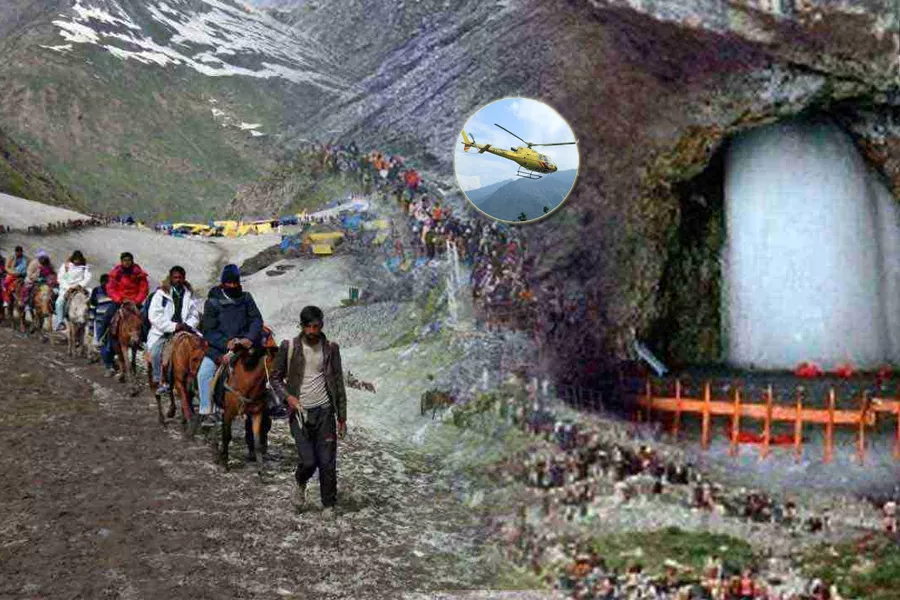
Understanding the Amarnath Yatra Routes
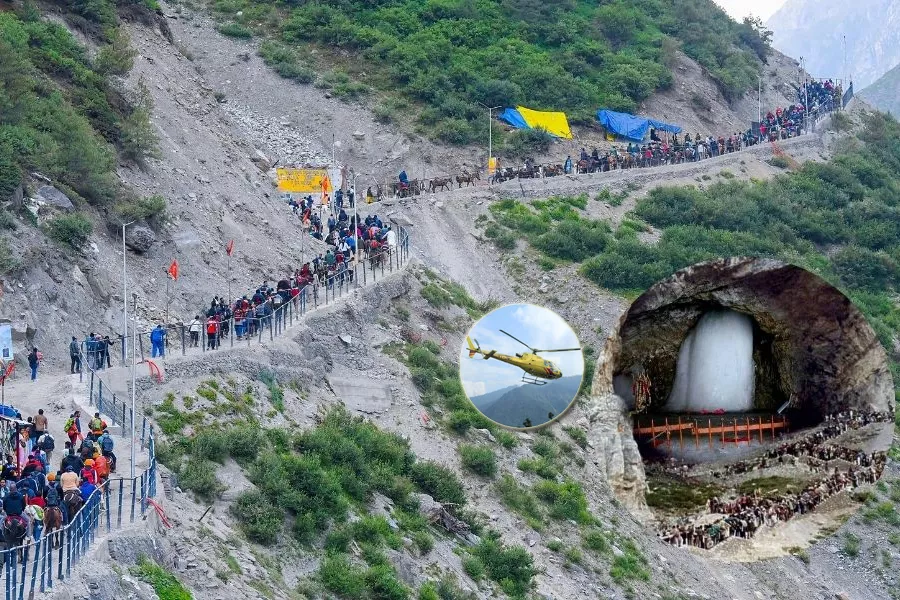
The two traditional trekking routes approach the Holy Cave from different directions. SASB identifies the Baltal route as approximately 14 km long and the Pahalgam route as approximately 32 km long. Its route information places the Baltal base camp near Sonamarg and the Pahalgam base camp at Nunwan, near Pahalgam.
These are approximate route distances. Your total journey also includes travel to the base camp, registration and access checks, rest stops, darshan and the return journey.
Baltal Route
The Baltal route begins at Baltal, near Sonamarg in Ganderbal district. The trekking route passes through Domail and Barari before reaching the Holy Cave. SASB describes the distance from Baltal to the cave as approximately 14 km.
What to Expect?
- Shorter trekking distance: Baltal is the shorter of the two traditional routes.
- Steeper sections: SASB notes that the path includes steep rises and falls.
- A demanding walking day: The shorter distance does not make it an easy walk. Gradients, altitude, weather and personal stamina affect how difficult it feels.
- Route-specific access checks: The official access control point has been identified at Domail, so pilgrims must follow the requirements published for their season.
- Planning for the return: Pilgrims should not assume they can finish at any time they choose. Follow official route timings and local instructions.
The Baltal route may appeal to pilgrims who prefer a shorter trekking distance and have prepared for the terrain. It may be a poor fit for someone who struggles with steep paths, has limited mobility or has not assessed their ability to cope with altitude.
Pahalgam Route
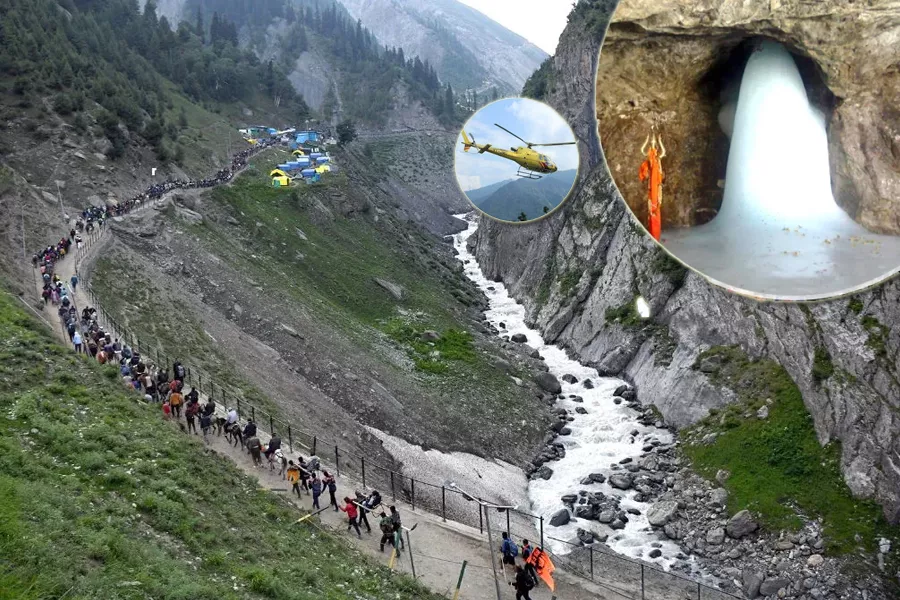
The Pahalgam route starts from the Nunwan base camp near Pahalgam. The traditional route passes through Chandanwari, Pissu Top, Sheshnag and Panchtarni before reaching the cave. SASB lists the route at approximately 32 km.
What to Expect?
- A longer journey: The Pahalgam route covers substantially more ground than the Baltal route.
- A staged itinerary: Pilgrims commonly plan the journey around stages and overnight stops rather than treating it as one short walk.
- Time for recovery: A longer itinerary allows planned breaks, but you still need to manage fatigue, hydration, food and sleep.
- Accommodation planning: SASB lists temporary tent accommodation at camps such as Nunwan, Sheshnag and Panchtarni during the Yatra period. Availability and rates vary, so verify current arrangements before travelling.
- Changing mountain conditions: A longer period on the trail means more exposure to changes in weather and trail conditions.
The Pahalgam route may suit pilgrims who have enough time and are prepared for a multi-stage mountain journey. It is not automatically easier because the route is longer or because travellers can divide it into stages.
Baltal vs Pahalgam: Route Comparison
| Route Factor | Baltal | Pahalgam |
|---|---|---|
| Starting base | Baltal, near Sonamarg | Nunwan, near Pahalgam |
| Approximate trekking distance to cave | 14 km | 32 km |
| General route character | Shorter, with steeper rises and falls | Longer, traditionally travelled in stages |
| Access control point identified by SASB | Domail | Chandanwari |
| Time planning | Plan for the trail, rest, darshan and return. | Plan for stages, overnight stops, rest, darshan and return. |
| Main consideration | Shorter does not mean easy. | Longer distance requires more time and stamina. |
Distances above refer to the traditional trekking routes. They are not road distances from Srinagar, nor do they describe the walking distance after a helicopter landing.
How the Amarnath Yatra Helicopter Option Works?
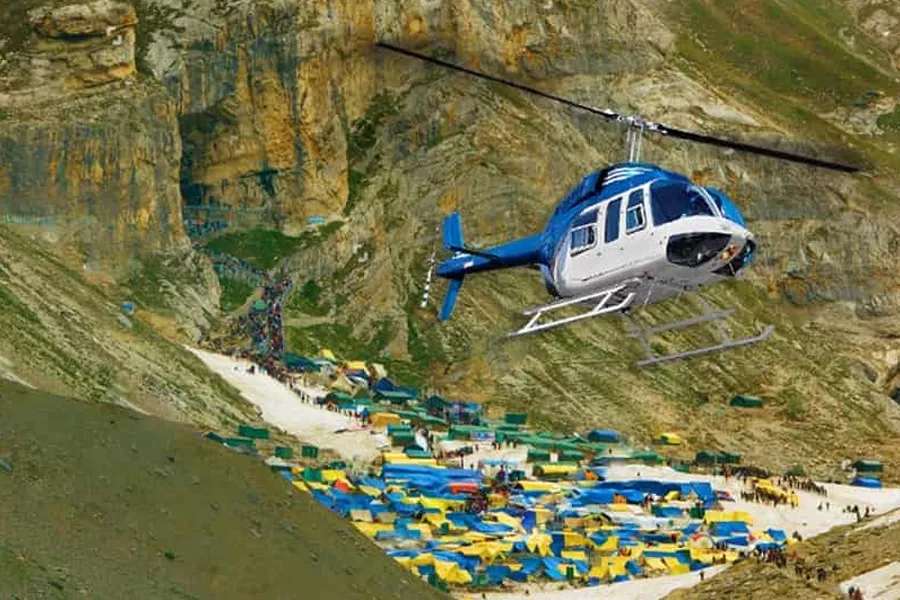
Helicopter services have historically operated on designated routes to help pilgrims reach the Panchtarni area. SASB’s general helicopter information lists routes between Neelgrath and Panchtarni, between Pahalgam and Panchtarni, and a Srinagar–Neelgrath service. These are route descriptions published by the Board, not a guarantee of availability in a future season.
The normal planning process, when services are officially available, involves the following steps:
- Check eligibility and registration. Read the applicable Yatra rules and complete the required registration and medical certification.
- Confirm helicopter availability. Look for a current official notice confirming that passenger flights are permitted for the season.
- Use the official booking channel. Verify the departure point, travel date, operator, fare and ticket terms.
- Arrange travel to the departure point. Your flight booking does not automatically include transport from Srinagar, Jammu or your hotel.
- Follow reporting instructions. Allow time for identification checks, reporting and other required procedures.
- Reach the designated landing point. The landing area is not the same as the Holy Cave.
- Arrange the remaining pilgrimage. Confirm the walking requirement, route access, darshan arrangements and permitted assistance.
- Plan the return. Follow the booking conditions and the instructions issued by the operator and pilgrimage authorities.
Departure Point, Landing Point and Cave: Know the Difference
These three locations serve different purposes:
- Departure point: Where the passenger boards the helicopter, if services are operating.
- Landing point: Where the helicopter sets the passenger down, historically including Panchtarni on the routes described by SASB.
- Holy Cave: The pilgrimage destination, which is separate from the helicopter landing point.
Confusing these locations can lead to unrealistic assumptions about walking distance, travel time and physical effort.
What About Helicopter Availability for the Next Yatra?
As checked on 23 October 2026, the official SASB website carries a notice that helicopter services were unavailable during the 2026 Yatra because both the Baltal and Pahalgam axes were declared no-flying zones. Do not use an old helicopter itinerary or fare table as evidence that passenger flights will operate in 2027. Wait for the relevant season’s official announcement.
How Much Walking Is Required After Taking a Helicopter?
This is one of the most important details to understand before booking.
A helicopter can shorten the approach to the shrine, but the published SASB route information identifies Panchtarni as a landing point rather than the cave itself. The Government of India’s Press Information Bureau has historically listed the Panchtarni-to-cave section as approximately 6 km on foot. That is a historical route reference, not a verified distance for a future season’s operating arrangements.
Press Information Bureau
Before relying on any walking estimate, confirm the following for your travel date:
- Whether passenger helicopter services are operating at all.
- The exact landing point specified on the official route.
- The current permitted route from the landing point to the cave.
- The walking distance currently advised by the authorities.
- Whether any permitted transport or mobility assistance is available.
- Any applicable reporting times, route restrictions and access conditions.
Why the Remaining Walk Can Still Be Difficult
Even a shorter walk may be demanding at high altitude. The path, elevation, cold, wind, crowding and the pilgrim’s physical condition all affect the effort required. A person who feels comfortable walking several kilometres at low altitude may still struggle in a mountain environment.
Do not plan the journey on the assumption that the flight will take you directly to darshan. Build time into your itinerary for the remaining walk, rest, changing conditions and the return to the designated point.
Amarnath Yatra Trekking Difficulty
The trekking option involves more sustained physical effort than a helicopter-assisted journey when flights operate. The actual difficulty depends on the chosen route, weather, pace, elevation and individual health.
Walking Distance and Gradient
The Baltal route is shorter but has steep rises and falls. The Pahalgam route is longer and is traditionally approached in stages. Neither route should be judged by distance alone. A shorter trail with steep sections can feel more demanding than a longer trail with a different profile.
Altitude and Stamina
The Holy Cave is at high altitude. Altitude can affect people differently, including those who exercise regularly. Fitness may help with sustained walking, but it does not guarantee that someone will tolerate altitude well.
Terrain and Weather
Expect mountain conditions rather than a uniform paved walking path. Uneven surfaces, cold, rain, wind and changes in visibility can make progress harder. The conditions on the day matter as much as the route description.
Recovery and Preparation
Before travelling, build up your walking endurance gradually, practise using your planned footwear and learn how to manage a day outdoors in changing weather. Ask a qualified healthcare professional whether high-altitude travel is suitable for you, particularly if you have an existing medical condition or a history of altitude-related problems.
Do not start the trek simply because the route appears short on a map. Follow current SASB guidance and instructions from on-site authorities.
Amarnath Yatra Helicopter vs Trekking: Cost Comparison
The total cost depends on your starting city, travel dates, accommodation, number of nights, meals and the services you use. Helicopter travel may add a substantial fare, while trekking still involves travel, food, accommodation and equipment costs.
A current helicopter ticket price cannot be responsibly quoted for the next season until the official fare and service availability are published. Helicopter services were suspended for the 2026 Yatra under the no-flying order. Any fare from an earlier season should be labelled historical, not presented as a current price.
| Cost Category | Helicopter Option | Trekking Option |
|---|---|---|
| Helicopter ticket | Pay the published fare only if services are officially available. | Not applicable. |
| Yatra registration | Check the current official registration fee and requirements. | Check the current official registration fee and requirements. |
| Travel to base or departure point | Transport to the designated heliport, plus onward travel as needed. | Transport to Baltal or Nunwan/Pahalgam. |
| Accommodation | May include a night near the departure point or along the route. | May include nights at base camps or en-route camps. |
| Meals and water | Budget for the whole journey, including delays. | Budget for walking days and overnight stops. |
| Clothing and equipment | Warm layers, rain protection and suitable shoes. | Trekking shoes, layers, rain protection and a suitable backpack. |
| Local assistance | Check permitted services and current rates. | Check permitted services and current rates. |
| Unexpected costs | Extra nights, transport changes or other disruption costs. | Extra nights, transport changes or other disruption costs. |
How to Compare the Real Cost?
Calculate the full journey, not just the helicopter ticket or the price of a trekking package. Include transport to the departure location, accommodation before and after the pilgrimage, meals, gear, local transport and a contingency for delays.
Do not assume that trekking will always be cheap. A longer stay can raise accommodation and travel costs. Equally, do not assume helicopter travel will always save money overall, especially if the schedule changes or you need additional nights.
For official updates, begin with the SASB website. Check the applicable registration, helicopter and accommodation information for your chosen season.
Which Option Saves More Time?
A helicopter flight may reduce the time spent on the trail, but flight duration is only one part of the trip.
Your total schedule may include:
- Road or other travel to the base camp or departure point.
- Registration and access checks.
- Reporting and boarding procedures.
- Waiting for operational clearance.
- Walking between the landing point and the cave.
- Darshan and time spent at the shrine.
- The return journey.
- Possible weather-related delays or additional accommodation.
Trekking usually requires more time on the route, particularly on the Pahalgam approach, which is traditionally divided into stages. The Baltal route is shorter but still requires time for walking, rest and the return journey.
If you have limited leave from work or a fixed onward flight, avoid a tightly packed itinerary. A booked flight does not guarantee that the operation will take place at the scheduled time.
Which Option Is Better for Beginners?
Neither option is automatically best for every first-time pilgrim.
A Helicopter May Be Worth Considering If:
- You want to reduce the amount of trekking.
- You meet all current eligibility and medical requirements.
- Services are officially operating for your chosen season.
- You can manage the remaining walk from the landing point.
- You have budgeted for the ticket and the rest of the trip.
- You understand that weather or official restrictions can affect the service.
Trekking May Be Worth Considering If:
- You have enough time for the chosen route.
- You have prepared for sustained walking.
- You can manage uneven terrain and the physical demands of altitude.
- You have planned rest, accommodation and food.
- You are willing to adjust your schedule to changing route conditions.
First-time pilgrims should focus on preparation rather than choosing the option that sounds easiest. If you have little mountain-walking experience, seek medical advice where appropriate, review the current route guidance and avoid treating the pilgrimage as a test of endurance.
Helicopter vs Trekking for Senior Citizens
Age alone does not determine whether someone can undertake the Amarnath Yatra. Health, mobility, stamina, altitude tolerance and the current eligibility rules all matter.
Helicopter travel, when available, may reduce the length of the walk. However, the remaining walk can still be demanding, and passengers must manage the altitude and any waiting or boarding requirements. A helicopter does not remove the need for medical assessment or make the pilgrimage risk-free.
Trekking may place greater demands on the legs, balance and stamina, especially on steep or uneven sections. Senior citizens who are considering the journey should discuss it with a qualified healthcare professional before booking or travelling.
For the 2026 Yatra, SASB’s published guidance stated that people under 13 or over 70 could not register, even with a Compulsory Health Certificate. This is a 2026 rule, not a guarantee of the eligibility limits for a future season. Check the latest official rules before making plans.
Which Option Is Better for Families?
Families should assess each traveller individually rather than choosing one option for the entire group without discussion.
Consider:
- Whether every person can manage the required walking.
- Whether children meet the current registration and eligibility rules.
- Whether older relatives can handle altitude and uneven terrain.
- How the group will manage cold, rain, food, water and rest.
- Whether the itinerary includes suitable overnight arrangements.
- How family members will stay together if their walking pace differs.
- What medical help and communication arrangements are available on the route.
A helicopter may reduce walking for some family members if services operate, but it may not remove the physical challenge for everyone. A trekking itinerary gives the group more walking to plan for and may require more time. Make the decision around the least mobile member’s needs, not just the preferences of the fittest traveller.
Weather Risks: Helicopter vs Trekking
Mountain weather can change quickly. Both travel options can be affected, but the ways they are affected differ.
Helicopter Travel
Flights depend on operating conditions and official permissions. Poor visibility, wind, other weather factors or security restrictions may delay or prevent operations. A ticket should not be treated as a guarantee of flight operation.
Before booking, read the current terms for cancellations, rescheduling and refunds. Confirm how the operator communicates changes and what you should do if the flight does not operate.
Trekking
Rain, cold, wind, slippery surfaces, snow or other route conditions can make walking difficult. Authorities may also impose access restrictions for safety or operational reasons. Do not continue into unsafe conditions simply to stay on schedule.
Check official weather updates and on-route instructions. Allow extra time and keep your itinerary flexible enough to accommodate delays.
A Practical Rule
Do not make non-refundable onward travel plans that depend on a precise flight or darshan time. Keep an emergency buffer for accommodation and transport changes.
Medical Fitness, Registration and Safety Requirements
Medical fitness and pilgrimage registration are separate from the choice between helicopter and trekking. Taking a helicopter does not automatically exempt a pilgrim from the Yatra’s rules.
Registration and Medical Certification
For the 2026 season, SASB required a valid Compulsory Health Certificate issued by an authorised doctor or medical institution. Its published guidance specified that the certificate had to be issued on or after 8 April 2026, and registration rules included age restrictions. Those dates and rules applied to the 2026 Yatra; do not reuse them for another season without checking the new instructions.
Before travelling in a future season:
- Open the official SASB website.
- Find the registration notice and current medical certificate format.
- Check the approved list of doctors or medical institutions.
- Confirm the minimum and maximum age rules and any other eligibility restrictions.
- Follow the required registration process and route-specific instructions.
- Carry the required permit, original identification and any other documents listed by the authorities.
High-Altitude Safety
The pilgrimage takes place in a high-altitude mountain environment. Watch for worsening headache, nausea, dizziness, unusual breathlessness, confusion or difficulty walking. These symptoms may indicate a serious problem, particularly if they worsen or appear together.
Seek prompt medical assistance and follow the advice of qualified medical personnel. Severe or worsening symptoms may require descent; do not try to push through them to complete darshan.
Consult a healthcare professional before the trip if you have a medical condition, take regular medication, have mobility limitations or are unsure whether high-altitude travel is appropriate. Carry prescribed medication as directed by your clinician.
Helicopter Booking Process for Amarnath Yatra
The safest starting point is the official SASB website: https://www.jksasb.nic.in/.
The Board’s published terms state that its official website is the recognised channel for its online services. They also warn that other websites claiming SASB authorisation are not recognised for bookings and that SASB has not authorised travel agents to book helicopter tickets or other services on its behalf.
Before attempting to book:
- Check the season’s announcement. Confirm that passenger helicopter services will operate during your chosen Yatra.
- Locate the official booking link. Follow the link published by SASB, rather than a sponsored search result or an unsolicited message.
- Verify the route and date. Make sure the departure location and landing arrangements suit your itinerary.
- Check passenger eligibility. Confirm that your registration and medical documents meet current requirements.
- Read the full terms. Review baggage rules, reporting time, cancellation conditions and any instructions about changes.
- Use accurate passenger details. Check every field before payment.
- Keep the confirmation and ID. Carry the documents required for boarding and access.
- Monitor official updates. Check for changes before leaving for the departure point.
The SASB terms published online state that bookings made through its website cannot be cancelled, postponed or brought forward by the user. Other provisions discuss the Board’s powers regarding cancellation and refunds. Because terms may change, read the exact conditions attached to your current-season booking before paying.
Scam warning: Avoid unofficial websites, social media offers and people who claim they can guarantee tickets through special access. Do not transfer money to an unverified personal account. If you are unsure about a booking channel, contact SASB using the helpline details published on its official website.
What Should You Pack for Each Option?
Packing should match the route, weather forecast, your medical needs and the restrictions published for your season.
For Helicopter Travellers
- Required Yatra permit and original photo identification.
- Booking confirmation and any required supporting documents.
- Warm layers suitable for high-altitude conditions.
- Rain protection.
- Comfortable walking shoes with good grip.
- Personal medication prescribed by your clinician.
- Water and permitted essentials.
- A small bag that meets the current baggage limits.
- Emergency contact details.
For Trekking Pilgrims
- Suitable trekking footwear that you have already tested.
- Layered clothing for cold and changing conditions.
- Waterproof outerwear.
- A backpack that you can carry comfortably.
- Water and food in line with route guidance.
- Sun protection.
- Essential first-aid supplies.
- Personal medication and relevant medical information.
- Required registration documents and identification.
- Emergency contacts and a plan for staying with your group.
Do not assume that all items are allowed on a helicopter or through every checkpoint. Verify the current baggage and prohibited-item rules before packing.
Common Mistakes to Avoid
- Assuming the helicopter eliminates all walking: Check the landing point and the current walking arrangements before deciding that you can manage the route.
- Using an old fare as the current price: Fares and services can change by season. Confirm them through official channels before budgeting.
- Booking through an unverified agent: Start at the SASB website and follow only the current official booking instructions.
- Ignoring medical requirements: Complete the applicable medical certification and registration steps even if you plan to use a helicopter.
- Choosing a route based only on distance: Consider gradient, altitude, weather, walking ability and recovery time.
- Underestimating mountain weather: Check current advisories and leave room for changes to the itinerary.
- Making tight onward connections: Delays can affect flights, road travel, darshan and return arrangements. Allow a buffer.
- Ignoring baggage restrictions: Check the current limits for your specific service rather than relying on an old packing list.
- Assuming a ticket guarantees a flight: Operational restrictions, weather and official decisions may affect services. Understand the relevant terms before paying.
- Pushing through worsening symptoms: Stop and seek medical help if you feel seriously unwell. Completing the pilgrimage is never more important than responding to a medical emergency.
Helicopter or Trekking: Which Should You Choose?
The right option depends on your priorities and what is officially available during your travel season.
Choose the Helicopter Option If:
- Passenger helicopter services are officially operating.
- You meet the current eligibility and medical requirements.
- You want to reduce the distance you trek.
- You can manage the remaining walking and altitude exposure.
- The total cost fits your budget.
- You can accommodate possible delays or cancellations.
Consider Trekking If:
- You have enough time for the route and recovery.
- You are physically prepared for sustained walking.
- You can manage uneven terrain and changing mountain conditions.
- You have planned rest stops, food and accommodation.
- You prefer the on-foot route and accept its greater physical demands.
If You Are a Beginner
Do not choose based on the assumption that one option is effortless. Review the route and medical guidance, assess your walking ability and allow enough time. If you have little experience with high-altitude travel, seek medical advice where appropriate.
If You Are Travelling with Senior Citizens
Base the decision on medical advice, mobility, current eligibility rules and the actual walking required. Do not assume that a helicopter makes the pilgrimage suitable for every older traveller.
If You Have a Limited Budget
Compare the full trip cost. Include transport, nights of accommodation, meals, equipment and possible delays. A helicopter fare is only one part of the budget, and trekking is not free of travel and lodging expenses.
If You Have Limited Time
Helicopter travel may reduce time on the trail when available, but check-in, waiting, walking, darshan and weather disruptions still matter. Keep extra time in the itinerary and avoid depending on a precise return time.
Final Recommendation
Choose the option that matches your health, mobility, available time and budget, and confirm that the route or service is authorised for your Yatra season. Helicopter travel can reduce trekking, but it does not remove altitude exposure or necessarily eliminate walking. Trekking requires more physical effort and usually more time, so it calls for suitable preparation and realistic expectations.
As of 23 October 2026, the official SASB notice says helicopter services were suspended for the 2026 Yatra because of a no-flying restriction. Do not assume that the same arrangements, routes or fares will apply in 2027. Check the official notice before booking transport or accommodation around a helicopter itinerary.
Frequently Asked Questions
Is Helicopter Travel Better Than Trekking for Amarnath Yatra?
It may be better for eligible pilgrims who want to reduce walking and have limited time. Trekking may suit those who are prepared for a longer mountain journey. Compare the current service availability, medical requirements, remaining walking, total cost and weather risks before deciding.
What Is the Difference Between the Baltal and Pahalgam Routes?
The Baltal route is approximately 14 km to the Holy Cave, while the Pahalgam route is approximately 32 km. Baltal is shorter but has steep rises and falls. The Pahalgam route is longer and is traditionally completed in stages. Follow current route instructions from SASB.
How Much Walking Is Required After an Amarnath Helicopter Ride?
The amount depends on the authorised landing point and current route arrangements. General SASB guidance identifies Panchtarni as a landing point, not the cave itself. Historical government information lists about 6 km between Panchtarni and the cave on foot. Verify the current distance and arrangements before relying on that figure.
How Much Does the Amarnath Yatra Helicopter Ticket Cost?
Check the fare published for your specific Yatra season. As of 23 October 2026, a current fare for a future season could not be verified, and helicopter services were suspended during the 2026 Yatra. Do not use an old ticket price as a current quote.
Where Can I Book Amarnath Helicopter Tickets Officially?
Start at the Shri Amarnathji Shrine Board website. Follow its current helicopter booking link only after confirming that services are available. SASB warns that it has not authorised travel agents to book helicopter tickets on its behalf.
Can I Complete the Amarnath Yatra Without Trekking?
Do not assume you can complete the pilgrimage without walking. Helicopter services described in general SASB information land at Panchtarni, from where the cave is reached separately. Other assistance may be available under the rules for a particular season, but you must verify the arrangements and your eligibility.
Which Option Is Better for Beginners?
Neither is automatically better for every beginner. Helicopter travel may reduce walking when available, while trekking requires greater preparation for sustained effort. Beginners should consider their health, walking ability, altitude tolerance, budget and available time before choosing.
Is Helicopter Travel Suitable for Senior Citizens?
It depends on medical fitness, mobility, altitude tolerance and the current eligibility rules. A helicopter may reduce the trekking distance, but it does not remove the remaining walk or high-altitude risks. Senior citizens should consult a qualified healthcare professional before travelling.
Which Option Is More Physically Demanding?
Trekking generally requires more sustained physical effort because pilgrims cover a longer distance on foot. Helicopter travel can reduce that effort when services operate, but passengers may still need to walk to the cave. Both options involve high-altitude exposure.
Does Weather Affect Amarnath Helicopter Services?
Yes. Mountain weather can affect flight operations, while official restrictions can also suspend services. Trekking routes may face difficult conditions or temporary access restrictions. Check current advisories and the terms that apply to your booking.
Can Helicopter Tickets Be Cancelled or Refunded?
The answer depends on the applicable booking terms and the reason for cancellation. SASB’s published online terms state that a user cannot cancel, postpone or bring forward an online booking. Review the current terms carefully and do not assume that every disruption guarantees a refund.
What Medical Certificate Is Required for Amarnath Yatra?
SASB specifies a Compulsory Health Certificate under its seasonal registration rules. The authorised format, approved doctors, validity dates and eligibility conditions can change. Check the current season’s official registration page rather than reusing a certificate checklist from a previous year.
Which Amarnath Route Is Shorter, Baltal or Pahalgam?
Baltal is shorter at approximately 14 km to the cave, compared with about 32 km from the Pahalgam route. These are approximate trekking distances, not road distances from Srinagar or Jammu. Baltal also includes steep sections, so the shorter distance does not guarantee an easier journey.
How Much Time Should I Allow for the Amarnath Yatra?
Allow time for travel to the base camp, registration and access checks, the trek or helicopter arrangements, darshan, rest and the return journey. The Pahalgam route is traditionally completed in stages. Add a buffer for weather, delays and extra accommodation instead of planning around a guaranteed finish time.
What Should I Check Before Choosing Helicopter or Trekking?
Confirm the current Yatra dates, registration, tour package and medical requirements, route access, helicopter availability, ticket conditions, walking distance, total budget and weather guidance. Choose only after considering your health, mobility, fitness and available time.