
Bhairav Nath Temple, Kedarnath
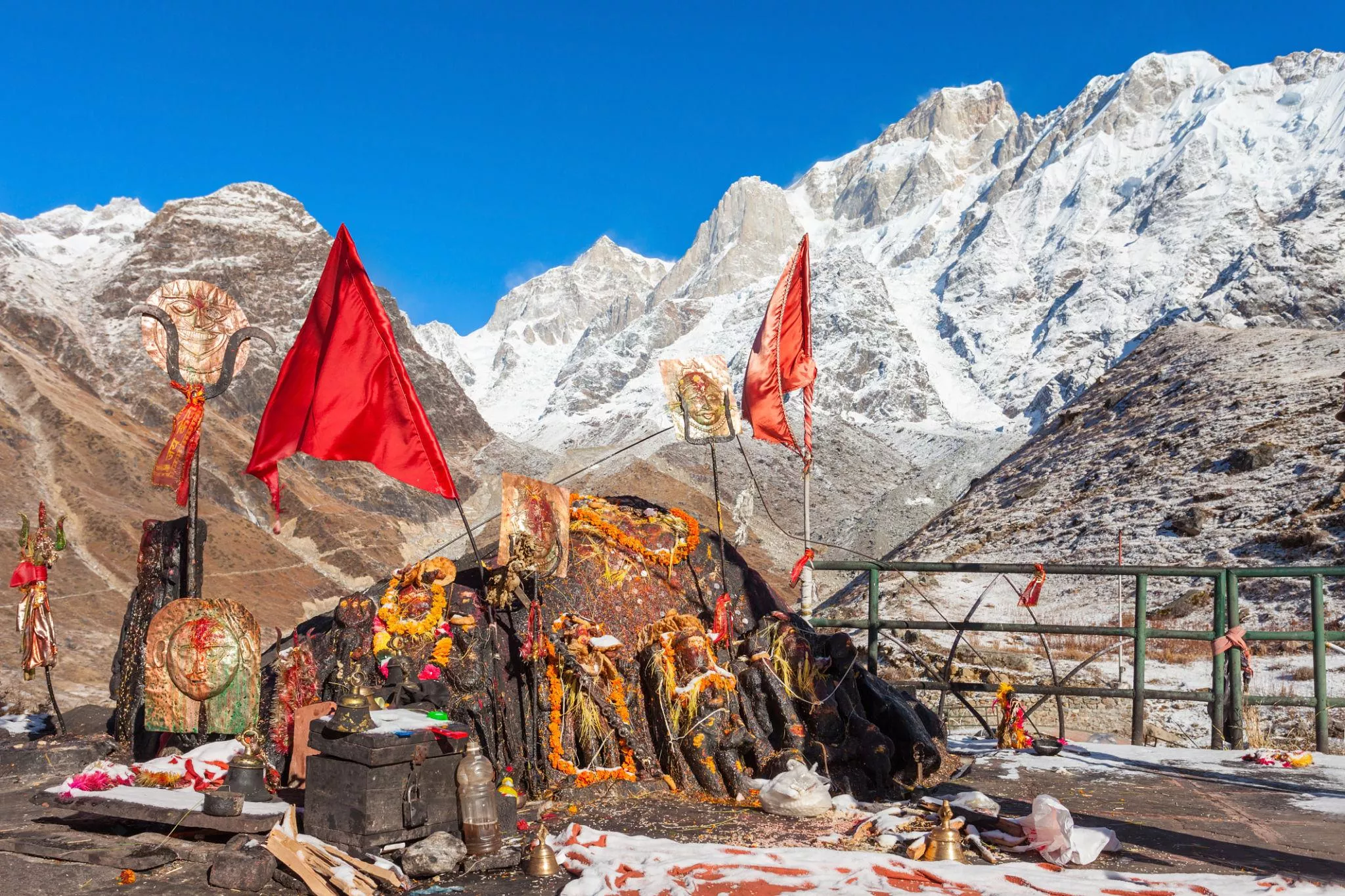
Bhairav Nath Temple is an important religious shrine near Kedarnath Temple in Uttarakhand. Dedicated to Bhairav, a fierce manifestation associated with Lord Shiva, the temple holds a special place in the traditional beliefs of Kedarnath. Devotees regard Bhairavnath as the guardian of Kedarnath Dham, particularly during the winter months when the main shrine remains closed.
Located on an uphill route from Kedarnath Temple, Bhairav Nath Temple also attracts visitors for its Himalayan surroundings and views of the Kedarnath valley. The shrine is approximately 500 metres from the main temple according to Uttarakhand Tourism, while the tourism department describes the uphill walk as around 800 metres. This guide explains its religious importance, history, walking route, visiting season and essential travel precautions.
Where Is Bhairav Nath Temple Located?
Bhairav Nath Temple is located in the Kedarnath region of Rudraprayag district, Uttarakhand. It stands on a hill above the main Kedarnath Temple and is dedicated to Bhairavnath, who is traditionally worshipped as the guardian deity of the region.
The shrine lies within the high-altitude Himalayan landscape surrounding Kedarnath. Visitors reach it by following an uphill walking route from the main temple.
Location Details
| Particular | Information |
|---|---|
| Temple name | Bhairav Nath Temple |
| Alternative name | Bhairon Baba Mandir |
| Location | Kedarnath, Rudraprayag |
| State | Uttarakhand |
| Main deity | Bhairavnath |
| Distance from Kedarnath Temple | Approximately 500 metres as listed by official sources |
| Uphill walk | Around 800 metres as described by Uttarakhand Tourism |
| Approximate altitude | High-altitude Kedarnath region; a separate verified altitude for this shrine is unavailable |
The official tourism website identifies the temple as a nearby attraction and describes its approach as an uphill trek. It also mentions views of Kedarnath Temple and the surrounding valley.
What Is the Geographical Setting Like?
The temple occupies a hilltop position overlooking the Kedarnath area. Its surroundings include steep mountain slopes, the Himalayan landscape and views towards the main Kedarnath shrine.
Unlike the main temple, which sits within the central pilgrimage settlement, Bhairavnath Temple requires visitors to climb above the settlement. This makes the short visit physically different from ordinary movement around the Kedarnath temple complex.
History of Bhairav Nath Temple, Kedarnath
The religious history of Bhairavnath Temple is closely connected with the traditions of Kedarnath and the worship of Lord Shiva.
The BKTC identifies Bhairavnath as the principal Gana of Lord Shiva and describes him as Kshetrapal, meaning the guardian or protector of the sacred region.
According to the temple committee’s published account, the first Rawal of Kedarnath, Bhikund, established the idol of Bhairavnath in 3001 BCE. This date belongs to the traditional account recorded by the committee. It should not be treated as an independently established archaeological date without supporting historical evidence.
Traditional Background
In Hindu religious traditions, Bhairava represents a powerful form associated with Lord Shiva. Different regions worship Bhairava in different forms and under different names.
At Kedarnath, devotees associate Bhairavnath with the protection of the sacred landscape. His shrine has become an important part of the local pilgrimage tradition.
Historical Records and Uncertainties
There is an important distinction between the religious history of the shrine and its documented construction history.
The BKTC provides a traditional account of the establishment of the idol. However, the available official information does not provide a detailed archaeological chronology, verified construction date or a complete record of subsequent renovations.
For this reason, visitors should understand the temple’s antiquity through its religious traditions rather than rely on unsupported historical claims.
Religious Significance of Bhairav Nath Temple
Bhairav Nath Temple holds religious importance because of its connection with Lord Shiva and the traditional guardian role assigned to Bhairavnath.
Who Is Bhairav Nath?
Bhairav, also called Bhairavnath, is a fierce manifestation of Lord Shiva in Hindu traditions. Devotees worship him as a powerful divine protector.
The name Bhairava appears in several Hindu religious traditions, where he represents protection, strength and the destruction of negative forces.
What Is the Meaning of Kshetrapal?
Kshetrapal means the protector or guardian of a particular sacred area.
At Kedarnath, devotees regard Bhairavnath as the Kshetrapal of the region. The belief connects him with the protection of Kedarnath Dham and its surrounding landscape.






Why Do Pilgrims Visit Bhairavnath Temple?
Many devotees include this shrine in their Kedarnath pilgrimage because of its traditional religious importance.
Their reasons include:
- Offering prayers to Bhairavnath.
- Seeking the blessings of the guardian deity.
- Following the local religious tradition associated with Kedarnath.
- Visiting another important Shiva-related shrine.
- Experiencing the mountain setting around the temple.
For many visitors, the visit adds another religious dimension to their Kedarnath journey.
Why Is Bhairav Nath Temple Important for Kedarnath?
The most important connection between the two temples is the traditional belief that Bhairavnath protects Kedarnath.
According to the religious belief followed in the region, Bhairavnath guards the Kedarnath shrine and its surrounding area, especially during winter.
Kedarnath Temple closes annually because of severe winter conditions and heavy snowfall. During this period, the regular worship arrangements shift to the winter seat at Omkareshwar Temple in Ukhimath.
Devotees believe that Bhairavnath continues his protective role over the Kedarnath region during this period.
Uttarakhand Tourism and BKTC both record this guardian-deity association.
Is Bhairavnath Considered the Guardian of Kedarnath?
Yes. According to the established local religious tradition, Bhairavnath is the Kshetrapal or guardian deity of Kedarnath.
This is a matter of religious belief rather than a historical claim that can be independently measured or proven.
Bhairav Nath Temple Trek and Route
The visit to Bhairavnath Temple involves a short uphill walk from the main Kedarnath shrine.
Although the distance is considerably shorter than the main Kedarnath trek from Gaurikund, visitors should not underestimate the effort. The route climbs above an already high-altitude settlement.
Starting Point
The walk begins from the Kedarnath temple area. Visitors follow the uphill approach towards Bhairavnath Temple.
Uttarakhand Tourism describes the route as an approximately 800-metre uphill trek. Its Kedarnath destination information separately lists the temple at around 500 metres from the main shrine.
How Much Time Does the Trek Take?
There is no reliable official fixed walking-time schedule available for this particular approach.
The time depends on:
- Individual walking speed.
- Fitness and acclimatisation.
- Weather and trail conditions.
- Crowd movement.
- Rest breaks.
- The condition of the route on the day of the visit.
Allow additional time rather than planning the visit around an assumed fixed duration.
What Is the Difficulty Level?
The walk is short in distance but involves an uphill climb at approximately 3,500 metres above sea level.
This matters because the body receives less oxygen at high altitude. Visitors who have already completed the Gaurikund-to-Kedarnath journey may also feel tired.
For this reason, the walk can be more demanding than its distance suggests.
What Footwear Should You Wear?
Choose comfortable trekking or walking shoes with a good grip. Avoid smooth-soled footwear, loose slippers and footwear that becomes slippery on wet ground.
Take extra care after rain or when frost affects the trail.
How to Reach Bhairav Nath Temple, Kedarnath
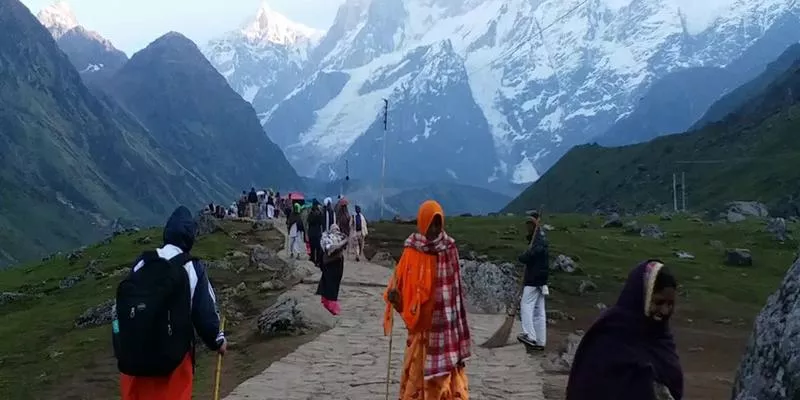
Visitors must first reach Kedarnath before they can visit Bhairavnath Temple. There is no separate motorable road to the shrine.
Step 1: Reach Haridwar or Rishikesh
Haridwar and Rishikesh are important starting points for road journeys towards Kedarnath.
You can reach these towns by train, bus or private vehicle from several major Indian cities.
Step 2: Travel to Sonprayag
From Haridwar or Rishikesh, travel by road through the Garhwal region towards Sonprayag.
The route generally passes through:
- Devprayag
- Srinagar
- Rudraprayag
- Guptkashi
- Sonprayag
Road travel time depends on traffic, weather, road conditions and seasonal restrictions.
Step 3: Continue to Gaurikund
Gaurikund is the road-accessible starting point for the traditional Kedarnath trek.
During the pilgrimage season, local transport arrangements operate between Sonprayag and Gaurikund. Follow the current administration instructions for this section.
Step 4: Reach Kedarnath
From Gaurikund, visitors travel towards Kedarnath by trekking, pony, palki or authorised helicopter services.
The official tourism and pilgrimage information describes the main trekking route as approximately 16 km, although some government pages publish different route figures. Check the current official route information before travelling.
Step 5: Walk Uphill to Bhairavnath Temple
After reaching Kedarnath, proceed towards the Bhairavnath Temple trail.
Follow the local route signs and ask temple personnel or local authorities about current access conditions.
Important: Helicopter services to Kedarnath do not provide direct access to Bhairavnath Temple. Visitors must separately cover the uphill walk from the Kedarnath settlement.
Best Time to Visit Bhairav Nath Temple
The best time to visit Bhairav Nath Temple is during the official Kedarnath pilgrimage season, generally from late April or May to October or early November.
The exact dates depend on religious calendar calculations, weather and official arrangements.
Summer: May to June
Summer is generally a suitable period for visiting Kedarnath.
- The pilgrimage season begins.
- Snow conditions gradually improve around accessible areas.
- Daytime weather is generally more favourable than winter.
- Large numbers of pilgrims visit during this period.
Carry warm clothing because temperatures can remain low even during summer.
Monsoon: July to August
Monsoon brings additional challenges to the Kedarnath region.
Heavy rain can affect walking conditions and road connectivity. Landslides and sudden weather changes may disrupt travel.
Check official weather and route advisories before planning the visit.
Autumn: September to October
September and October can offer favourable travel conditions when the weather remains clear.
However, temperatures fall, especially during mornings and evenings. The pilgrimage season also approaches its winter closure period.
Winter: November to April
Kedarnath experiences heavy snowfall and severe cold during winter. The main shrine closes for the winter season, and normal access to the high-altitude settlement becomes restricted.
Visitors should not plan a routine visit to Bhairavnath Temple during winter closure.
BKTC explains the winter worship arrangements for Kedarnath, while the tourism department identifies winter as a period of heavy snowfall and difficult access.
Bhairav Nath Temple Timings and Darshan Information
Visitors often search for separate opening hours and darshan timings for Bhairav Nath Temple.
However, a reliable, regularly updated official timetable for this individual shrine is not available in the published information reviewed for this article.
Keep the following points in mind:
| Visitor information | Current information |
|---|---|
| Temple opening date | Seasonal; confirm locally |
| Daily darshan timings | Separate verified schedule not available |
| Aarti timings | Confirm with temple authorities |
| Entry fee | No verified separate fee information found |
| Winter access | Subject to seasonal closure and local arrangements |
| Visitor restrictions | Follow current administration instructions |
Do not rely on fixed timings published by unofficial websites without confirmation.
For the latest information, check the official BKTC website and local Kedarnath administration announcements.
What Can You See at Bhairav Nath Temple?
A visit to Bhairavnath Temple combines religious worship with an opportunity to experience the surrounding Himalayan landscape.
The Temple and Religious Atmosphere
The shrine is dedicated to Bhairavnath. Its religious identity is closely connected with the guardian tradition of Kedarnath.
Visitors can offer prayers and observe the local worship practices.
Views of Kedarnath Temple
One of the main reasons people visit the hilltop shrine is the elevated perspective of the Kedarnath settlement and its surroundings.
The official tourism department specifically mentions views of Kedarnath Temple and the verdant Kedarnath Valley from this uphill route.
Photography Opportunities
The surrounding mountain scenery can provide photography opportunities, particularly during clear weather.
Visitors should avoid blocking walking paths or disturbing worshippers while taking photographs. Follow any photography restrictions displayed at the shrine.
Bhairav Nath Temple and Kedarnath Temple: Difference and Connection
Both shrines hold religious importance in the Kedarnath pilgrimage, but they have different deities and roles.
| Feature | Kedarnath Temple | Bhairav Nath Temple |
|---|---|---|
| Main deity | Lord Shiva | Bhairavnath |
| Religious identity | One of the twelve Jyotirlingas | Guardian deity shrine |
| Location | Main Kedarnath settlement | Uphill from Kedarnath |
| Religious importance | Major Shiva pilgrimage shrine | Traditional Kshetrapal shrine |
| Accessibility | Reached from Gaurikund by trek or authorised helicopter service | Requires an additional uphill walk |
| Pilgrimage experience | Main darshan and worship | Additional prayers and mountain visit |
| Traditional connection | Main sacred shrine | Believed to protect Kedarnath |
How Are the Temples Connected?
The connection is based on the traditional belief that Bhairavnath protects Kedarnath Dham.
Therefore, devotees visiting the main Kedarnath shrine often include Bhairavnath Temple in their pilgrimage.
The two temples serve different religious purposes but remain closely connected through local Shaiva traditions.
Is Bhairav Nath Temple Trek Difficult?
The Bhairavnath Temple walk is short compared with the main Kedarnath trek, but the uphill gradient and high altitude make it physically demanding for some visitors.
Three factors deserve attention.
- Uphill terrain: The trail climbs above the main Kedarnath settlement. This requires additional effort, particularly for visitors who have already walked a long distance.
- High altitude: Kedarnath is situated at approximately 3,580 metres. Physical exertion at this elevation can feel harder than at lower altitudes.
- Weather: Cold temperatures, rain, snow and slippery surfaces can affect the walking experience.
Visitors should avoid rushing and take breaks when necessary.
Can Senior Citizens and Children Visit Bhairav Nath Temple?
Senior citizens and children may visit the temple if the route is accessible and their physical condition allows them to complete the uphill walk.
However, age alone cannot determine whether someone can manage the climb.
Advice for Senior Citizens
- Assess your ability to walk uphill before starting.
- Allow time for rest breaks.
- Wear shoes with a strong grip.
- Avoid rushing or competing with other visitors.
- Consult your doctor before the trip if you have an existing medical condition.
- Do not continue if you develop unusual breathlessness, dizziness or severe fatigue.
Advice for Families Travelling with Children
Children should remain under adult supervision throughout the walk.
Carry sufficient water, warm clothing and basic snacks. Avoid taking very young children onto the trail in poor weather or when they are already exhausted.
High-Altitude Health Precautions
AIIMS Rishikesh advises pilgrims travelling to high-altitude Char Dham destinations to watch for symptoms such as headache, nausea and dizziness. It also recommends seeking medical assistance if symptoms worsen.
Anyone experiencing severe breathlessness, confusion or difficulty walking should seek medical assistance immediately rather than continue the climb.
Important Things to Carry Before Visiting
The uphill walk requires less preparation than the main Kedarnath trek, but suitable clothing and basic supplies remain important.
| Item | Why You Need It |
|---|---|
| Trekking shoes | Provide grip on uneven and uphill surfaces |
| Warm jacket | Protects against cold mountain weather |
| Raincoat | Helps during unexpected rain |
| Drinking water | Supports hydration during physical activity |
| Light snacks | Useful when you need extra energy |
| Personal medicines | Keeps prescribed treatment available |
| Identification | Useful during pilgrimage and travel checks |
| Mobile phone | Helps with communication where network coverage is available |
| Power bank | Provides additional battery backup |
| Sunglasses | Protects your eyes from strong sunlight |
| Sunscreen | Helps protect exposed skin |
| Small backpack | Keeps essentials easy to carry |
Pack light. A heavy bag can make the uphill walk more tiring.



Important Travel and Safety Tips
Keep these precautions in mind before visiting Bhairav Nath Temple:
- Start early: Plan your visit during daylight and allow enough time for the uphill walk.
- Check the weather: Mountain conditions can change quickly. Check the forecast before leaving.
- Follow local instructions: Respect any temporary restrictions imposed by the administration.
- Walk slowly: Avoid unnecessary physical exertion at high altitude.
- Stay hydrated: Drink water regularly.
- Wear suitable footwear: Choose shoes with good traction.
- Avoid bad weather: Do not attempt the uphill route during unsafe conditions.
- Carry essential medicines: Keep prescribed medication with you.
- Protect the environment: Do not throw plastic, food wrappers or other waste along the trail.
- Respect religious customs: Maintain the sanctity of the temple and follow local practices.
- Keep additional time: Do not schedule the visit immediately before an important departure or other fixed activity.
- Watch for altitude symptoms: Seek medical help if you experience worsening headache, nausea, dizziness or breathing difficulties.
The AIIMS Rishikesh medical advisory and Uttarakhand health department guidance are useful references for preparing for high-altitude travel.
Nearby Places to Visit Around Bhairav Nath Temple
The Kedarnath region has several religious and natural attractions. Some are close to the main temple, while others require separate walking routes.
1. Kedarnath Temple
The main Kedarnath shrine is the most important religious destination in the area. Dedicated to Lord Shiva, it is one of the twelve Jyotirlingas and a major destination in the Char Dham pilgrimage.
Bhairavnath Temple is traditionally associated with protecting this sacred shrine.
Distance: Approximately 500 metres by the official tourism description, with an additional uphill approach.
2. Adi Shankaracharya Samadhi
Adi Shankaracharya Samadhi is located behind the main Kedarnath Temple. It is associated with Adi Shankaracharya, the Hindu philosopher and spiritual teacher.
The BKTC identifies the samadhi as an important religious landmark near the main shrine.
Distance: Within the immediate Kedarnath temple area.
3. Gandhi Sarovar (Chorabari Tal)
Gandhi Sarovar, also known as Chorabari Tal, is a high-altitude lake in the Kedarnath region.
It is a separate trekking destination and should not be confused with the short uphill walk to Bhairavnath Temple.
Visitors should check current trail accessibility and weather conditions before planning this excursion.
Distance: Requires a separate walk from the Kedarnath settlement. Confirm the current route and distance locally.
Planning These Nearby Visits
Do not assume that all attractions can be covered comfortably in a single short outing. The altitude, walking effort, weather and available daylight should determine your schedule.
Frequently Asked Questions About Bhairav Nath Temple
Where Is Bhairav Nath Temple Located in Kedarnath?
Bhairav Nath Temple is located on a hill above the main Kedarnath Temple in Rudraprayag district, Uttarakhand. It is dedicated to Bhairavnath, whom devotees worship as the traditional guardian deity of Kedarnath.
How Far Is Bhairav Nath Temple from Kedarnath Temple?
The BKTC and Uttarakhand Tourism describe the distance as approximately 500 metres. Uttarakhand Tourism also mentions an uphill walk of around 800 metres. The actual walking distance depends on the approach and measurement used.
Why Is Bhairav Nath Temple Famous?
Bhairav Nath Temple is famous for its religious connection with Kedarnath. Devotees believe Bhairavnath protects the Kedarnath shrine and its surrounding region, particularly during the winter closure.
Who Is Bhairav Nath?
Bhairavnath is a fierce manifestation associated with Lord Shiva in Hindu traditions. He is worshipped as a protector and guardian deity. At Kedarnath, devotees regard him as Kshetrapal of the region.
What Is the History of Bhairav Nath Temple?
According to the BKTC, the first Rawal of Kedarnath, Bhikund, established the idol of Bhairavnath in 3001 BCE. This is a traditional account published by the temple committee, not an independently verified archaeological date.
What Is the Religious Significance of Bhairav Nath Temple?
The temple represents the traditional guardian role of Bhairavnath in the Kedarnath region. Devotees visit the shrine to offer prayers and seek blessings as part of their Kedarnath pilgrimage.
Is Bhairav Nath Temple Worth Visiting?
Yes, it is worth considering if you have sufficient time and can manage the uphill walk. It offers an additional religious experience and views of the Kedarnath region.
How Difficult Is the Bhairav Nath Temple Trek?
The walk is short but uphill. Its high-altitude setting can make the climb tiring, particularly for visitors who have already completed the main Kedarnath trek.
How Much Time Does It Take to Reach Bhairav Nath Temple?
An official fixed walking duration is not published in the sources reviewed. The time depends on walking speed, fitness, weather, trail conditions and rest breaks.
What Is the Best Time to Visit Bhairav Nath Temple?
May, June, September and October are generally suitable months during the Kedarnath pilgrimage season. Avoid planning the visit without checking weather conditions and official temple opening arrangements.
What Are the Bhairav Nath Temple Timings?
A separate verified daily darshan timetable is not readily available. Visitors should confirm the current visiting arrangements with temple authorities after reaching Kedarnath.
Is There an Entry Fee for Bhairav Nath Temple?
No separate entry fee is listed in the official information reviewed for this article. Confirm any current arrangements locally.
Can Senior Citizens Visit Bhairav Nath Temple?
Senior citizens can consider visiting if their fitness and medical condition allow them to manage the uphill walk. Anyone with heart, lung or other relevant medical concerns should seek medical advice before the pilgrimage.
Can Children Visit Bhairav Nath Temple?
Children can visit when the trail is accessible and weather conditions are suitable. Parents should supervise them throughout the walk and avoid unnecessary exertion.
Is Bhairav Nath Temple Open During Winter?
The shrine is associated with Kedarnath’s seasonal pilgrimage arrangements. Winter brings heavy snowfall and difficult access to the region. Visitors should not assume that the temple remains accessible during the winter closure.