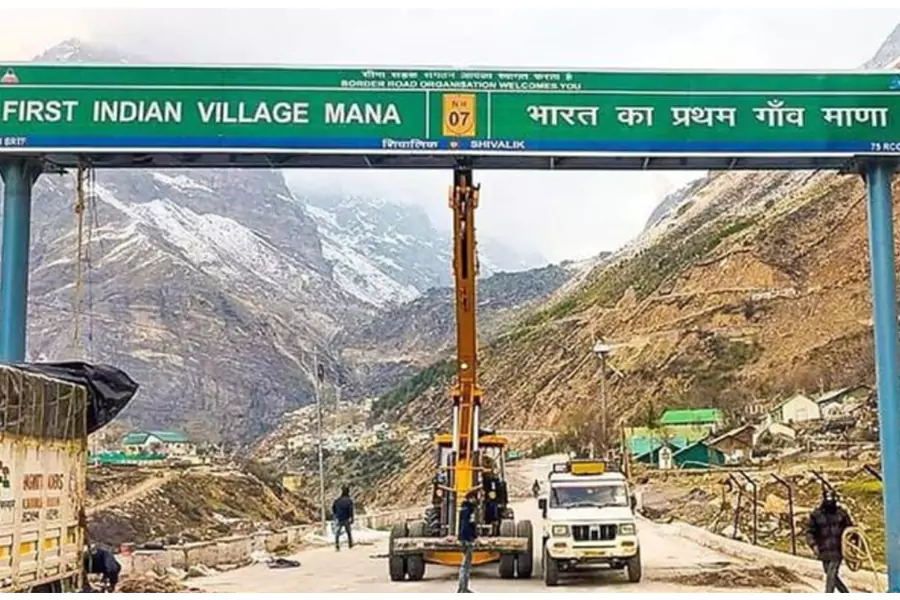
Mana Village
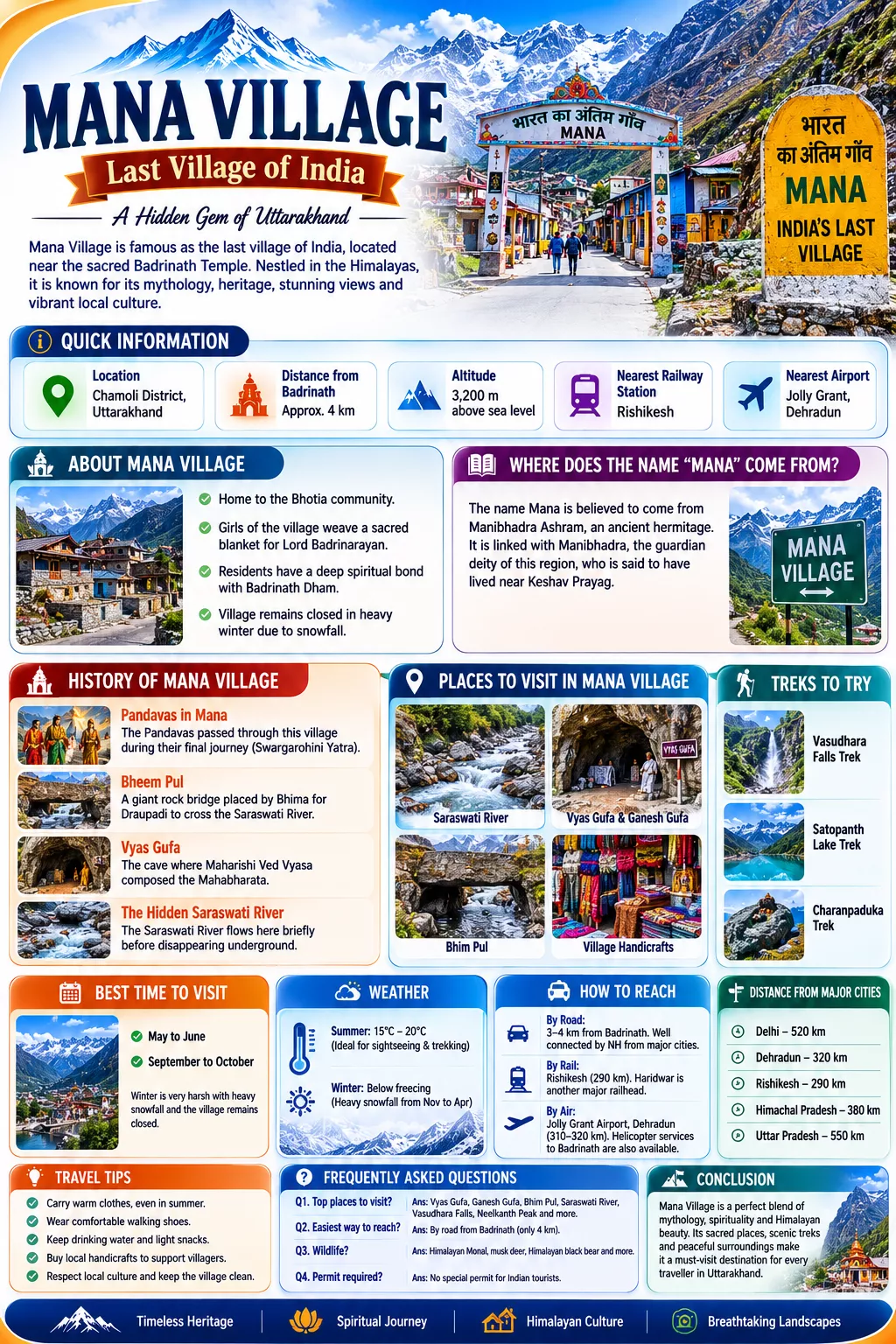
Mana Village is famous as the last village of India, located just a few kilometres from the sacred Badrinath Temple in Uttarakhand. Nestled in the majestic Himalayas near the Indo-Tibetan border, this charming village is known for its rich mythology, ancient heritage, breathtaking landscapes, and vibrant local culture. Every year, thousands of pilgrims and travellers visit Mana to explore its spiritual landmarks and experience the simple lifestyle of the Himalayan people.
More than just a border village, Mana Village is closely connected with the Mahabharata, several ancient legends, and important pilgrimage sites. Before planning your visit, it’s worth learning about its fascinating history, attractions, and travel essentials to make the most of your journey.
About Mana Village
The residents of Mana Village have maintained a deep spiritual connection with Badrinath Dham for generations. One of the most cherished traditions takes place just before the temple closes for winter, when the unmarried girls of the village weave a sacred woollen blanket that is ceremonially offered to Lord Badrinarayan. This centuries-old custom continues to be an important part of the temple’s closing rituals.
Most villagers belong to the Bhotia community, a tribe known for its rich cultural traditions and seasonal migration. During winter, many families move to lower-altitude regions because of heavy snowfall and return to Mana once the weather becomes favourable. Historically, the Bhotia people were engaged in trade between India and Tibet before the border was closed.
Quick Information
- Location: Chamoli District, Garhwal, Uttarakhand
- Distance from Badrinath: Approximately 4 km
- Altitude: 3,200 metres above sea level
- Nearest Railway Station: Rishikesh Railway Station
- Nearest Airport: Jolly Grant Airport, Dehradun
Where Does the Name “Mana” Come From?
According to local belief, the name Mana originated from Manibhadra Ashram, an ancient hermitage believed to have existed in this region. The village is closely associated with Manibhadra, who is regarded as the guardian deity of the area. As per local folklore, Manibhadra is believed to have lived near the holy confluence of the Alaknanda and Saraswati rivers at Keshav Prayag, not far from Mana Village.
History of Mana Village
Pandavas in Mana
According to local tradition, Mana Village is closely linked to the Mahabharata. It is believed that the Pandavas passed through this village while undertaking their final journey towards heaven, known as the Swargarohini Yatra.
Bheem Pul
One of the village’s most famous attractions is Bheem Pul, a massive natural rock bridge spanning the Saraswati River. According to legend, Bhima placed this enormous stone across the river so that Draupadi could safely cross during the Pandavas’ journey.
Vyas Gufa
Vyas Gufa is believed to be the cave where Maharishi Ved Vyasa composed the Mahabharata. According to tradition, Lord Ganesha wrote down the epic while Vyasa dictated each verse without interruption.
The Hidden Saraswati River
The Saraswati River flows visibly for a short distance near Mana before disappearing underground. Local beliefs associate this mysterious phenomenon with an ancient legend connected to Maharishi Ved Vyasa, making the site one of the village’s most fascinating attractions.
Sacred Land
Mana is much more than the last village near the border. It is a place where mythology, spirituality, Himalayan culture, and spectacular natural beauty come together, making it one of Uttarakhand’s most unique destinations.
Places to Visit in Mana Village
Saraswati River
The Saraswati River flows with tremendous force near Mana before disappearing beneath the rocks. According to Hindu tradition, the river represents Goddess Saraswati, the goddess of wisdom, learning, and knowledge. The roaring sound of the river and its dramatic landscape make this spot truly unforgettable.
Vyas Gufa & Ganesh Gufa
Vyas Gufa is one of the most sacred places in Mana Village. Devotees believe that Maharishi Ved Vyasa composed many of the ancient scriptures here. Nearby is Ganesh Gufa, where Lord Ganesha is believed to have written the Mahabharata as Vyasa narrated it.
After exploring these sacred caves, many visitors enjoy a simple cup of hot tea and freshly prepared Maggi from the local stalls, a popular experience among travellers visiting Mana.
Bhim Pul
Bhim Pul is one of the most visited attractions in Mana Village. The giant rock bridge naturally stretches across the rushing Saraswati River and is deeply connected with the Mahabharata. According to legend, Bhima placed this massive stone to help Draupadi continue the Pandavas’ final journey.
Handicrafts of the Village
The women of Mana are highly skilled in traditional weaving and handicrafts. Visitors can purchase beautifully handcrafted shawls, woollen sweaters, carpets, mufflers, scarves, caps, and other local products directly from the artisans. These handmade items make meaningful souvenirs while supporting the village’s local economy.
Treks to Try from Mana Village
The Trek to Vasudhara Falls
One of the most popular short treks from Mana leads to the magnificent Vasudhara Falls. According to local belief, the waterfall’s sacred water touches only those with a pure heart. Along the trail, visitors enjoy spectacular Himalayan scenery, making this trek both spiritually and visually rewarding.
The Trek to Satopanth Lake
The trail to the sacred Satopanth Lake begins from Mana Village. Surrounded by towering Himalayan peaks, the lake holds great religious significance. According to Hindu beliefs, Lord Brahma, Lord Vishnu, and Lord Shiva are believed to visit this sacred lake. The trek also passes the beautiful Sahastradhara Falls, offering breathtaking mountain views throughout the journey.
The Trek to Charanpaduka
The Charanpaduka Trek takes visitors to a sacred rock believed to bear the footprints of Lord Vishnu. Besides its religious importance, the viewpoint offers magnificent views of the Nar and Neelkanth peaks, making it one of the most rewarding short hikes near Badrinath.
Best Time to Visit
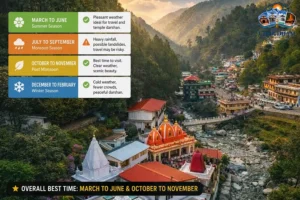
The best time to visit Mana Village is between May and June and again from September to October. During these months, the weather remains pleasant, roads stay open, and nearby attractions can be explored comfortably.
Winter is extremely harsh because of heavy snowfall, and Badrinath Temple also remains closed during this period. Most villagers temporarily relocate to lower-altitude regions until the pilgrimage season begins again.
Weather
From November to April, Mana experiences severe winter conditions with temperatures often falling below freezing. Heavy snowfall covers the region, making travel difficult.
During the summer months, temperatures generally range between 15°C and 20°C, creating ideal conditions for sightseeing, trekking, and exploring the surrounding Himalayan landscape.
How to Reach Mana Village
By Road
Mana Village is located around 3–4 km from Badrinath and is easily accessible by road. Visitors can hire a shared taxi or private cab from Badrinath to reach the village. The route is well connected by national highways from Haridwar, Rishikesh, Dehradun, Delhi, and other major North Indian cities.
By Rail
The nearest railway station is Rishikesh Railway Station, located about 290 km from Mana Village. Haridwar Railway Station is another major railhead with better connectivity to cities across India. From either station, buses and taxis are available for Badrinath and Mana.
By Air
The nearest airport is Jolly Grant Airport, Dehradun, approximately 310–320 km from Mana Village. From the airport, travellers can hire taxis or board buses towards Badrinath. During the pilgrimage season, helicopter services are also available to Badrinath from Sahastradhara Helipad in Dehradun.
Distance from Major Cities
- Delhi: Approximately 520 km
- Dehradun: Around 320 km
- Rishikesh: Approximately 290 km
- Himachal Pradesh: Around 380 km
- Uttar Pradesh: Approximately 550 km
Frequently Asked Questions
Q1. What are the top places to visit in Mana Village?
Ans: Popular attractions include Vyas Gufa, Ganesh Gufa, Bhim Pul, Saraswati River, Vasudhara Falls, Neelkanth Peak, Tapt Kund, and Mata Murti Temple.
Q2. What is the easiest way to reach Mana Village?
Ans: The easiest way is by road from Badrinath, located only about 4 km away. Shared taxis and private cabs are readily available during the pilgrimage season.
Q3. Which wildlife can be seen near Mana Village?
Ans: The surrounding Himalayan region is home to species such as the Himalayan Monal, Himalayan Tahr, Musk Deer, Himalayan Black Bear, and numerous mountain birds.
Q4. Is any permit required to visit Mana Village?
Ans: No. Indian tourists generally do not require a special permit to visit Mana Village. However, visitors should always follow local administrative guidelines during the pilgrimage season.
Conclusion
Mana Village is far more than the last village of India. It is a destination where mythology, spirituality, culture, and Himalayan beauty come together in a truly unforgettable way. From sacred places like Vyas Gufa, Ganesh Gufa, and Bhim Pul to scenic treks leading to Vasudhara Falls and Satopanth Lake, every corner of the village has a story to tell.
With its peaceful surroundings, welcoming locals, and rich cultural heritage, Mana offers an experience that stays with visitors long after their journey ends. Plan your visit during the summer or post-monsoon season to enjoy the best weather and fully experience everything this remarkable Himalayan village has to offer.