10 Spiritual Places to Visit in Uttarakhand

spiritual places in Uttarakhand

Uttarakhand holds two of Hinduism’s four Dhams, one of the twelve Jyotirlingas, more than a hundred surviving stone temples built by a single medieval dynasty, and a limestone cave that pilgrims have entered since at least the 12th century believing it connects the earth to the underworld. Few Indian states pack this much recognized sacred ground into so little territory — officially, tourism literature calls it Devbhoomi, “land of the gods,” and the label isn’t just marketing.

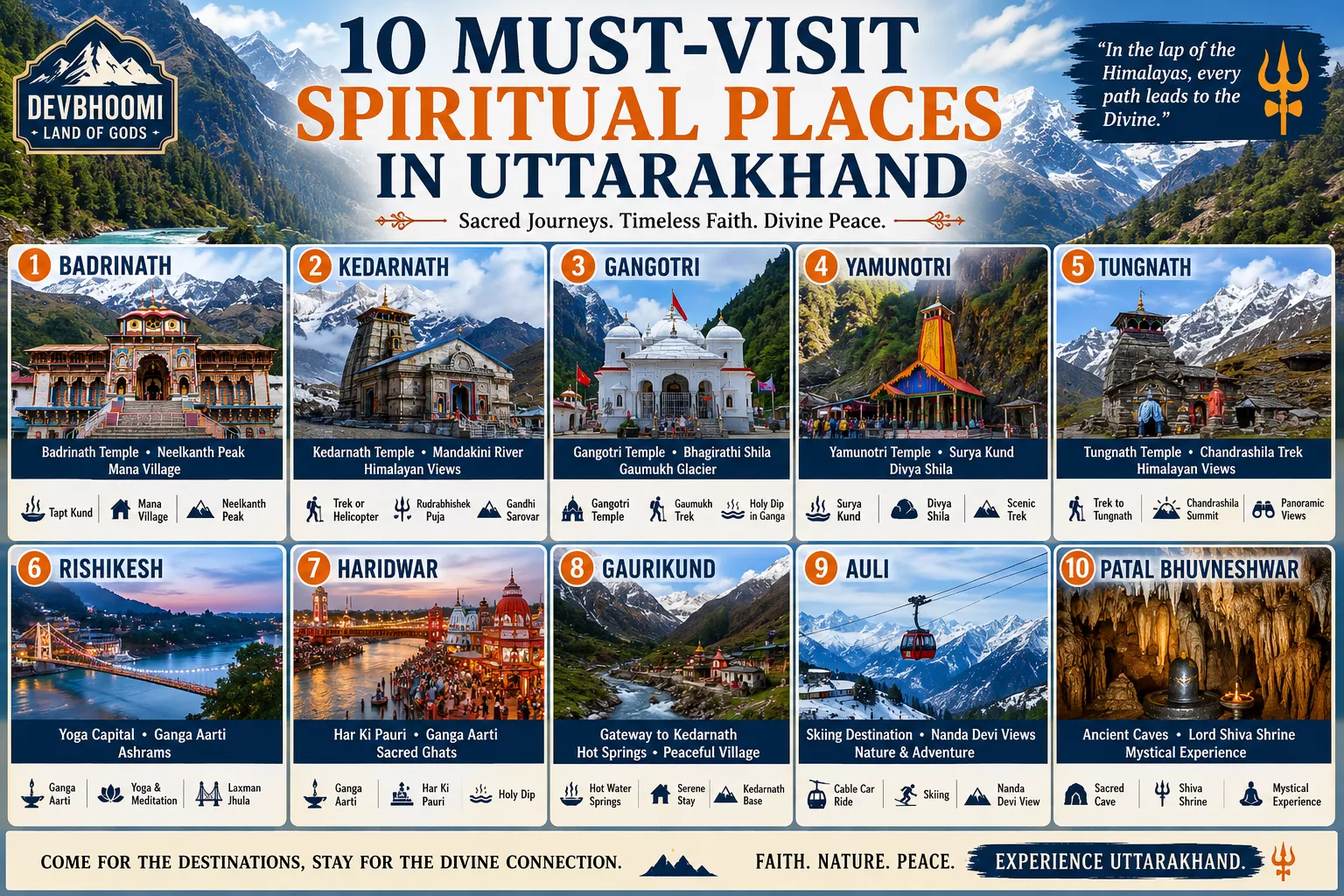
This guide covers ten of those places, grouped the way a pilgrim would actually encounter them rather than as a random top-ten list: the four Char Dham temples that anchor the entire tradition, the two gateway cities where nearly every journey starts, and four quieter sites that reward travelers willing to step off the main road. Every date and distance below has been checked against 2026 sources, because a “best of Uttarakhand” list is only useful if the practical details are still true this year.

Quick look at all ten:

Major Pilgrimage Places in Uttarakhand – Overview
Place District Altitude Best Time Known For
Yamunotri Uttarkashi 3,291 m May–Jun, Sep–Oct Source of the Yamuna River and one of the Char Dham pilgrimage sites.
Gangotri Uttarkashi ~3,100 m May–Jun, Sep–Oct Sacred origin of the Ganga River and an important Hindu pilgrimage destination.
Kedarnath Rudraprayag 3,583 m May–Jun, Sep–Oct Famous Jyotirlinga temple of Lord Shiva and a scenic Himalayan trekking destination.
Badrinath Chamoli 3,133 m May–Jun, Sep–Oct Renowned Vishnu temple, Tapt Kund hot springs, and one of the Char Dham shrines.
Haridwar Haridwar ~314 m Oct–Mar World-famous Ganga Aarti at Har Ki Pauri and one of India’s holiest cities.
Rishikesh Dehradun ~372 m Sep–Apr Yoga capital of the world, spiritual ashrams, and thrilling river rafting activities.
Tungnath Rudraprayag ~3,680 m Apr–Jun, Sep–Nov World’s highest Shiva temple and a popular Himalayan trekking destination.
Jageshwar Almora ~1,870 m Year-round Ancient temple complex featuring over 124 beautifully carved stone temples.
Kasar Devi Almora ~2,100 m Year-round Peaceful meditation destination known for its magnetic field and Himalayan views.
Patal Bhuvaneshwar Pithoragarh 1,350 m Mar–Jun, Sep–Nov Mythological limestone cave temple filled with naturally formed sacred rock formations.

Part 1: The Char Dham — Uttarakhand’s Four Sacred Anchors

Every year, four Himalayan shrines close for roughly six months under snow and reopen only when temple astrologers say the timing is right. Together they make up the Chota Char Dham — “chota” (small) distinguishes this regional circuit from the older, subcontinent-wide Char Dham of Puri, Rameswaram, Dwarka, and Badrinath. The regional circuit is meant to be completed in one direction only, Yamunotri to Badrinath, because that’s the order the road network actually supports; reversing it adds real time and complication.

For 2026, the temple committees have confirmed: Yamunotri and Gangotri open together on April 19 (Akshaya Tritiya), Kedarnath follows on April 22, and Badrinath opens last on April 23. Closing dates are announced closer to winter and move with the lunar calendar, so treat the ones below as informed estimates, not fixed bookings.

1. Yamunotri — First Stop on the Circuit

Opens: April 19, 2026 · Closes: ~November 11 (tentative) · Trek: ~5–6 km from Janki Chatti

Yamunotri sits right at the point where a road simply stops working. From Janki Chatti, the last motorable stretch, a climb of five to six kilometers — steep in sections but far shorter than what waits at Kedarnath — leads up to the temple marking the Yamuna’s source.

The ritual here is unusually hands-on. Pilgrims wrap raw rice or whole potatoes in cloth, lower them into Surya Kund — a natural hot spring right beside the temple — and pull them out cooked minutes later as prasad. Before entering the shrine, most stop at Divya Shila, a rock slab that’s worshipped in its own right. In mythology, the Yamuna is Surya’s daughter and Yama’s sister, which is why devotees believe a dip in her waters here guards against an untimely death. Once the doors close for winter, the goddess’s image is carried down to Kharsali village, where local priests continue her worship through the cold months.

2. Gangotri — Where the Ganga Enters the Story

Opens: April 19, 2026 · Closes: ~November 10 (tentative) · Further trek: 19 km to Gaumukh

The temple standing at Gangotri today isn’t ancient in construction, even though the site itself is ancient in devotion — it was built in white granite in the late 18th century by the Nepalese Gorkha general Amar Singh Thapa, after the original structures in the region were destroyed in the 1803 Garhwal earthquake. A later renovation by the royal family of Jaipur added the Rajasthani-style pavilions, or chhatris, you’ll notice on the roofline today. Inside the compound, smaller shrines to Hanuman, Ganesh, Shiva, and Bhagirath surround the main sanctum, alongside a statue honoring Adi Shankaracharya, who is credited with reviving the pilgrimage tradition here centuries earlier.

The river worshipped at the temple is technically the Bhagirathi — it only takes the name Ganga after merging with the Alaknanda at Devprayag, much further downstream. Beside the temple, a flat rock called Bhagirath Shila marks where King Bhagirath is said to have performed the penance that brought the goddess down from the heavens. Fit trekkers can continue 19 km further to Gaumukh, the glacier mouth where the Bhagirathi physically emerges from ice — a two-day round trip usually broken with an overnight at Bhojbasa.

3. Kedarnath — The Jyotirlinga in the Clouds

Opens: April 22, 2026, 8:00 AM · Closes: mid-November (Bhai Dooj, date confirmed closer to season) · Trek: 16–18 km from Gaurikund, 8–9 hours

Kedarnath is the one that tests people. The temple sits at 3,583 meters, one of the twelve Jyotirlingas of Shiva, and reaching it still means an uphill trek of 16 to 18 kilometers from Gaurikund — on foot, pony, palanquin, or by helicopter for those who can book a seat and afford the fare. A 12.9 km ropeway from Sonprayag was approved by India’s Cabinet in March 2025 and is now under construction by Adani Enterprises; once finished it will cut the journey to about 36 minutes, but current estimates put completion around 2031–2032, so for the next several pilgrimage seasons, the trek remains the only affordable overland route.

This year’s opening drew a record 38,000 devotees on the very first day, and more than 13 lakh pilgrims visited within the first two months of the 2026 season — numbers worth knowing if you’re planning around crowd levels rather than just weather. Entry now runs through a checkpoint at Sonprayag where a registered QR-coded yatra permit is checked, and a daily pilgrim cap is enforced, so arriving before sunrise during May is genuinely necessary, not just good advice. The temple itself closes daily between 3 and 5 PM regardless of registration status.

What makes the site remarkable beyond the climb is what it survived: in the catastrophic 2013 Himalayan floods, a massive boulder lodged directly behind the temple and split the floodwaters around the structure, leaving Kedarnath largely intact while much of the town around it was destroyed. Locals and pilgrims alike still point to that rock. Beyond the temple, a shorter trek leads to Gandhi Sarovar (also called Chorabari Tal), a glacial lake with clear views back down toward the shrine.

4. Badrinath — Journey’s End for the Circuit

Opens: April 23, 2026 · Closes: mid-November, exact date confirmed on Vijayadashami · Access: motorable road, no trek required

Badrinath is the only one of the four dhams you can drive straight to, which makes it the natural final stop — most road-based itineraries reach it last, at the end of the circuit rather than the start. The temple, dedicated to Vishnu in his Badrinarayan form, stands at 3,133 meters on the banks of the Alaknanda, with Neelkanth Peak rising behind it. Tradition holds that Adi Shankaracharya re-established worship here in the 8th century after discovering the deity’s image in the nearby Narad Kund. Pilgrims still bathe in the Tapt Kund hot sulphur springs at the base of the temple steps before darshan, a ritual cleansing that’s as much a practical relief from the cold as a spiritual one.

Just beyond Badrinath sits Mana, often billed as India’s last village before the Tibetan border, and worth the short detour for Vyas Gufa (the cave where sage Ved Vyas is said to have composed the Mahabharata), Bhim Pul, and the point where the Saraswati River is believed to vanish underground. When the temple closes for winter, the deity’s image is moved to Joshimath, which effectively functions as Badrinath’s cold-season address.

Getting there and registering: All four dhams require Char Dham Yatra registration through the Uttarakhand government’s official portal (search “registrationandtouristcare.uk.gov.in” — registration for the 2026 season opened March 6). Most road itineraries covering all four dhams run 10–12 days from Haridwar or Rishikesh; both cities also serve as the nearest railheads, with Jolly Grant Airport in Dehradun the nearest airport to all four shrines.

Part 2: Haridwar and Rishikesh — Where the Journey Actually Begins

Before pilgrims head into the mountains, nearly all of them pass through this pair of towns on the Ganga’s banks, less than 25 km apart. They’re often bundled together in itineraries, but they serve different purposes.

5. Haridwar — The Ganga’s Gateway to the Plains

Haridwar marks the exact point where the Ganga leaves the Himalayan foothills and enters the plains, and it treats that transition as sacred geography. Har Ki Pauri, the main ghat, is believed to bear Vishnu’s footprint in a stone embedded in its wall, and every evening thousands gather here for the Ganga Aarti — priests swinging multi-tiered brass lamps over the water while the crowd releases floating diyas downstream. Haridwar is counted among Hinduism’s Sapta Puri, the seven holiest cities in the tradition, and it’s also one of four sites (alongside Prayagraj, Ujjain, and Nashik) that host the Kumbh Mela on a rotating twelve-year cycle.

Two hilltop temples flank the town and are usually visited by cable car: Mansa Devi, associated with wish-fulfillment, and Chandi Devi, reached by a separate ropeway across the river. Between darshans, the lanes near Har Ki Pauri are dense with shops selling rudraksha malas, brass idols, and the sweets Haridwar is regionally known for.

6. Rishikesh — Ashrams, Yoga, and a Bridge in Transition

Rishikesh built its global reputation on the ashrams lining its riverbanks, and it earned the nickname “Yoga Capital of the World” honestly — the Parmarth Niketan ashram has hosted an annual International Yoga Festival since 1999, typically a week-long event each March packed with more than 70 hours of sessions across traditions from Iyengar to Kriya yoga, drawing practitioners from dozens of countries. The town’s most famous ashram visit, though, predates the festival by decades: in 1968, the Beatles spent weeks at Maharishi Mahesh Yogi’s ashram (known locally as Chaurasi Kutia), writing much of what became the White Album. The property, now government-managed inside Rajaji National Park, is open to visitors and covered floor to ceiling in fan and street art.

One practical note that catches a lot of visitors off guard: Laxman Jhula, the century-old iron suspension bridge that shows up in nearly every photo of Rishikesh, has been closed to foot traffic since 2019 due to structural damage, and it remains closed as of mid-2026 pending repair work. Its replacement, a new glass-floor suspension bridge called Bajrang Setu, has been built about 200 meters upstream and was nearing formal inauguration as this guide was written — check current status before planning a crossing. Ram Jhula, the other major bridge linking Swargashram to the Rishikesh side, remains fully open and connects to the evening aarti at Parmarth Niketan. Beyond the bridges and ashrams, Rishikesh is also where most Ganga white-water rafting trips launch, typically running from September through June and pausing during the heaviest monsoon weeks.

Part 3: Beyond the Main Circuit — Four Sites Most Itineraries Skip

These four rarely make it onto standard tour packages, which is exactly their appeal. Each pairs a strong devotional story with something you can’t get at the bigger, busier shrines: architecture, altitude, unresolved mystery, or a genuinely strange chapter of 20th-century history.

7. Tungnath — The Roof of the Panch Kedar

At roughly 3,680 meters, Tungnath is the highest of the Panch Kedar — five Shiva temples across Garhwal linked by legend to the Pandavas, who were said to be seeking Shiva’s forgiveness after the Kurukshetra war and built shrines wherever parts of his body were believed to have been found. Tungnath marks the arm; Kedarnath, the hump. Unlike its more famous counterpart, Tungnath is an easy trek by Himalayan standards: 3–4 km from the road at Chopta, gentle enough for reasonably fit beginners, through alpine meadows where Himalayan monal pheasants are a realistic sighting rather than a rare one.

Most visitors don’t stop at the temple. A further 1.5 km climb reaches Chandrashila peak at close to 4,000 meters, where a clear-morning view takes in Nanda Devi, Chaukhamba, and the Kedarnath range in a single sweep. Chopta itself has become a small hub for camping under genuinely dark, high-altitude skies. The whole route is snowbound and inaccessible from December through March.

8. Jageshwar — A Valley That Never Stopped Building Temples

Jageshwar doesn’t have one grand structure to photograph — it has a valley full of them. The main cluster alone counts 124 stone temples, and once you include the neighboring Dandeshwar and Kuber clusters, the Archaeological Survey of India protects 151 numbered monuments across the site, built in overlapping phases from roughly the 7th to the 14th century under the Katyuri and later Chand dynasties. They stand in a narrow gorge of the Jataganga river, shaded by deodar cedar old enough to make the stone look almost incidental.

The main shrine here is dedicated to Bal Jageshwar, the child form of Shiva, and regional tradition in Kumaon also counts Jageshwar among the twelve Jyotirlingas — a claim you’ll hear made about shrines in Gujarat and Maharashtra too, so it’s best treated as devotional belief rather than settled geography. What isn’t in dispute is the setting: over two dozen Sanskrit and Brahmi inscriptions on the temple walls document centuries of royal patronage, and the evening aarti, echoing through a valley with no traffic noise to compete with, is reason enough to plan an overnight rather than a drive-through visit. The Jageshwar Monsoon Festival in Shravan (July–August) and the Maha Shivratri Mela each spring are the two times the valley gets genuinely crowded.

9. Kasar Devi — Where the Science Gets Exaggerated but the Story Doesn’t Need It To

Kasar Devi’s real history is compelling enough without embellishment: Swami Vivekananda meditated in a cave beside this hilltop shrine near Almora in 1890, and wrote about the experience in his own diaries. That single visit set off a genuinely unusual chain of arrivals — Tibetan Buddhism scholar Walter Evans-Wentz stayed here in the early 20th century, Danish mystic Sunyata Baba settled nearby for over three decades, and in 1961 the Beat poets Allen Ginsberg, Peter Orlovsky, and Gary Snyder made a documented visit. By the 1960s the ridge, nicknamed Crank’s Ridge or Hippie Hill, had become a fixture on the overland hippie trail, and local lore credits later visits from figures ranging from Bob Dylan to George Harrison, though those particular claims are far less rigorously documented than Vivekananda’s.

The part worth being skeptical about is the popular claim, repeated on countless tourism sites, that Kasar Devi sits on a rare “gap” in Earth’s Van Allen radiation belt, supposedly shared with only Machu Picchu and Stonehenge. It’s a striking story, but it doesn’t hold up: the Van Allen belts are a magnetospheric phenomenon located hundreds to tens of thousands of kilometers above the Earth’s surface, not something a hillside can geographically intersect, and NASA has never published research confirming any such site-specific “gap.” It’s also worth noting that Vivekananda’s 1890 visit happened 68 years before the Van Allen belts were even discovered, in 1958 — so whatever drew him here, it wasn’t that. What you can reliably expect is a genuinely quiet hilltop with sweeping Himalayan views stretching from Nanda Devi toward the Nepal border, and a meditative atmosphere that a century of serious spiritual visitors, not pseudoscience, actually built.

10. Patal Bhuvaneshwar — A Cave Temple Pilgrims Crawl Into

Fourteen kilometers from the town of Gangolihat, a narrow tunnel entrance drops into a limestone cave system that stretches 160 meters and descends roughly 90 feet (about 27 meters) from the entrance point. Legend holds that King Rituparna of the Suryavansha dynasty first discovered it during the Treta Yuga, but its documented pilgrimage history begins in 1191 CE, when Adi Shankaracharya is said to have entered and reopened it for worship.

Inside, guided by dim lighting and iron support chains bolted into the rock, visitors squeeze through passages narrow enough that some sections require crawling. Local guides point out specific stalactite and stalagmite formations named for what they’re believed to resemble: the coils of the serpent Sheshnag, the matted locks (jata) of Shiva, the udders of the celestial cow Kamadhenu, and — the formation most guides linger on — a shape identified as the severed head of Ganesh, with a natural rock formation above it, called the Brahmakamala, dripping water believed to have restored him to life. The cave is a protected ASI monument today, and however you weigh the mythology, the physical experience of the descent is unlike anything else on this list.

Planning Your Trip: Practical Notes

Registering for the Char Dham Yatra: Registration is mandatory for all four dhams and opens each year through the Uttarakhand government’s official tourism portal. For 2026, registration opened on March 6. Book well ahead — Kedarnath and Badrinath accommodation fills up months in advance of the April opening.

Timing around the monsoon: July and August bring heavy rain and real landslide risk across the Char Dham routes, especially the Kedarnath trek. Most experienced travelers split their visit into two windows instead — late April through June, and again September through October, when skies clear and temperatures are milder.

Altitude and fitness: Nights stay cold even in May and June at Kedarnath, Badrinath, Yamunotri, and Gangotri, so pack for winter regardless of the season on the calendar. If the Kedarnath trek is your main concern, Tungnath is a genuinely useful practice hike beforehand — shorter, less crowded, and still above 3,600 meters.

A honest note on itinerary length: Covering all four dhams by road typically takes 10–12 days from Haridwar or Rishikesh. Trying to compress it significantly usually means helicopter transfers at several stages, which changes both the cost and the experience.

Frequently Asked Questions

What is the Chota Char Dham Yatra?

It’s the pilgrimage circuit covering four Himalayan shrines in Uttarakhand — Yamunotri, Gangotri, Kedarnath, and Badrinath – completed traditionally in that west-to-east order. “Chota” (small) distinguishes it from India’s older, subcontinent-spanning Char Dham of Puri, Rameswaram, Dwarka, and Badrinath.

What is the best time to visit Uttarakhand for pilgrimage?

Late April through June, and again September through October. The Char Dham temples are only open April/May to October/November each year; July–August monsoon rains bring landslide risk on mountain routes, and the shrines are closed entirely from November to April due to snow.

How many days do I need for the full Char Dham Yatra?

Most road-based itineraries run 10–12 days starting and ending in Haridwar or Rishikesh. Helicopter packages can compress this to 4–6 days but cost significantly more and skip much of the overland experience.

Is the Kedarnath trek difficult for beginners?

It’s a genuine physical undertaking — 16–18 km uphill, typically 8–9 hours on foot, at altitude. Ponies, palanquins, and helicopter transfers are all available for those who can’t or don’t want to walk the full distance. Building fitness beforehand and acclimatizing for a day at a lower elevation helps considerably.

Do I need to register in advance for Char Dham Yatra 2026?

Yes. Registration is mandatory for all four shrines through Uttarakhand’s official tourism portal, and Kedarnath additionally requires a QR-coded entry permit checked at the Sonprayag checkpoint. Registration for 2026 opened March 6.

What’s the difference between visiting Haridwar and Rishikesh?

Haridwar is built around ritual and the Ganga Aarti at Har Ki Pauri — it’s the more traditionally devotional of the two. Rishikesh leans toward yoga, ashram stays, and adventure activities like rafting, though it has its own significant temples and evening aarti at Parmarth Niketan. Many travelers base themselves in one and day-trip to the other, since they’re less than 25 km apart.

Can the Char Dham Yatra be done in winter?

No — all four temples close completely from around November through April due to heavy Himalayan snowfall. During this period, the deities are worshipped at their winter seats in the valleys below: Badrinath’s at Joshimath, Kedarnath’s at Ukhimath, Gangotri’s at Mukhba, and Yamunotri’s at Kharsali. These winter towns can be visited year-round.

Uttarakhand rewards planning more than spontaneity — the temples that matter most close for half the year, the treks are genuinely physical, and the best months get booked out early. But get the timing right, and you’re looking at snow peaks catching the first light over a 3,500-year-old cave system on one end of a trip, and a century-old bridge over the Ganga on the other. Few pilgrimage circuits anywhere cover this much ground, literally and otherwise.

If you are planning for Char Dham Tour in 2027, book here https://www.triptochardham.in/char-dham-packages
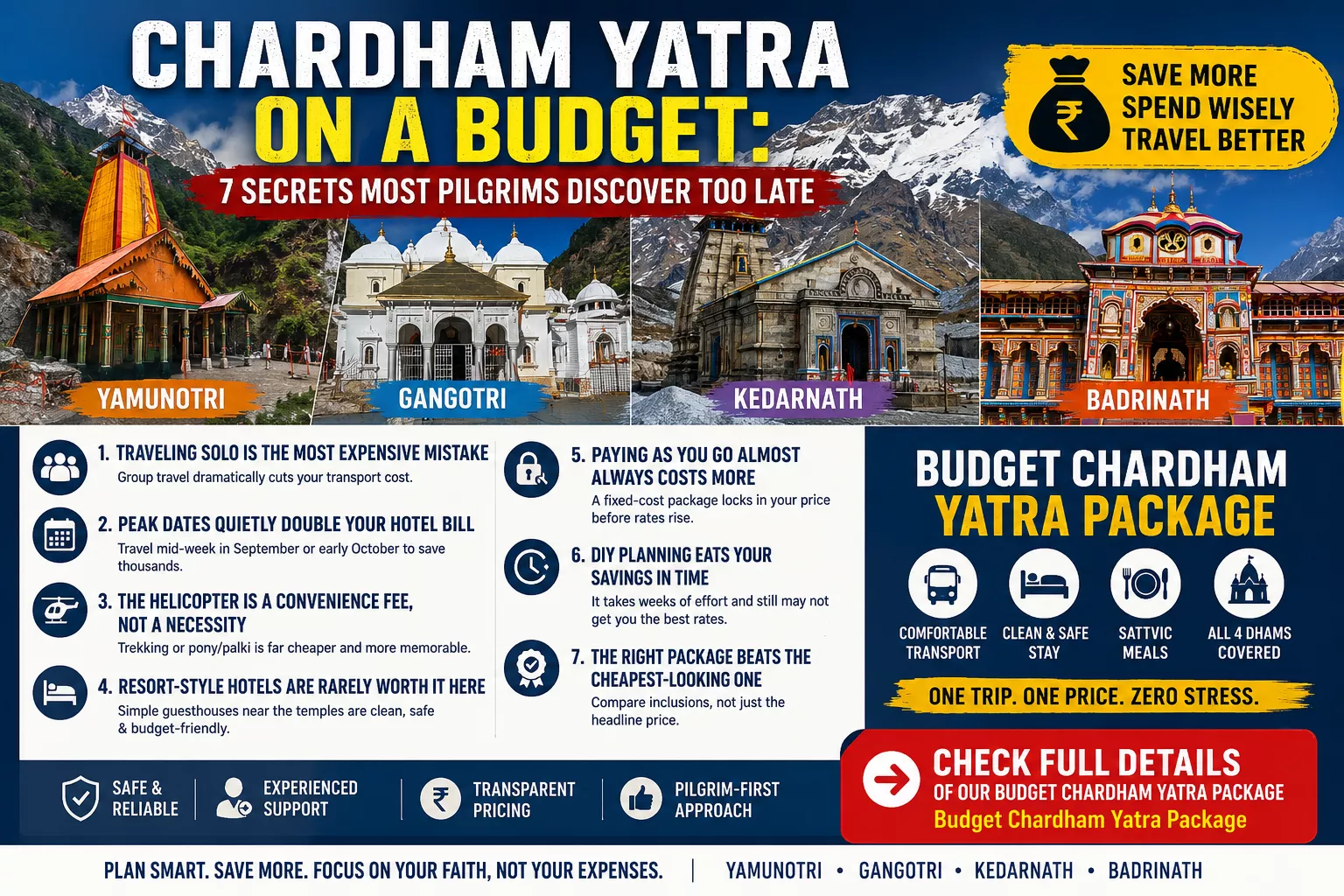
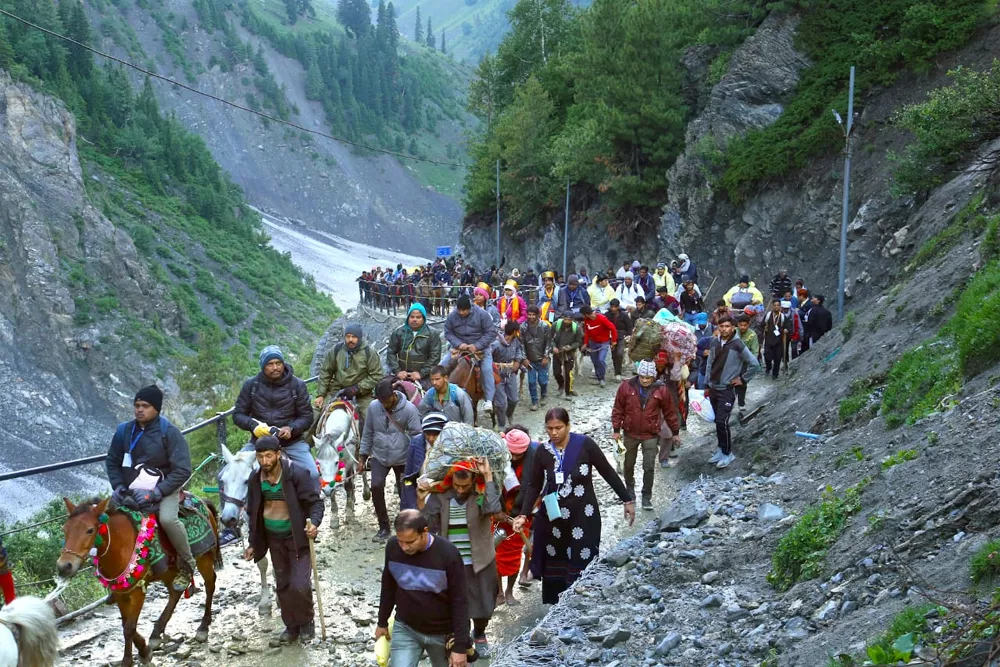
Chardham Yatra on a Budget: 7 Secrets Most Pilgrims Discover Too Late

Chardham Yatra on a Budget 7 Secrets Most Pilgrims Discover Too Late

Nine out of ten first-time pilgrims overpay for their Chardham Yatra, and they never even find out. They book the first hotel that shows up, take a private cab out of convenience, and end up paying almost double what a smart, well-planned trip would cost.

If you’re planning your yatra to Yamunotri, Gangotri, Kedarnath, and Badrinath this season, read this before you book anything. These are the exact things that separate a Rs. 15,000 pilgrim from a Rs. 60,000 pilgrim, and most of it comes down to timing and planning, not luck.

The Biggest Myth About Chardham Yatra Costs

Ask around and you’ll hear numbers ranging from Rs. 15,000 to Rs. 1,00,000 per person. The wide gap exists because most people are comparing apples to oranges. A helicopter darshan package for Kedarnath alone can cost more than an entire 10 day road trip covering all four dhams.

The real cost depends on three things: how you travel, where you stay, and when you go. Here are the 7 secrets that make the biggest difference.

1. Traveling Solo Is the Most Expensive Mistake You Can Make

A private cab for one or two people can cost as much as a shared Tempo Traveller for eight. Group travel is, hands down, the single biggest money-saver in the entire yatra. If you don’t already have a group, joining a pre-formed batch through a package instantly cuts your transport cost.

2. Peak Dates Quietly Double Your Hotel Bill

Hotel owners in Uttarakhand know exactly when demand spikes, and prices follow. The days around major festivals and long weekends see rates jump 30 to 50 percent overnight. Traveling mid-week in September or early October instead of the crowded May-June rush can save thousands without changing anything else about your trip.

3. The Helicopter Is a Convenience Fee, Not a Necessity

Helicopter darshan at Kedarnath feels tempting, but it can cost more than your entire remaining trip combined. Trekking or taking a pony/palki service is far cheaper, and for most pilgrims it becomes the most memorable part of the entire journey, not the part they wish they’d skipped.

4. Resort-Style Hotels Are Rarely Worth It Here

Pilgrims aren’t visiting Uttarakhand for infinity pools. Simple guesthouses and dharamshalas near the temples are clean, safe, and a fraction of the cost of branded resorts in bigger towns. Save the luxury stay for a different trip.

5. Paying As You Go Almost Always Costs More

This is the one nobody warns you about. Booking each hotel and cab separately sounds flexible, but it removes your biggest advantage: negotiating power. Prices surge the moment demand rises, and there’s no ceiling once you’re already there. A single fixed-cost package locks in your price before the season pushes rates up.

6. DIY Planning Eats Your Savings in Time, Not Just Money

Planning this yourself is possible, but it usually takes weeks of calling hotels, checking driver availability, and hoping nothing falls through during peak season. Most first-time pilgrims don’t have the local contacts to actually get the lowest rates, even when they try.

7. The Right Package Beats the Cheapest-Looking One

Not every “budget” package is actually budget. Some quote a low base price, then add helicopter, VIP darshan, and premium hotel charges later. The pilgrims who genuinely save money are the ones who compare what’s actually included, not just the headline number.

The Easiest Way to Get All Seven Right at Once

Instead of juggling ten different bookings and hoping you timed everything correctly, a well-built Budget Chardham Yatra Package already applies all seven of these principles for you: group transport, off-peak timing, sensible accommodation, and one transparent price with no surprise add-ons.

Check the full details of our Budget Char Dham Yatra Package here: Budget Chardham Yatra Package

Final Thought

The Char Dham Yatra is meant to be a journey of faith, not a financial guessing game. Pilgrims who plan around these seven points routinely complete the entire yatra for a fraction of what others pay, without cutting corners on safety or comfort. If you’re ready to plan yours, start with a package that’s built around these same principles.

Amarnath Yatra 2026: अमरनाथ यात्रा से पहले सुरक्षा चाक-चौबंद, एलजी मनोज सिन्हा ने ली अहम बैठक

Amarnath Yatra 2026: अमरनाथ यात्रा से पहले सुरक्षा चाक-चौबंद, एलजी मनोज सिन्हा ने ली अहम बैठक

उपराज्यपाल मनोज सिन्हा ने जम्मू-कश्मीर में सुरक्षा स्थिति और आगामी अमरनाथ यात्रा की तैयारियों की उच्चस्तरीय समीक्षा बैठक ली।

जम्मू में उपराज्यपाल मनोज सिन्हा ने बुधवार को एक महत्वपूर्ण बैठक बुलाई। इस बैठक में उन्होंने जम्मू-कश्मीर की सुरक्षा स्थिति और आगामी अमरनाथ यात्रा 2026 की तैयारियों को ध्यान से परखा। प्रशासन ने यह बैठक ‘दरबार मूव’ से ठीक पहले आयोजित की। सचिवालय 30 अप्रैल को जम्मू से बंद होकर 4 मई को श्रीनगर में खुलेगा।

बैठक में सेना, पुलिस, सुरक्षा और खुफिया एजेंसियों के वरिष्ठ अधिकारी शामिल हुए। सभी अधिकारियों ने मिलकर कानून-व्यवस्था बनाए रखने और अमरनाथ यात्रा के दौरान श्रद्धालुओं की सुरक्षा सुनिश्चित करने पर विशेष ध्यान दिया।

सूत्रों के अनुसार अधिकारियों ने सुरक्षाबलों के बीच बेहतर समन्वय, सतर्कता बढ़ाने और पूरे केंद्र शासित प्रदेश में सुरक्षा व्यवस्था को मजबूत करने के उपायों पर गहन विचार किया। इसके अलावा एलजी मनोज सिन्हा ने ‘नशा मुक्त जम्मू-कश्मीर अभियान’ की प्रगति की भी समीक्षा की। उन्होंने अधिकारियों को नशे के खिलाफ सख्त कार्रवाई करने और जागरूकता अभियान को और तेज करने के स्पष्ट निर्देश दिए।

Book Here Amarnath Package https://www.triptochardham.in/amarnath-yatra-packages

Amarnath Rath Yatra: अमरनाथ गुफा में हमेशा क्यों दिखाई देता है कबूतरों का जोड़ा? जानिए इसके पीछे की मान्यता

Amarnath Yatra 2026

अमरनाथ यात्रा 2026 की संपूर्ण जानकारी, यात्रा की तारीखें, पवित्र अमरनाथ गुफा और कबूतरों के जोड़े से जुड़ी प्राचीन हिंदू पौराणिक कथा को विस्तार से जानें।


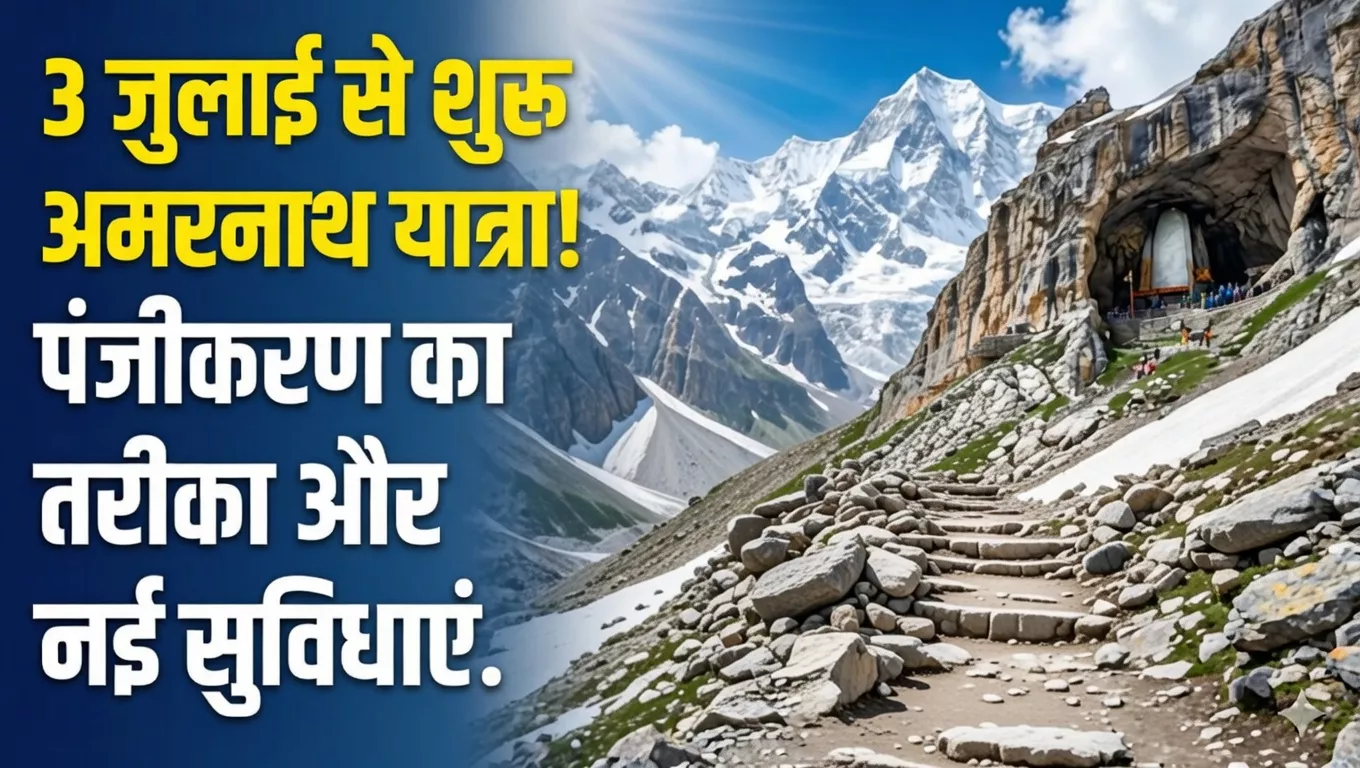
Amarnath Yatra pigeon myth: हर वर्ष अमरनाथ यात्रा देशभर के लाखों श्रद्धालुओं के लिए एक गहन आध्यात्मिक अनुभव लेकर आती है। वर्ष 2026 में यह पवित्र यात्रा 3 जुलाई से 28 अगस्त तक आयोजित की जाएगी। लगभग 3,888 मीटर की अद्भुत ऊंचाई पर स्थित अमरनाथ गुफा में प्राकृतिक रूप से बनने वाला हिमलिंग श्रद्धालुओं के लिए दिव्य और चमत्कारी माना जाता है। इस गुफा से जुड़ा सबसे चर्चित रहस्य एक कबूतर के जोड़े से संबंधित है, जिसे यहां आने वाले तीर्थयात्री नियमित रूप से देखते हैं। यह प्राचीन मान्यता हर मौसम में इस गुफा पर आने वाले श्रद्धालुओं के मन में जिज्ञासा और गहरी आस्था जगाती रहती है। आइए जानते हैं अमरनाथ गुफा के कबूतर जोड़े से जुड़ी पौराणिक कथा और यह क्यों इतनी विशेष मानी जाती है।

अमरनाथ गुफा में हमेशा क्यों दिखाई देता है कबूतरों का जोड़ा?

अमरनाथ यात्रा के दौरान अमरनाथ गुफा में कबूतर के जोड़े के दिखाई देने को स्थानीय लोग और तीर्थयात्री अत्यंत प्राचीन और रहस्यमयी घटना मानते हैं। स्थानीय मान्यता के अनुसार यह कोई साधारण दृश्य नहीं है, बल्कि यह अमरत्व से जुड़ी एक दिव्य कथा से सीधे जुड़ा हुआ है। भक्त मानते हैं कि इस कबूतर जोड़े का दर्शन शुभ संकेत देता है और शक्तिशाली आध्यात्मिक ऊर्जा का प्रतीक है।

प्राचीन हिंदू शास्त्रों और पौराणिक कथाओं के अनुसार, एक बार भगवान शिव ने माता पार्वती को अमरत्व का रहस्य सुनाने के लिए इसी गुप्त गुफा का चयन किया था। उन्होंने यह स्थान इसलिए चुना ताकि कोई अन्य प्राणी इस पवित्र ज्ञान को न सुन सके। कथा यह कहती है कि Amarnath Yatra pigeon myth की शुरुआत इसी क्षण से हुई, क्योंकि जो भी इस अमरत्व की कथा को सुन लेता, उसे सदा के लिए अमर जीवन प्राप्त हो जाता।

गुफा की ओर यात्रा करते समय भगवान शिव ने अपने सभी साथियों और पवित्र प्रतीकों को अलग-अलग पवित्र स्थानों पर छोड़ दिया। उन्होंने नंदी को पहलगाम में, चंद्रमा को चंदनवाड़ी में, पवित्र नदी गंगा को पंचतरणी में और अपने सर्पों को शेषनाग में छोड़ा। यह पूरी प्रक्रिया पूर्ण करने के बाद भगवान शिव ने गुफा में प्रवेश किया और पूर्ण एकांत में माता पार्वती को अमरत्व का संपूर्ण ज्ञान दिया।

अमरनाथ यात्रा से जुड़ी लोकप्रिय मान्यता के अनुसार, एक कबूतर का जोड़ा अनजाने में इस दिव्य और पवित्र कथा को सुन लेता है। अमरत्व की कथा सुन लेने के कारण उन्हें भी सदा जीवित रहने का वरदान प्राप्त हो जाता है। श्रद्धालुओं का विश्वास है कि यही कबूतर जोड़ा आज भी गुफा में निवास करता है। तीर्थयात्री इस दर्शन को आस्था, चमत्कार और दिव्य उपस्थिति का प्रतीक मानते हैं। कबूतर जोड़े को देखकर भक्तों के मन में आश्चर्य और आध्यात्मिक आनंद की जो अनुभूति होती है, वह यात्रा पूर्ण होने के बाद भी उनके साथ बनी रहती है।

अमरनाथ यात्रा की अवधि कितनी है?

देशभर के हिंदू श्रद्धालु अमरनाथ यात्रा को अपने धर्म के सबसे महत्वपूर्ण और पवित्र तीर्थों में से एक मानते हैं। यह पवित्र यात्रा जम्मू-कश्मीर की ऊंची पहाड़ियों में होती है और श्रद्धालुओं को अमरनाथ गुफा तक पहुंचाती है। यह यात्रा तीर्थयात्रियों को आस्था और आध्यात्मिकता का एक शक्तिशाली अनुभव देती है जो उनके भीतर एक सकारात्मक परिवर्तन लाती है।

लोग मानते हैं कि बाबा बर्फानी के दर्शन करने और उनका आशीर्वाद लेने से कई अन्य तीर्थों के बराबर पुण्य प्राप्त होता है। वर्ष 2026 में अधिकारियों ने यात्रा की अवधि लगभग 57 दिनों की रखी है और इच्छुक तीर्थयात्रियों के लिए पंजीकरण प्रक्रिया पहले ही शुरू हो चुकी है। श्रद्धालु इस पवित्र यात्रा को दो मुख्य मार्गों से पूरा कर सकते हैं, बालटाल मार्ग और पहलगाम मार्ग। दोनों मार्ग तीर्थयात्रियों को अलग-अलग कठिनाई स्तर के साथ अनोखे अनुभव प्रदान करते हैं। चाहे कोई छोटे बालटाल मार्ग को चुने या लंबे और मनोरम पहलगाम मार्ग को, दोनों रास्ते उसी दिव्य गंतव्य तक पहुंचाते हैं और हर उस भक्त को एक गहरा और अविस्मरणीय आध्यात्मिक अनुभव देते हैं जो इस पावन यात्रा पर निकलता है।

Important link:

Book Here Amarnath Tour Package https://www.triptochardham.in/amarnath-yatra-packages

बाबा अमरनाथ यात्रा 2026 में लगेंगे 120 से अधिक लंगर, संगठनों को अनुमति का इंतजार

Amarnath Yatra Langar

बाबा अमरनाथ यात्रा के लिए लंगर संगठन अनुमति का इंतजार कर रहे हैं, जिसकी आवेदन प्रक्रिया 25 मार्च को पूरी हो चुकी है। यात्रा 3 जुलाई से शुरू होकर 57 दिनों तक चलेगी। श्री अमरनाथ जी श्राइन बोर्ड 120 से अधिक लंगरों को अनुमति देगा, जो पहलगाम और बालटाल मार्गों पर लगेंगे।


राज्य ब्यूरो, जम्मू। बाबा अमरनाथ यात्रा के दोनों प्रमुख मार्गों यानी पहलगाम और बालटाल से लेकर पवित्र गुफा तक लंगर लगाने की तैयारी में जुटे संगठन अब श्री अमरनाथ जी श्राइन बोर्ड से अनुमति मिलने का बेसब्री से इंतजार कर रहे हैं। बोर्ड ने आवेदन जमा करने की अंतिम तिथि 25 मार्च तय की थी और उस तिथि तक सभी आवेदन बोर्ड को मिल चुके हैं। अब संगठनों की नजरें बोर्ड पर टिकी हैं कि वह कितने लंगर संगठनों को यात्रा मार्ग पर सेवा करने की अनुमति प्रदान करता है।

इस वर्ष बाबा अमरनाथ यात्रा तीन जुलाई से शुरू होगी और यह यात्रा पूरे 57 दिनों तक चलेगी। रक्षा बंधन के पावन अवसर पर 28 अगस्त को यह यात्रा संपन्न होगी। फिलहाल श्रद्धालुओं का एडवांस पंजीकरण जोरों पर चल रहा है। यात्रा की सभी जरूरी तैयारियां भी तेज गति से आगे बढ़ रही हैं। अनंतनाग जिला प्रशासन ने पहलगाम रूट पर टेंट और दुकानें लगाने के लिए ड्रॉ निकालकर आवंटन प्रक्रिया को सफलतापूर्वक पूरा कर लिया है।

बाबा अमरनाथ यात्रा 2026 में लगेंगे 120 से अधिक लंगर

बाबा अमरनाथ यात्रा के दोनों मार्गों पर हर साल करीब एक सौ बीस लंगर लगते हैं। इस बार भी लंगर संगठन अपनी तैयारियों में जुट गए हैं। यात्रा में लंगर संगठन बहुत अहम भूमिका निभाते हैं क्योंकि वे हजारों श्रद्धालुओं को मुफ्त भोजन और पानी उपलब्ध कराते हैं। सबसे अधिक लंगर पंजाब के संगठन लगाते हैं। इसके अलावा हरियाणा, दिल्ली, उत्तर प्रदेश और गुजरात के संगठन भी इस पुण्य कार्य में बढ़-चढ़कर हिस्सा लेते हैं।

यात्रा मार्ग पर लंगरों की संख्या की बात करें तो बालटाल और दोमेल में सबसे अधिक 25 लंगर लगते हैं। पवित्र गुफा में 13, शेषनाग में आठ, पिस्सुटाप में पांच, पंचतरणी में 12, चंदनबाड़ी में सात, नुनवन में नौ और जोजीबल में पांच लंगर लगाए जाते हैं। श्री अमरनाथ जी श्राइन बोर्ड लंगर वालों के लिए खाने का मेनू भी तय करता है। बोर्ड लंगर संगठनों को अधिक तेल वाली चीजें परोसने से बचने की सलाह देता है और श्रद्धालुओं के स्वास्थ्य को ध्यान में रखते हुए पौष्टिक आहार परोसने के लिए प्रेरित करता है।

जम्मू के आधार शिविर यात्री निवास भगवती नगर में भी पांच लंगर लगाए जाते हैं। जम्मू से लखनपुर तक राष्ट्रीय राजमार्ग और जम्मू से श्रीनगर राष्ट्रीय राजमार्ग पर करीब पचास लंगर लगाने की योजना है। इन लंगरों का मुख्य उद्देश्य यात्रा के जत्थे में चलने वाले श्रद्धालुओं को रास्ते में भोजन और पानी की सुविधा देना होता है। यात्रा मार्गों पर लंगर लगाने वाले अधिकांश संगठन अपना शैड और जरूरी सामान पहलगाम और बालटाल में स्थित स्टोर में पहले से रखते हैं।

संगठनों को अनुमति का इंतजार

संगठन हर साल उसी सामान का उपयोग करते हैं जिससे उनकी सुविधा बनी रहती है। इसके साथ ही कुछ संगठन ट्रकों के जरिए नया सामान भी लेकर आते हैं। सेवादार भी ट्रकों में सामान के साथ ही यात्रा स्थलों पर पहुंचते हैं। शैड बनाकर लंगर की पूरी तैयारी की जाती है। चूंकि यात्रा शुरू होने में अभी काफी समय बाकी है, इसलिए लंगर संगठन अभी अनुमति मिलने का इंतजार कर रहे हैं। अनुमति मिलते ही वे सामग्री की खरीद और अन्य सभी प्रबंध पूरे करेंगे।

आमतौर पर यात्रा शुरू होने से पंद्रह दिन पहले लंगर संगठन अपने-अपने स्थानों से पहलगाम और बालटाल के लिए रवाना होते हैं। वहां पहुंचकर वे सामान को आगे के निर्धारित शिविरों तक पहुंचाते हैं। बाबा बर्फानी लंगर आर्गेनाइजेशन के प्रधान राजन गुप्ता ने बताया कि हम लंगर लगाने की अनुमति का इंतजार कर रहे हैं। उन्होंने कहा कि जैसे ही अनुमति मिलेगी, हम अपनी तैयारियों को और तेज कर देंगे।

Important link:


Book Here Amarnath Tour Package https://www.triptochardham.in/amarnath-yatra-packages

What Are the Official Registration Dates for the Amarnath Pilgrimage?

Amarnath Yatra Registration 2026

Every year, millions of devoted pilgrims from across India and the world prepare for one of the most sacred journeys in Hinduism. The Amarnath pilgrimage, also called the Amarnath Yatra, takes devotees to a holy cave shrine high up in the Kashmir Himalayas. Inside that cave, a naturally formed ice structure, called the Ice Shivling, stands as a symbol of Lord Shiva’s divine presence. If you plan to join this beautiful spiritual journey, knowing the official registration dates for the Amarnath pilgrimage is the very first step you must take.

When Does Amarnath Yatra 2026 Registration Start?

Amarnath Registration Steps

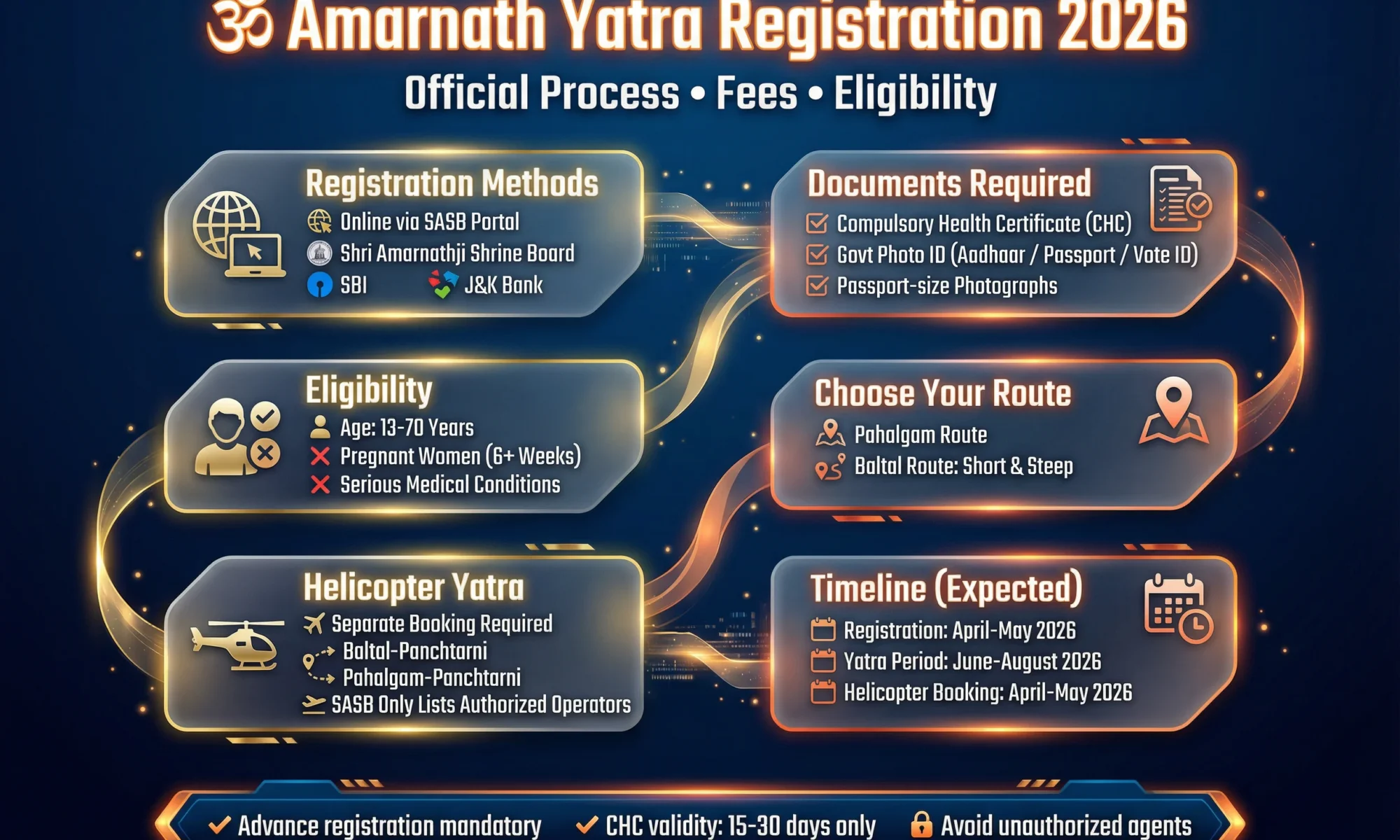
The Amarnath Yatra 2026 registration officially begins on April 15, 2026. The Shri Amarnath Ji Shrine Board (SASB) announced this date during an official meeting chaired by Jammu and Kashmir Lieutenant Governor Manoj Sinha. The pilgrimage itself will begin on July 3, 2026, and run for 57 days, concluding on August 28, 2026.

Registering on time gives you a real chance to secure your permit before slots fill up. Do not wait until the last moment because every day counts when you plan a journey this big.

When Does the Amarnath Yatra 2026 Begin and End?

The Amarnath Yatra 2026 follows a fixed schedule that the SASB sets every year. Here are the most important dates you need to remember:

  • Registration Start Date: April 15, 2026
  • Health Certificate Valid From: April 8, 2026
  • First Puja (Jyeshtha Purnima): June 19, 2026
  • Yatra Start Date: July 3, 2026
  • Yatra End Date: August 28, 2026

The registration for a particular yatra date closes seven days in advance, so plan ahead and register as early as possible.

How Can You Register for the Amarnath Pilgrimage?

The SASB gives pilgrims two ways to complete their registration. Both options are easy to follow, and you can pick the one that works best for you.

Online Registration

Online registration is available through the official SASB website at jksasb.nic.in. You simply visit the website, create your account, fill in your details, upload your documents, and pay the registration fee. The process is quick, and you receive your permit digitally once it is approved.

Offline Registration Through Bank Branches

Advance registration takes place through over 550 designated bank branches across India. Registrations are accepted at branches of Yes Bank, ICICI Bank, Punjab National Bank, State Bank of India, and Axis Bank. Bank staff members help pilgrims at dedicated help desks set up specifically for Yatra registration.

What Documents Do You Need to Register?

Before you begin your registration, gather all the required documents. Having everything ready saves you time and avoids delays.

Compulsory Health Certificate (CHC)

Every pilgrim must carry a Compulsory Health Certificate (CHC), which must be issued on or after April 8, 2026 by an authorized doctor or medical institution. The certificate confirms that you are physically fit to complete the high-altitude trek. A detailed list of recognized medical facilities covering 37 States and Union Territories helps pilgrims find an approved doctor near them.

Other Required Documents

  • A valid government-issued photo ID proof
  • Recent passport-size photographs
  • Your Aadhaar card details (needed for RFID card collection)

Once you submit your registration, you cannot edit the details, so double-check everything carefully before you press the submit button.

What Is the Registration Fee for the Amarnath Yatra 2026?

The registration fee for the Amarnath Yatra 2026 stands at Rs. 150 per permit. This fee is affordable and covers the basic processing of your Yatra permit. Pay this fee through the official portal or at your chosen bank branch. Never pay fees through unofficial websites or unknown agents.

Who Can Register for the Amarnath Pilgrimage?

Not everyone can join the Amarnath Yatra. The SASB follows clear rules to keep all pilgrims safe during this challenging high-altitude trek.

Age Limit

Only pilgrims between the ages of 13 and 70 can undertake the pilgrimage. Children below 13 years and adults above 70 years cannot participate, as the trek demands strong physical fitness.

Health Conditions

Pregnant women beyond six weeks of pregnancy cannot undertake the Yatra, even if they hold a valid health certificate. Pilgrims with serious illnesses or weak health should consult a doctor before they decide to register.

How Many Pilgrims Can Register Each Day?

Each day, 20,000 pilgrims receive permission to register, with the daily capacity split equally between the two main routes. Each route accommodates 10,000 pilgrims per day. This limit keeps the pilgrimage safe and organized. It also means that spots fill up quickly, so registering early matters a great deal.

What Are the Two Routes to the Amarnath Cave?

The SASB offers pilgrims two trekking routes to reach the holy cave. You choose your preferred route during the registration process.

Pahalgam Route

The Pahalgam route in Anantnag district stretches for 48 km. This route is longer but offers a gradual climb, making it a popular choice for first-time pilgrims. The scenic beauty along this path makes the journey even more memorable.

Baltal Route

The Baltal route in Ganderbal district is shorter but steeper. Pilgrims who want to complete the darshan quickly often prefer this path. Both routes lead to the same divine destination: the sacred Amarnath Cave.

What Is an RFID Card, and Why Do You Need One?

Every registered pilgrim must collect their RFID card from designated locations in the Jammu or Kashmir division before starting the Yatra. The card uses a chip that tracks your location throughout the journey and helps authorities ensure your safety at all times. You must wear your RFID card around your neck at all times during the Yatra. Carry your Aadhaar details when you go to collect your card, as authorities use it for biometric verification.

What Safety and Medical Support Is Available During the Yatra?

The SASB and the Jammu and Kashmir government work together to keep all pilgrims safe. The health and medical education department, along with the support of various NGOs, the Army, and Central Armed Police Forces, provides base hospitals, medical and emergency aid centers, oxygen booths, and ambulances at various locations along both Yatra routes.

Multi-layered security arrangements cover the entire route, with deployment of Jammu and Kashmir Police, NDRF, SDRF, and CRPF personnel. Pilgrims should carry warm woolen clothing, a raincoat, an umbrella, and waterproof shoes. The weather in the Himalayan region changes quickly, so staying prepared keeps you comfortable and safe throughout the journey.

Tips to Register Successfully for the Amarnath Pilgrimage

  • Register early as soon as the window opens on April 15, 2026. Early applicants get more choices and face fewer issues.
  • Get your health certificate first. Visit an authorized doctor from April 8, 2026 onward and carry the original CHC to your registration.
  • Use the official SASB website at jksasb.nic.in for online registration. Avoid unofficial travel sites that may mislead you.
  • Keep your documents ready before you start filling out the form, since you cannot edit your application after submission.
  • Choose your route early. Decide whether you want to trek via Pahalgam or Baltal and mention it clearly during registration.
  • Collect your RFID card from the authorized counter in Jammu or Srinagar before you begin your trek.

Final Thoughts on the Official Registration Dates for the Amarnath Pilgrimage

The Amarnath pilgrimage stands as one of the most powerful and moving spiritual experiences a devotee can undertake. The snow-covered Himalayan peaks, the sound of prayers echoing through the mountains, and the sight of the sacred Ice Shivling fill every pilgrim’s heart with deep devotion and peace. With registration opening on April 15, 2026, and the Yatra running from July 3 to August 28, 2026, now is the perfect time to prepare your documents, check your health, and register through the official SASB portal. Take every step carefully, follow the guidelines honestly, and begin your journey to one of the holiest cave shrines in the world with full confidence and faith.

Important link:


Book Here Amarnath Tour Package https://www.triptochardham.in/amarnath-yatra-packages

Amarnath Yatra 2026: घर बैठे ऐसे करें ऑनलाइन रजिस्ट्रेशन, लेकिन पहले जान लें ये 3 जरूरी नियम, वरना नहीं मिलेगी एंट्री

Amarnath Yatra 2026

Amarnath Yatra 2026 Registration: हिमालय की ऊंची और पवित्र पहाड़ियों में विराजमान बाबा बर्फानी के दर्शन करने का सपना देखने वाले सभी शिवभक्तों के लिए एक बेहद जरूरी और खुशखबरी भरी सूचना सामने आई है। श्री अमरनाथजी श्राइन बोर्ड ने घोषणा की है कि साल 2026 की पवित्र अमरनाथ यात्रा 3 जुलाई से शुरू होगी। इस यात्रा के लिए रजिस्ट्रेशन की प्रक्रिया 15 अप्रैल 2026 से शुरू होती है। श्राइन बोर्ड ने इस बार यात्रियों की सुरक्षा और स्वास्थ्य को सर्वोच्च प्राथमिकता देते हुए नियमों में बड़े और महत्वपूर्ण बदलाव किए हैं।

Amarnath Yatra 2026 Registration: क्या आप भी इस साल बाबा बर्फानी के जयकारे लगाते हुए हिमालय की गोद में बसी पवित्र अमरनाथ गुफा तक पहुंचना चाहते हैं? अगर हां, तो अभी से अपनी तैयारी शुरू कर दीजिए। अमरनाथ यात्रा 2026 के लिए रजिस्ट्रेशन की खिड़की 15 अप्रैल से खुलती है। लेकिन इस साल यात्रा पहले की तरह नहीं होगी। श्राइन बोर्ड ने सुरक्षा और स्वास्थ्य को लेकर कुछ नए और सख्त नियम लागू किए हैं। इन नियमों की जानकारी के बिना आपका रजिस्ट्रेशन रद्द हो सकता है या आपको रास्ते से वापस लौटाया जा सकता है। इस रिपोर्ट में जानिए रजिस्ट्रेशन शुरू होने से पहले की हर जरूरी जानकारी।

शिवभक्तों के लिए अमरनाथ यात्रा 2026 का बिगुल बज चुका है। इस साल यात्रा 3 जुलाई से शुरू होती है और इसके लिए रजिस्ट्रेशन की प्रक्रिया 15 अप्रैल से शुरू होती है। अगर आप भी इस साल बाबा बर्फानी के दर्शन करना चाहते हैं तो समय रहते अपनी पूरी तैयारी कर लें।

रजिस्ट्रेशन के लिए ऑनलाइन और ऑफलाइन दोनों विकल्प

श्री अमरनाथजी श्राइन बोर्ड (SASB) ने शिवभक्तों की सुविधा को ध्यान में रखते हुए ऑनलाइन और ऑफलाइन दोनों तरीकों से आवेदन स्वीकार करने का फैसला किया है।
ऑनलाइन रजिस्ट्रेशन करने वाले भक्त सीधे श्राइन बोर्ड की ऑफिशियल वेबसाइट पर जाकर फॉर्म भर सकते हैं।

ऑफलाइन रजिस्ट्रेशन के लिए भक्त देशभर में फैली 550 से ज्यादा बैंक शाखाओं जैसे SBI, PNB, ICICI, Yes Bank और Axis Bank में जाकर अपना रजिस्ट्रेशन करा सकते हैं।

यात्रा के लिए रजिस्ट्रेशन होता है जरूरी

अमरनाथ यात्रा पर जाने वाले श्रद्धालुओं को बैंक में जाकर या ऑनलाइन फॉर्म भरकर और रजिस्ट्रेशन फीस जमा करके अपना रजिस्ट्रेशन पूरा करना होता है। बैंकों में इसके लिए अलग काउंटर बनाए जाते हैं। फॉर्म और फीस जमा होने के बाद श्रद्धालु की बायोमेट्रिक ई-केवाईसी प्रक्रिया पूरी होती है। इसके बाद एक स्लिप मिलती है जिसे यात्री को यात्रा की पर्ची के रूप में अपने पास रखना होता है। यात्रा के दौरान चेकिंग के समय यात्री को यही पर्ची दिखानी होती है।

ये रहा ऑनलाइन रजिस्ट्रेशन का पूरा प्रोसेस

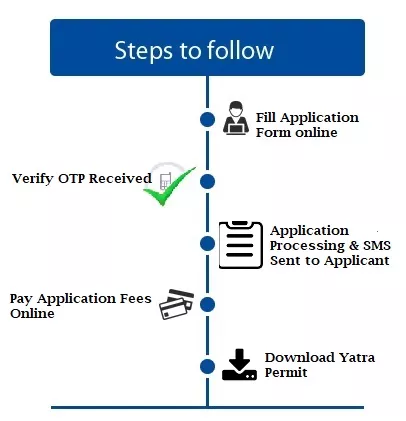
Amarnath Registration Steps

  • सबसे पहले आपको अमरनाथजी श्राइन बोर्ड (SASB) की ऑफिशियल वेबसाइट jksasb.nic.in पर जाना होता है।
  • वेबसाइट पर Online Services या Registration लिंक पर क्लिक करें और फिर पर्सनल या ग्रुप रजिस्ट्रेशन में से अपनी जरूरत के अनुसार कोई एक विकल्प चुनें।
  • सामने खुले फॉर्म में सही जानकारी भरें और पहचान पत्र के साथ मेडिकल सर्टिफिकेट अपलोड करें।
  • इसके बाद निर्धारित ऑनलाइन फीस का भुगतान करें और पोर्टल से अपना यात्रा परमिट डाउनलोड कर लें।
  • श्री अमरनाथजी यात्रा के ऑफिशियल ऐप के जरिए भी रजिस्ट्रेशन किया जा सकता है।

ये भी पढ़ेंः Amarnath Yatra Registration 2026 – A Complete Guide

कौन कर सकता है यात्रा के लिए रजिस्ट्रेशन?

इस बार श्राइन बोर्ड ने सुरक्षा और स्वास्थ्य को ध्यान में रखते हुए 3 सख्त गाइडलाइंस जारी की हैं:

  • केवल 13 से 70 वर्ष की आयु के बीच के श्रद्धालु ही इस बार बाबा बर्फानी के दर्शन के लिए यात्रा कर सकते हैं।
  • सभी यात्रियों के पास अनिवार्य रूप से स्वास्थ्य प्रमाण पत्र यानी CHC होना जरूरी है, जो 8 अप्रैल 2026 के बाद जारी हुआ हो।
  • इसके साथ ही 6 सप्ताह से अधिक की गर्भवती महिलाओं को यात्रा की अनुमति नहीं दी जाएगी।

यात्रा के दो प्रमुख रास्ते

श्रद्धालु अपनी शारीरिक क्षमता के अनुसार दो रास्तों में से किसी एक को चुन सकते हैं:

  • पहलगाम रूट: यह रास्ता 48 किलोमीटर लंबा है लेकिन इसकी चढ़ाई अपेक्षाकृत कम कठिन है। पहली बार यात्रा करने वाले श्रद्धालुओं के लिए इसे बेहतर विकल्प माना जाता है।
  • बालटाल रूट: यह 14 किलोमीटर का रास्ता है लेकिन इसकी खड़ी चढ़ाई थोड़ी कठिन होती है। ट्रेकिंग का शौक रखने वाले यात्री अक्सर इस रास्ते को पसंद करते हैं।

ये भी पढ़ेंः Which Route is Easier: Baltal or Pahalgam?

हाई-टेक सुरक्षा और सुविधाएं

इस साल यात्रा को और अधिक सुरक्षित बनाने के लिए प्रशासन ने RFID ट्रैकिंग कार्ड को अनिवार्य कर दिया है। इसके साथ ही सभी तीर्थयात्रियों को 10 लाख रुपये का दुर्घटना बीमा कवर भी दिया जाएगा। बालटाल, नुनवान और श्रीनगर में ठहरने की बेहतर व्यवस्था के साथ-साथ घोड़े, पालकी और पोर्टर्स की बुकिंग के लिए प्री-पेड सिस्टम भी इस बार लागू किया गया है।


अधिक जानकारी के लिए श्री अमरनाथजी श्राइन बोर्ड की आधिकारिक वेबसाइट jksasb.nic.in पर जाएं।


Important link:

Book Here Amarnath Tour Package https://www.triptochardham.in/amarnath-yatra-packages

अमरनाथ यात्रा 2026: यात्रा 3 जुलाई से शुरू, जानें रजिस्ट्रेशन की पूरी प्रक्रिया और जरूरी तारीखें

Amarnath Yatra 2026

Amarnath Yatra 2026: अमरनाथ गुफा जम्मू-कश्मीर के अनंतनाग जिले में लगभग 12,756 फीट की ऊंचाई पर स्थित है। इस पवित्र गुफा में हर साल प्राकृतिक रूप से एक बर्फ का शिवलिंग बनता है। दुनियाभर के श्रद्धालु इस बर्फीले शिवलिंग को भगवान शिव का दिव्य स्वरूप मानते हैं।

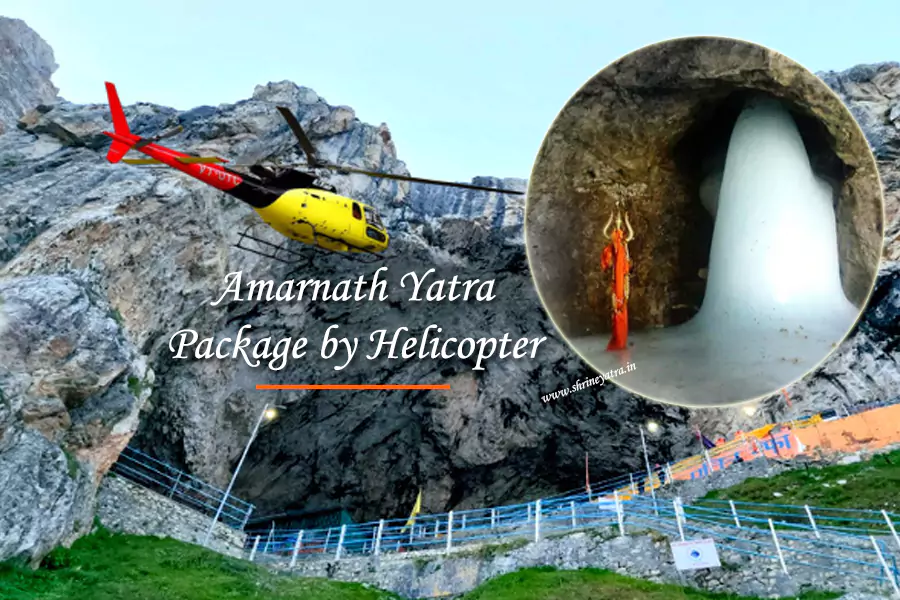
Amarnath Yatra Package by Helicopter

Amarnath Yatra 2026: श्री अमरनाथजी श्राइन बोर्ड ने अमरनाथ यात्रा 2026 की तारीखों की आधिकारिक घोषणा कर दी है। इस साल की वार्षिक तीर्थयात्रा 3 जुलाई 2026 से शुरू होगी। यह यात्रा 28 अगस्त 2026 को रक्षा बंधन के पावन अवसर पर समाप्त होगी। इस बार यह यात्रा कुल 57 दिनों तक चलेगी और लाखों श्रद्धालुओं के इस पवित्र यात्रा में शामिल होने की उम्मीद है।

प्रथम पूजा और आध्यात्मिक शुरुआत

यात्रा के औपचारिक आरंभ से पहले, श्राइन बोर्ड भगवान शिव का आशीर्वाद लेने के लिए एक विशेष प्रथम पूजा का आयोजन करता है। यह पवित्र पूजा ज्येष्ठ पूर्णिमा के दिन, यानी 29 जून 2026 को संपन्न होगी। इसी दिन से यात्रा के लिए पूरा आध्यात्मिक वातावरण तैयार हो जाता है और यात्रा की दिशा में कदम बढ़ने लगते हैं।

रजिस्ट्रेशन प्रक्रिया: कब और कैसे कराएं पंजीकरण?

अमरनाथ यात्रा 2026 के लिए सभी श्रद्धालुओं को अग्रिम पंजीकरण (Advance Registration) कराना अनिवार्य है। श्राइन बोर्ड श्रद्धालुओं की सुरक्षा सुनिश्चित करने और भीड़ के प्रबंधन के लिए यह पंजीकरण जरूरी बनाता है। इस साल रजिस्ट्रेशन की प्रक्रिया 15 अप्रैल 2026 से शुरू होगी। भक्त ऑनलाइन और ऑफलाइन दोनों माध्यमों से अपना पंजीकरण करा सकते हैं।

ऑफलाइन माध्यम:

श्रद्धालु देशभर में स्थित जम्मू-कश्मीर बैंक, PNB (पंजाब नेशनल बैंक), SBI (स्टेट बैंक ऑफ इंडिया) और Yes Bank की 554 शाखाओं पर जाकर व्यक्तिगत रूप से अपना पंजीकरण करा सकते हैं।

ऑनलाइन माध्यम:

श्राइन बोर्ड अपनी आधिकारिक वेबसाइट और मोबाइल ऐप के जरिए पंजीकरण की सुविधा प्रदान करता है। श्रद्धालु घर बैठे लॉगिन करके अपनी जानकारी भर सकते हैं और पंजीकरण की प्रक्रिया पूरी कर सकते हैं।

Read more here: Amarnath Yatra Registration 2026 – A Complete Guide

स्वास्थ्य प्रमाणपत्र है अनिवार्य

अमरनाथ यात्रा अत्यधिक ऊंचाई और कठिन भौगोलिक परिस्थितियों वाले क्षेत्र से होकर गुजरती है। इसी कारण प्रत्येक श्रद्धालु को पंजीकरण के समय किसी अधिकृत चिकित्सक द्वारा जारी किया गया अनिवार्य स्वास्थ्य प्रमाणपत्र (CHB) जमा करना होता है। प्रशासन बिना वैध स्वास्थ्य प्रमाणपत्र और परमिट के किसी भी यात्री को आगे बढ़ने की अनुमति नहीं देता है। सभी श्रद्धालु यात्रा शुरू करने से पहले इस जरूरी नियम का पालन अवश्य करें।

यात्रा मार्ग और तैयारी

अमरनाथ यात्रा 2026 को प्रशासन दो पारंपरिक मार्गों से संचालित करता है: पहलगाम मार्ग और बालटाल मार्ग। अधिकारियों ने दोनों मार्गों पर श्रद्धालुओं के लिए सुरक्षा व्यवस्था, चिकित्सा शिविर, लंगर और ठहरने की सुविधाओं को अंतिम रूप देना शुरू कर दिया है। श्राइन बोर्ड सभी तीर्थयात्रियों को सलाह देता है कि वे अपने साथ गर्म कपड़े, जरूरी दवाइयां और आवश्यक व्यक्तिगत सामान अवश्य रखें। यात्रा से पहले शारीरिक रूप से तैयार रहना हर श्रद्धालु की यात्रा को अधिक सुरक्षित और सुखद बनाता है।

Important link:

Book Here Amarnath Tour Package https://www.triptochardham.in/amarnath-yatra-packages

Authorised Doctors for Amarnath Yatra 2026 – Jammu Health Directorate List

Amarnath Yatra via Baltal

SRINAGAR: The Directorate of Health Services, Jammu has officially released a list of 14 authorised doctors across the Jammu Division. These doctors will issue mandatory health certificates for pilgrims planning to attend the Shri Amarnath Ji Yatra 2026.

The directorate issued this list through an official communication (No. DHSJ/SANJY-26/) dated March 19, 2026. The communication was addressed to the Health and Medical Education Department at Civil Secretariat, Jammu. Chief Medical Officers and Medical Superintendents submitted their inputs, and the Administrative Department used those inputs to compile the final nominations.

Releases List of Authorised Doctors for Amarnath Yatra 2026

The document shows that the 14 doctors are spread across 7 locations in the Jammu Division. Kishtwar has 2 doctors, while Paddar and Chatroo each have 1 doctor. The Poonch district, including District Hospital Poonch, covers 3 doctors. SDH Mandi holds 2 doctors, and both CHC Surankote and CHC Mendhar have 2 doctors each. One doctor has also been authorised at NTPHC Sathra.

Looking at their designations, the list includes 1 Consultant Physician, 1 Consultant Medicine Specialist, 1 Specialist, and 11 Medical Officers.

The authorised doctors include Dr. Sanjay Lal Parihar (Reg. No. 5998), Dr. VR Pandita (4655), Dr. Younis Raja (15004), Dr. Kanhaiya Lal (8738), Dr. Shahzad Ahmed (3300), Dr. Ishfaq Anjum (12967), Dr. Amit Kour (9449), Dr. Ramitpal Singh (12836), Dr. Muzaffer (38969), Dr. Sumit Sharma (18129), Dr. Imran Jamil (11018), Dr. Tariq Mehmood Khan (10336), and Dr. Ibrar Ahmed (15818). The entry of Dr. Afzad Ahmed from CHC Mendhar appears on the list without registration and contact details.

Officials confirmed that only these 14 doctors hold the authority to issue valid health certificates for the 2026 Yatra in the Jammu Division. Every pilgrim must carry this health certificate, as it serves as proof of medical fitness for this high-altitude pilgrimage.
The Directorate has also shared official contact details for further coordination. You can reach them by telephone at 0191-2546338, by fax at 0191-2549632, or by email at dhsjammu@rediffmail.com and dhsjammu24@gmail.com.

This notification marks a key administrative step in the preparations for the annual pilgrimage, which draws thousands of devoted pilgrims every year.

Check the list: https://jksasb.nic.in/ListofAuthorizedDoctorsInstitutions2026.html

Book here customized tour package https://www.triptochardham.in/amarnath-yatra-packages

Top Travel Agencies and Tour Operators for Amarnath Yatra 2027

Amarnath Yatra 2026

Every year, thousands of devoted pilgrims travel to the sacred Amarnath Cave in Jammu & Kashmir to seek the blessings of Lord Shiva. This holy journey takes place in the high Himalayas, and it requires careful planning, physical preparation, and a trusted travel partner. Choosing the right travel agency makes a huge difference in your experience. At Shrine Yatra, we help pilgrims complete this divine journey safely, comfortably, and peacefully.

Why You Need a Reliable Travel Agency for Amarnath Yatra?

The Amarnath Yatra is not a simple trip. The trek involves high-altitude mountain paths, unpredictable weather, and limited facilities along the route. A good travel agency handles all the hard work so you can focus on your devotion.

Here is what a trusted agency does for you:

  • Books your Amarnath Yatra registration on time
  • Arranges helicopter bookings or trek packages based on your needs
  • Provides accommodation near the base camps
  • Organizes transport from your city to the base camp and back
  • Offers medical support and trained guides throughout the journey
  • Keeps you informed about weather updates and route conditions

Without proper support, pilgrims can face delays, health risks, and unnecessary stress. That is why picking the best travel agency for Amarnath Yatra matters so much.

What Makes Shrine Yatra One of the Best Travel Agencies for Amarnath Yatra

Shrine Yatra stands out as one of the most trusted names for Amarnath Yatra packages. We have served thousands of happy pilgrims over the years, and we put the needs of every traveler first.

1. Complete Yatra Packages

Shrine Yatra offers all-inclusive Amarnath Yatra packages that cover everything from departure to return. Our packages include:

  • Yatra registration and permits
  • Accommodation at comfortable camps and hotels
  • Transport by road or helicopter
  • Meals during the journey
  • Medical kits and first-aid support
  • Experienced guides and staff

You do not need to worry about booking each part separately. We handle it all.

2. Helicopter Packages for Senior and Differently-Abled Pilgrims

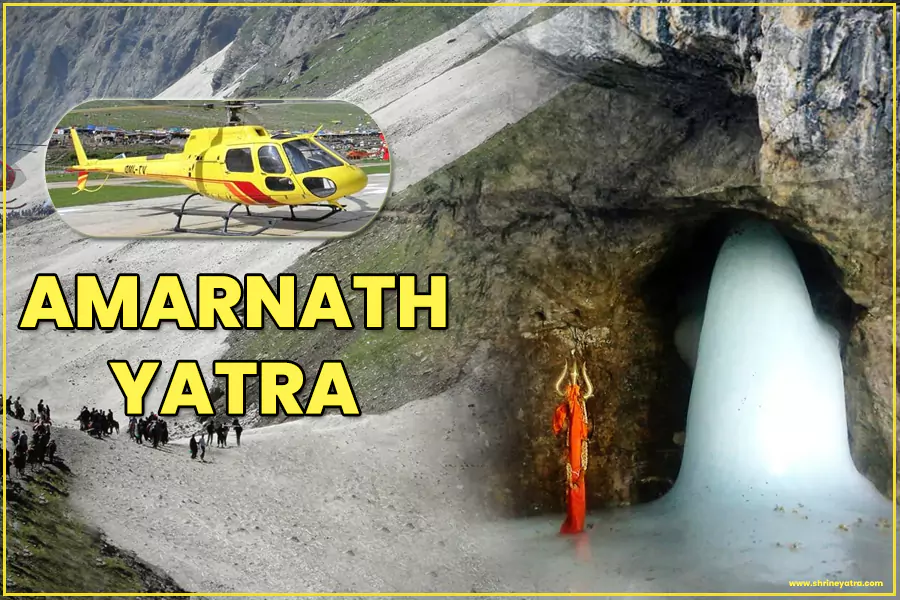
Many elderly pilgrims and people with physical limitations dream of visiting the Amarnath Cave but find the trek difficult. Shrine Yatra provides Amarnath Yatra helicopter packages that make this dream possible. The helicopter ride takes pilgrims directly to Panjtarni, which is close to the holy cave. This option saves time and reduces physical strain.

3. Budget-Friendly Options

We believe that every devotee deserves the chance to complete the Amarnath Yatra. That is why Shrine Yatra offers packages at different price points. Whether you travel alone, with family, or in a group, we have a package that fits your budget without reducing comfort or safety.

4. Experienced and Caring Team

Our team at Shrine Yatra has years of experience managing Amarnath Yatra trips. Our guides know the route well and stay with pilgrims at every step. We train our staff to handle emergencies, assist senior pilgrims, and keep everyone in the group safe and motivated.

5. 24/7 Customer Support

Planning a yatra involves many questions. You might want to know about the best time to go, what to pack, or how to get a yatra pass. Shrine Yatra provides round-the-clock customer support to answer all your questions before, during, and after the journey.

Popular Amarnath Yatra Routes We Cover

There are two main routes to reach the Amarnath Cave:

Pahalgam Route (Traditional Route)

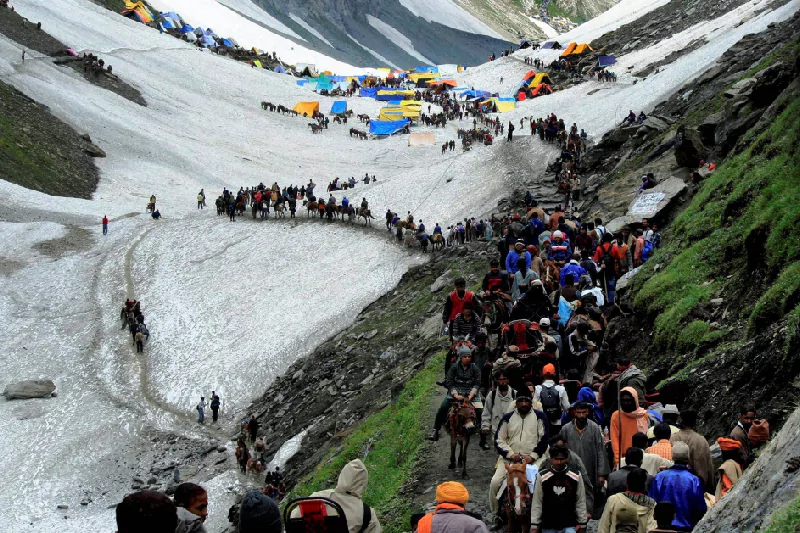
This is the longer and more scenic route. It starts from Pahalgam in Anantnag district. Pilgrims walk through beautiful valleys, meadows, and mountain trails. This route takes around 3 to 5 days to complete on foot.

Shrine Yatra organizes well-planned group treks along the Pahalgam route. We set up camps at key stops like Chandanwari, Sheshnag, and Panchtarni so pilgrims can rest and stay energized.

Baltal Route (Shorter Route)

The Baltal route is shorter and takes only 1 to 2 days. It is a steep climb, but it suits pilgrims who want to complete the yatra quickly. Shrine Yatra provides strong support teams along this route to help pilgrims manage the difficult terrain.

Both routes connect at Panjtarni, from where the final stretch to the Amarnath Cave begins.

Tips for Choosing the Best Travel Agency for Amarnath Yatra

When you search for the best travel agencies for Amarnath Yatra, keep these points in mind:

  • Check for proper registration: Always choose an agency that holds a valid government registration. Shrine Yatra operates with full legal compliance and transparency.
  • Look at reviews and testimonials: Read what past pilgrims say about the agency. Positive reviews and repeat customers show that an agency delivers what it promises.
  • Compare packages carefully: Do not just look at the price. Check what the package includes. A cheap package might miss important services like medical support or proper accommodation.
  • Ask about safety measures: The Amarnath Yatra route sits at high altitudes. A good agency provides oxygen support, trained medical staff, and emergency response plans.
  • Confirm yatra registration assistance: The Amarnath Shrine Board requires all pilgrims to register before the yatra. The best agencies help you complete this registration smoothly and on time.

Why Pilgrims Trust Shrine Yatra Year After Year?

Shrine Yatra has built a strong reputation by putting pilgrims first at every step. We do not just sell travel packages. We create a meaningful and safe experience for every devotee who joins us.

Here is what makes our pilgrims come back to us:

  • On-time departures and arrivals
  • Clean and safe accommodation
  • Hygienic meals prepared with care
  • Helpful and respectful staff
  • Transparent pricing with no hidden charges
  • Real-time updates and communication throughout the journey

Our goal is simple: we want every pilgrim to reach the Amarnath Cave safely, feel the divine energy of the holy shrine, and return home with beautiful memories.

Book Your Amarnath Yatra Package with Shrine Yatra Today

If you want a smooth, safe, and spiritually fulfilling Amarnath Yatra experience, Trip To Chardham is here to guide you. We handle all the details so that you can walk this sacred path with a peaceful heart and a focused mind.

Contact us today to learn more about our Amarnath Yatra packages, check availability, and book your spot before seats fill up. The holy cave of Lord Shiva awaits you, and Shrine Yatra will be with you every step of the way.

Start your divine journey with Trip To Chardham. Book now and travel with confidence.