Is Kedarnath Trek Difficult? Distance, Altitude and Difficulty Explained
Many pilgrims ask the same question before they travel. Is the Kedarnath trek hard? This is one of the most searched questions for anyone planning a trip to Kedarnath Temple. Many travelers also book a Kedarnath Yatra package to make the trip easier to plan. Kedarnath sits high in the Garhwal Himalayas. It is a holy place, but it is also a real Himalayan trek. The walk tests your body and your will power. Every year, thousands of people take on this trek as part of the Kedarnath Dham Yatra. Faith brings people here, but the physical side of the trek is real too.
The trek means long hours of walking uphill. You gain a lot of height, and mountain weather can change fast. But with the right prep, most healthy people can manage it well. In this guide, we cover the distance and the difficulty level. We also cover safety points and how to plan your trek, plus how a Kedarnath Yatra package can make your trip easier.
Kedarnath Trek Overview
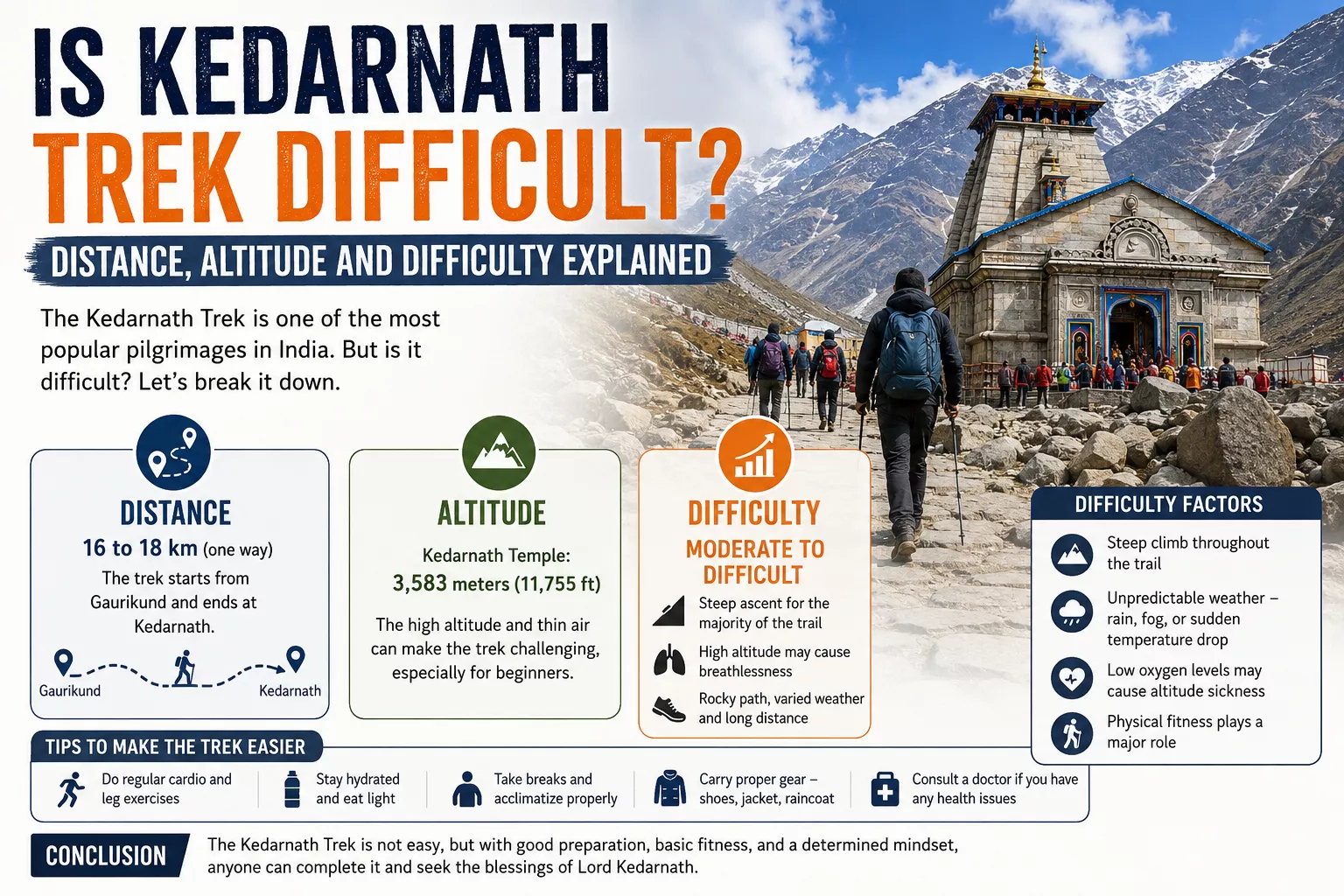
The Kedarnath Trek starts at Gaurikund. This is the last point you can reach by road. From here, you walk about 16 to 18 kilometers uphill to reach the temple. The temple sits at 3,583 meters above sea level. The path is clear and easy to follow. It was rebuilt after the 2013 floods, so it is now wider and better marked than before.
You do not need any special climbing skills for this trek. But the steady uphill walk still makes it tough on the body. Along the way, you pass pretty valleys, river crossings, and some steep sections. You will find food stalls, rest shelters, and medical camps all along the path. In short, the Kedarnath Trek is a moderate trek. It takes real effort, but you can do it with the right prep.
Key Highlights of the Kedarnath Trek
- Total Distance: 16 to 18 km (one way)
- Starting Altitude: 1,982 meters
- Temple Altitude: 3,583 meters
- Average Trek Time: 6 to 9 hours
- Difficulty Level: Moderate
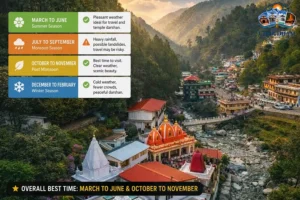
- Best Season: May to June and September to October
These facts together decide if a person finds the trek easy or hard.
Understanding Kedarnath Trek Distance and Time
Distance matters a lot when it comes to difficulty. On flat ground, 16 kilometers feels easy. But the same distance uphill, at high altitude, feels much more tiring. The time it takes depends on your fitness, the weather, and how many people are on the path. Most fit adults finish the trek in 6 to 7 hours. Beginners often take 8 to 9 hours, with rest breaks along the way. Senior citizens often need more time, or they choose help like a pony or palki. The route is split into a few sections. The climb keeps going the whole way. The last part before the temple is the steepest part, so it feels the most tiring. Knowing this ahead of time helps you avoid pushing your body too hard.
Approximate Distance Breakdown
|
|
|
|---|---|
| Section | Distance |
| Gaurikund to Jungle Chatti | 4 km |
| Jungle Chatti to Bheembali | 3 km |
| Bheembali to Linchauli | 4 km |
| Linchauli to Kedarnath | 5–6 km |
This breakdown helps you get ready for each part of the climb.
Altitude and Its Impact on Difficulty
Altitude is often the real reason people worry about this trek. You gain more than 1,500 meters of height in just one day. Higher up, there is less oxygen in the air. This can make you feel out of breath and tired. Even people who are fit at sea level may feel slow and heavy while climbing. Some trekkers get mild altitude symptoms. These can be a headache, dizziness, or an upset stomach. Walking slowly and taking breaks often helps your body get used to the thin air. Drink enough water, and do not rush your pace. Altitude, more than the ground itself, is what makes this trek feel hard.
Common Effects of High Altitude
- Less stamina
- A faster heartbeat
- Feeling out of breath on steep parts
- Getting tired faster
- Mild headaches for some people
Most of these effects do not last long. They get better with a slow, steady pace.
Kedarnath Trek Condition and Route Quality
Today’s Kedarnath trek route is much better and safer than it was years ago. After the terrible floods in 2013, the government rebuilt the path. This made it safer and easier to use. The trail is now wider, and many parts are made stronger. Railings stand along the steep spots to help prevent falls. Medical camps and safety staff wait at points along the way. Still, the weather is something no one can control. In the monsoon, heavy rain can make the path slippery. This raises the risk of landslides. So both the trail itself and the time of year you go affect how hard the trek feels.
Seasonal Trek Conditions
- Summer (May to June): Steady weather, mild cold, big crowds
- Monsoon (July to August): Slippery paths, higher landslide risk, best avoided
- September to October: Clear skies, colder nights, fewer pilgrims
Picking the right season makes both the walk and the safety side much easier.
Is Kedarnath Trek Difficult for Beginners?
If you have never trekked before, the Kedarnath Trek can feel a bit scary at first. But it is not an extreme trek, and you do not need any special gear. The main challenge is walking uphill for many hours in a row. People who do not move around much in daily life may find it hard at first. But they can still finish it with some prep. A simple fitness plan for 4 to 6 weeks before the trip can help a lot. Try brisk walking, climbing stairs, and light jogging to build up your stamina. Your mindset matters too. Staying patient helps. A steady pace stops you from wearing out too fast.
Beginner Preparation Checklist
- Walk 4 to 5 km every day before the trip
- Practice climbing stairs often
- Build up your breathing with light cardio
- Wear in your trekking shoes before you travel
- Eat healthy food in the weeks before you leave
Good prep turns a hard trek into one you can truly manage.
Planning Kedarnath Trek for Families and Senior Citizens
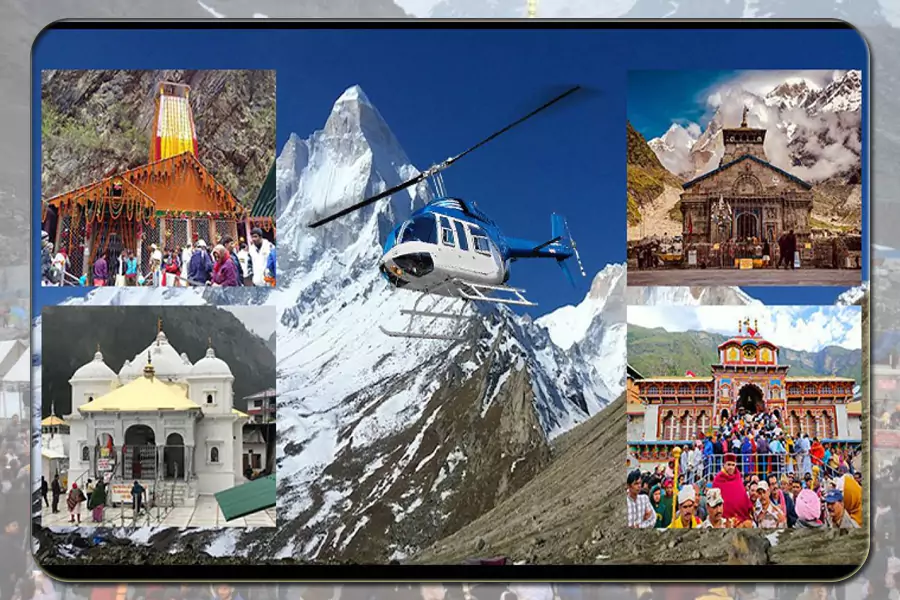
The Kedarnath Yatra draws people of every age, including older travelers. You do not have to walk the full 16 to 18 km on foot. There are a few ways to get help along the route. Pony and mule rides run the whole way. Palki, or doli, service lets trained porters carry senior citizens safely. Helicopter rides from nearby towns can cut travel time by a lot.
Many travelers pick a Kedarnath yatra package that covers rooms, transport, and help with booking. Good planning means age does not have to stop anyone from completing the Kedarnath Dham Yatra.
Assisted Travel Options
- Pony or mule ride
- Palki (doli) service
- Helicopter ride from Phata or Guptkashi
- A full Kedarnath yatra package
These choices make the trip possible even for those who cannot walk long distances.
Is the Kedarnath Trek Dangerous?
People often think this trek is risky just because it sits in the Himalayas. In truth, under normal weather, the trek is safe and well watched over. The government sends security staff, rescue teams, and medical help along the route. But the risk goes up during heavy rain, or if trekkers ignore the safety rules. Pushing your body too hard can also cause problems. So can not drinking enough water, or poor planning. These are all problems you could avoid.
cCheck the weather before you leave. Skip the trip during monsoon season to lower your risk. So, is the Kedarnath trek dangerous? It is safe, as long as you go with care and stay aware.
Safety Tips for Risk Reduction
- Start your trek early in the morning
- Skip trekking in heavy rain
- Follow the official trail rules
- Do not rush or push too hard
- Carry basic medicines with you
Staying aware and staying disciplined are what keep a trek safe.
Expert Tips for a Smooth Kedarnath Trek
Good planning lowers the strain on your body and makes the whole trek better. Starting early helps you skip the afternoon tiredness and the biggest crowds. Keeping a slow, steady pace saves your energy for the whole walk. Pack only what you truly need, so you are not carrying extra weight. Wear clothes in layers, since it gets cold near the temple. Good shoes with a strong grip help stop you from slipping. Spend a night in Guptkashi before you trek. This lets your body get used to the height. These simple steps make the trek feel much easier.
Essential Items to Carry
- A warm jacket and gloves
- A raincoat or poncho
- Comfy trekking shoes
- Energy snacks and a water bottle
- Your personal medicines
Good prep has a direct effect on how comfortable and safe you feel.
Trek Route and Suggested Itinerary for Beginners
A clear day by day plan helps beginners use their energy well.
First Day: Reach Guptkashi or Sitapur and rest well. A good night’s sleep before the trek is key for stamina.
Second Day: Get to Gaurikund early and start the climb. Take several short breaks instead of a few long ones. Once you reach Kedarnath, go for temple darshan and rest for the night.
Third Day: Walk back down with care, since going downhill can strain your knees. Booking a Kedarnath yatra package makes transport and rooms much easier to arrange.
The 4-Day Itinerary
|
|
|
|---|---|
| Day | Plan |
| Day 1 | Arrival and acclimatization |
| Day 2 | Trek to Kedarnath |
| Day 3 | Return trek |
| Day 4 | Departure |
This clear plan cuts down on stress and guesswork.
Final Verdict: Is Kedarnath Trek Difficult?
We looked at the distance, the altitude, the ground, and safety. Based on all this, the Kedarnath Trek comes out as moderately hard. It is not a light stroll, but it is not an extreme Himalayan trip either. Healthy adults with some basic prep can finish it without much trouble. Beginners can manage it too, with training and a steady pace. Senior citizens have several helpful options if walking the full way is too much.
The real test here is stamina and getting used to the height, not skill. So, is the Kedarnath trek hard? Yes, it takes real effort, but you can do it with planning, prep, and patience.
Frequently Asked Questions for Kedarnath Trek Difficulty
1. Is the Kedarnath trek difficult for beginners?
The Kedarnath trek is seen as moderately hard. Beginners with basic fitness can finish it. Walk at a steady pace, take rest breaks, and start early in the day.
2. How long is the Kedarnath trek distance, and how many hours does it take?
The trek runs about 16 to 18 km from Gaurikund to the temple. Most pilgrims take 6 to 10 hours, depending on their fitness, the weather, and how fast they walk.
3. Can senior citizens complete the Kedarnath trek safely?
Yes, many senior citizens finish the trek safely with the right prep. Pony rides, palki service, and helicopter rides are also there for those who want to skip the long walk.
4. What is the altitude of the Kedarnath trek, and does it cause breathing problems?
Kedarnath Temple sits at about 3,583 meters. Some travelers feel a little short of breath, since the air has less oxygen up high. Walk slowly and drink enough water.
5. Is the Kedarnath trek safe for families and kids?
Yes, the trek is generally safe for families and older kids when you plan it well. Parents should keep a slow pace and make sure kids stay warm and drink enough water.
6. What is the condition of the Kedarnath trek route and path quality?
The trek route is well kept. It has paved paths, railings, rest points, medical camps, and food stalls along the way. The weather can still affect how comfortable the walk feels.
7. How to prepare physically for the Kedarnath trek?
Start walking or doing light cardio at least 3 to 4 weeks before your trip. Practice climbing stairs, build up your stamina, and work on your breathing to handle the altitude better.
8. What are expert tips for a smooth Kedarnath trek?
Start early, walk slowly, and carry light luggage. Drink enough water and wear proper trekking shoes. Do not push too hard on the high altitude sections.
9. What is the day-wise itinerary for the Kedarnath trek for beginners?
Day 1, reach Guptkashi or Sonprayag. Day 2, travel to Gaurikund and start the trek to Kedarnath. Day 3, temple darshan and rest. Day 4, trek back to Gaurikund and carry on with your return trip.
10. Which is harder, the Kedarnath trek or other Himalayan pilgrim treks?
The Kedarnath trek is easier than many high altitude Himalayan treks, but harder than short pilgrim walks. Most travelers with average fitness can manage it well.