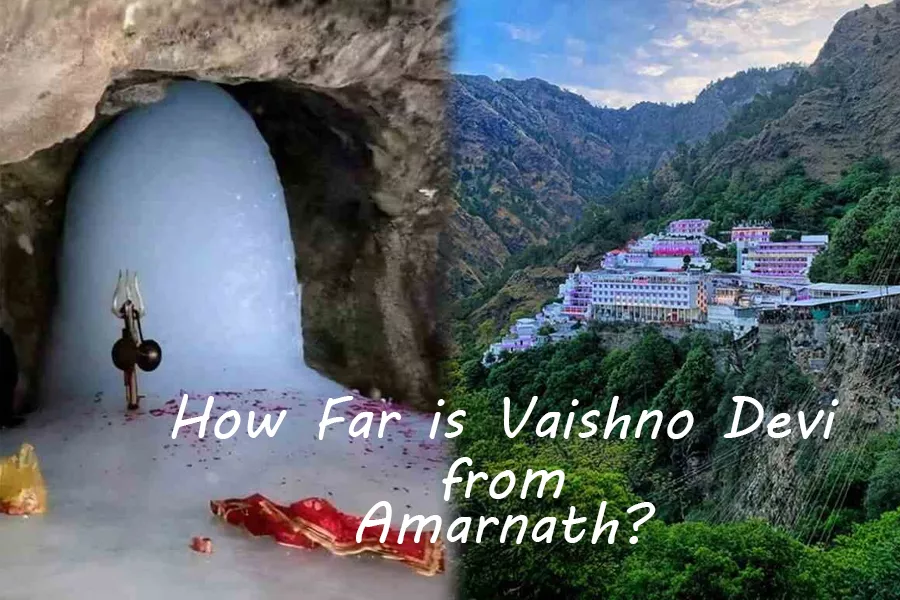
How Far Is Vaishno Devi From Amarnath?
If you are planning both the Vaishno Devi Yatra and Amarnath Yatra in the same Jammu & Kashmir trip, the first thing to understand is that there is no single road distance between the two shrines.
The reason is simple: Vaishno Devi Shrine is reached from Katra by a pilgrimage route, while Amarnath Cave is not directly accessible by road. You first travel by road to an authorised Amarnath access point such as Pahalgam or Baltal, and then continue toward the cave through the designated pilgrimage route.
For practical travel planning, Katra is the useful starting point. Current route and taxi sources generally place Katra to Pahalgam at roughly 230–250 km by road, while Katra to Baltal is commonly around 320–350 km by road, depending on the route used. The Amarnath walking distance then has to be added separately.
So, if someone asks, “How far is Vaishno Devi from Amarnath?”, the most useful answer is:
Katra to an Amarnath access point is roughly 230–350 km by road depending on whether you use the Pahalgam or Baltal side, and the journey to the Holy Cave requires additional pilgrimage travel beyond the road journey.
That distinction makes a big difference when planning your days.
Quick Answer: How Far Is Vaishno Devi From Amarnath?
The answer depends on what you mean by “Vaishno Devi” and “Amarnath.”
- Vaishno Devi Shrine to Katra: about 13 km by the pilgrimage track.
- Katra to Pahalgam: roughly 230–250 km by road as a practical planning range.
- Katra to Baltal: roughly 320–350 km by road, depending on the route.
- Baltal to Amarnath Cave: about 14 km by the designated route.
- Pahalgam side: Pahalgam to Chandanwari is about 16 km by road, followed by the pilgrimage route toward the cave.
- Chandanwari to Holy Cave: approximately 32 km along the traditional route.
These figures should not be added together blindly because they describe different parts of the journey.
The key point is: Katra is the road-access reference point for Vaishno Devi, while Baltal and the Pahalgam/Chandanwari side are access points for Amarnath. The cave itself is reached through the Yatra route, not by ordinary road travel.
Why the Distance Between Vaishno Devi and Amarnath Can Be Confusing
Many online distance answers create confusion by treating several different places as though they are the same.
They are not.
Vaishno Devi Shrine
The shrine is located in the Trikuta Hills. Pilgrims normally begin the traditional journey from Katra, which serves as the base town.
The Shrine Board lists the Bhawan at about 13 km from Katra.
Katra
Katra is the practical transportation and accommodation hub for the Vaishno Devi pilgrimage.
You can arrive here by road, rail or other permitted transport and then undertake the Vaishno Devi Yatra.
Amarnath Cave
The Holy Cave is a high-altitude pilgrimage destination. You cannot simply drive a taxi to the cave.
You first reach an authorised access point and then continue through the designated Yatra route.
Baltal
Baltal is one of the main access points for the Amarnath pilgrimage. The traditional route from Baltal to the Holy Cave is about 14 km.
Pahalgam
Pahalgam is associated with the longer traditional Amarnath route. Pilgrims proceed toward Chandanwari before starting the main walking section.
Srinagar
Srinagar is a major transport and accommodation hub between the Jammu and Kashmir regions. Travelers combining the two pilgrimages may use Srinagar as an intermediate stop, depending on the selected Amarnath access route.
Jammu
Jammu is another major transport hub. Katra is roughly 50 km from Jammu according to the Vaishno Devi Shrine Board.
This is why a package itinerary might say:
Jammu → Katra → Srinagar → Baltal
while another may use:
Katra → Pahalgam → Amarnath
Both can describe legitimate travel plans, but they are measuring different sections.
Vaishno Devi Shrine vs Katra: What Distance Should You Use?
For most road-trip planning, use Katra, not the shrine itself.
The Shri Mata Vaishno Devi Shrine Board identifies Katra as the base for the pilgrimage, while the shrine lies approximately 13 km from Katra along the pilgrimage track.
That means a vehicle cannot simply pick you up from the Vaishno Devi Bhawan and drive directly toward Amarnath.
A realistic combined journey looks more like:
Vaishno Devi Shrine → return to Katra → road journey → Amarnath access point → designated Yatra route → Amarnath Cave
This is much more useful than quoting a single shrine-to-shrine road distance.
Katra to Amarnath Distance
There are two practical ways to approach Amarnath from Katra:
Katra to Pahalgam side
Current 2026 travel and taxi sources commonly quote approximately 230–250 km between Katra and Pahalgam, with road travel generally taking several hours.
From Pahalgam, the pilgrimage access continues toward Chandanwari.
The Shrine Board’s route information lists:
- Pahalgam to Chandanwari: about 16 km by road
- Chandanwari to Sheshnag: about 12 km
- Sheshnag to Panchtarni: about 14 km
- Panchtarni to Holy Cave: about 6 km
Therefore, the traditional Pahalgam-side journey contains both road travel and a substantial walking/pilgrimage section.
Katra to Baltal side
Current route and taxi sources generally place Katra to Baltal in the 320–350 km range by road, depending on the route and road calculation used.
From Baltal, the Amarnath route to the cave is approximately 14 km.
This makes the Baltal option longer by road from Katra, but shorter in terms of the designated walking distance to the cave.
That distinction is important when choosing your route.
Distance Comparison: Katra and Amarnath Access Points
| Journey | Approximate distance | Main travel method | What it represents |
| Katra → Vaishno Devi Bhawan | About 13 km | Trek/approved alternatives | Pilgrimage route |
| Katra → Pahalgam | About 230–250 km | Road | Road transfer |
| Pahalgam → Chandanwari | About 16 km | Road | Access toward Yatra route |
| Chandanwari → Holy Cave | About 32 km | Designated pilgrimage route | Main traditional walking section |
| Katra → Baltal | About 320–350 km | Road | Road transfer |
| Baltal → Holy Cave | About 14 km | Designated pilgrimage route/approved options | Main shorter walking route |
Important: These are planning figures rather than one official government-defined “Vaishno Devi to Amarnath distance.” Road distances can vary with the exact pickup point, route and road conditions.
Vaishno Devi to Amarnath Distance by Road
If you have already completed the Vaishno Devi Yatra, your practical road journey starts from Katra after returning from the shrine.
You then have two broad choices.
Option 1: Katra → Pahalgam → Chandanwari → Amarnath
This option combines a roughly 230–250 km road transfer to Pahalgam with the onward journey toward Chandanwari and then the traditional Amarnath route.
It can work well if your itinerary already includes Pahalgam or if you want to use the longer traditional pilgrimage approach.
Option 2: Katra → Baltal → Amarnath
This involves a longer road transfer from Katra, generally around 320–350 km in current route-planning sources, followed by the shorter Baltal route to the cave.
The important point is that neither route is simply a taxi ride from Vaishno Devi to Amarnath Cave.
The road journey ends before the final pilgrimage destination.
Amarnath to Vaishno Devi Distance
The reverse journey follows the same basic geography.
If you finish the Amarnath Yatra at the cave, you first need to return through the designated route to your access point.
For example:
Amarnath Cave → Baltal → road journey → Katra → Vaishno Devi
or:
Amarnath Cave → Chandanwari/Pahalgam side → road journey → Katra → Vaishno Devi
The actual travel time can differ from the outward journey because of:
- Traffic
- Weather
- Road restrictions
- Security arrangements
- Yatra movement
- Your return route
- Rest stops
- Availability of transport
So it is better to plan the return as a separate travel segment instead of simply reversing the clock from the outbound trip.
How Long Does It Take to Travel From Vaishno Devi to Amarnath?
This question is more complicated than the distance question.
You need to consider at least five separate stages:
1. Vaishno Devi Shrine to Katra
The pilgrimage track from Katra to Bhawan is approximately 13 km. Your return from Bhawan to Katra can be completed by walking or using permitted transport options where available.
2. Katra to the Amarnath access point
Depending on your selected route:
- Katra → Pahalgam: roughly 230–250 km.
- Katra → Baltal: roughly 320–350 km.
Allow several hours for either road journey.
3. Access-point formalities
During the active Amarnath Yatra, you may have registration, security, route-control and access procedures to follow.
4. Access point to the cave
This is the major difference from an ordinary road trip.
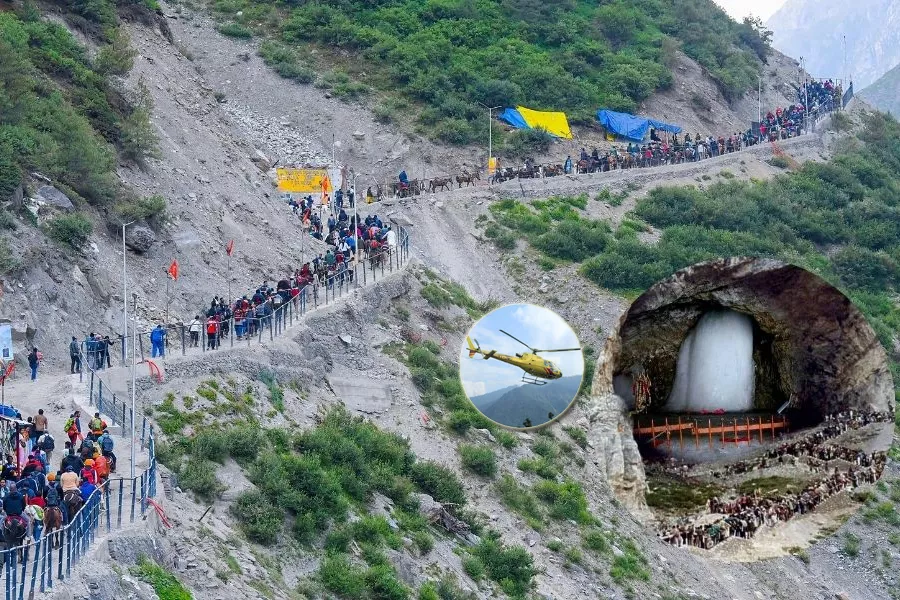
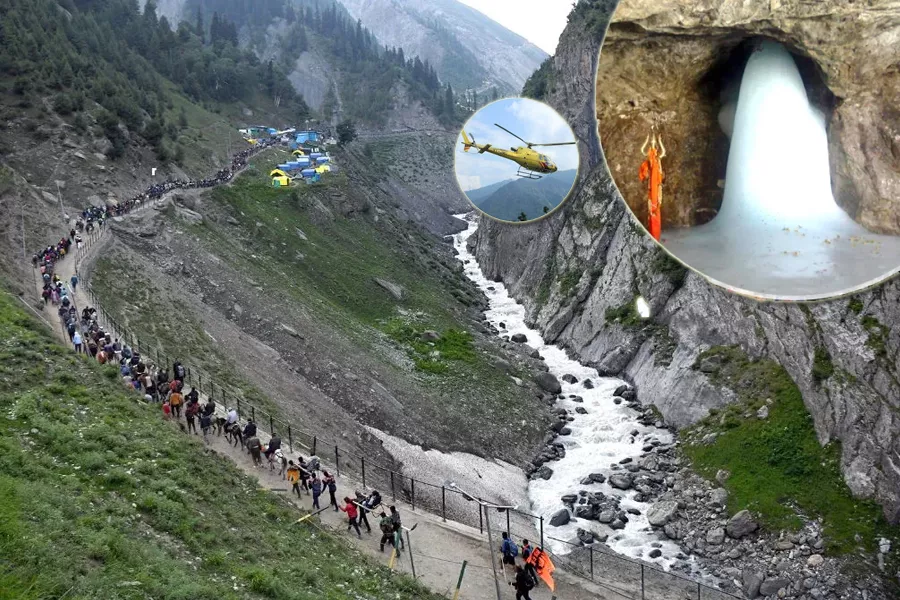
The final section requires the designated pilgrimage route. From Baltal, the route is about 14 km. From the Pahalgam side, the walking distance is considerably longer.
5. Darshan and return
Darshan, queues, rest and the return journey can add substantial time.
For this reason, do not plan the entire Katra-to-Amarnath experience as a single road-travel day.
Vaishno Devi to Amarnath Route
A practical combined route can look like this:
Vaishno Devi Shrine
↓
Katra
↓
Jammu / NH44 corridor
↓
Kashmir Valley
↓
Pahalgam or Baltal
↓
Designated Amarnath Yatra route
↓
Amarnath Cave
The exact road path depends on the Amarnath access point and the current traffic and security arrangements.
You should not assume that the same road route will be available during every Yatra season.
Katra to Amarnath: How Should You Travel?
Private car or taxi
This is generally the most flexible option for families and small groups.
Advantages include:
- Flexible departure time
- Door-to-door travel between road-access locations
- Easier luggage management
- Convenient rest stops
- Better control over the itinerary
The downside is cost, especially for smaller groups.
Shared taxi
Shared transport can reduce the cost but gives you less control over departure times and stops.
It can work for travelers who are comfortable with a less flexible schedule.
Bus or public transport
Public transport can be economical, but it may require changes and does not eliminate the need for the Amarnath pilgrimage route after reaching the access area.
Check current services before departure rather than relying on old schedules.
Train
Rail is useful for reaching the Jammu/Katra side and, depending on the current railway timetable and service, for parts of the wider Jammu & Kashmir journey.
A train does not take you directly to the Amarnath Cave.
Flight
Flying to Srinagar can make sense for travelers whose broader itinerary begins or ends in the Kashmir Valley.
You would still need onward road travel to the relevant Amarnath access point.
Helicopter
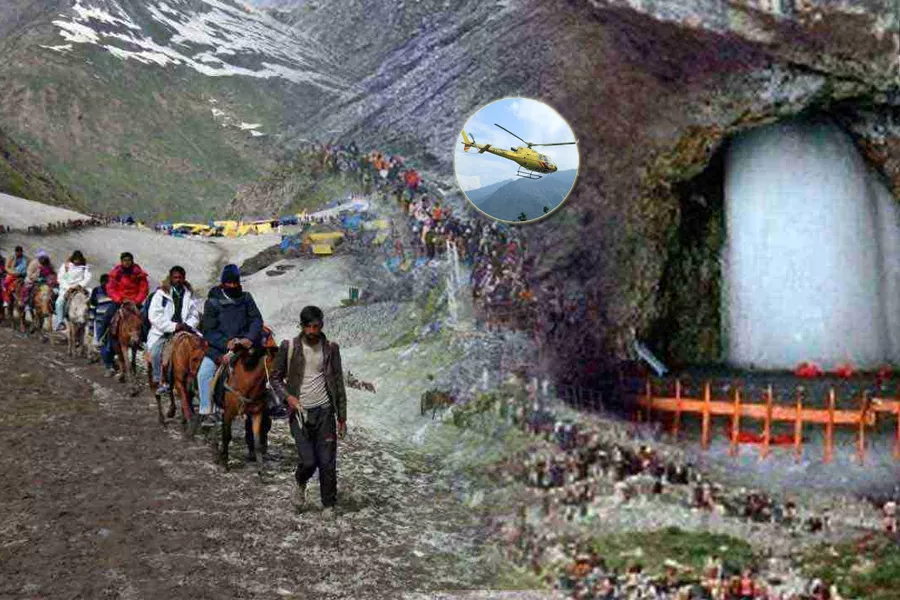
Helicopter services for Amarnath are seasonal and subject to official operation, weather and administrative restrictions.
Do not treat them as a permanent connection between Katra and the Amarnath Cave.
Road vs Train vs Flight vs Helicopter
| Option | Practical advantage | Limitation | Suitable for |
| Private road transfer | Flexible and direct between road-access points | Longer mountain-road journey | Families, couples, groups |
| Shared taxi | Lower cost than a private vehicle | Less flexible | Budget travelers |
| Train + road | Useful for selected rail sections | More changes | Budget-conscious travelers |
| Flight + road | Can reduce long surface travel from other cities | Requires airport transfers | Time-conscious travelers |
| Helicopter | Can reduce walking/road time when officially operating | Seasonal, weather-dependent and route-specific | Travelers seeking an alternative to some road/walking sections |
Why Distance Does Not Equal Travel Time in Jammu & Kashmir
A 250 km journey in the mountains cannot be treated like a 250 km highway journey across a flat region.
Travel time can change because of:
- Mountain roads
- Traffic congestion
- Road construction
- Rain
- Landslides
- Security checks
- Convoy or traffic restrictions
- Pilgrimage traffic
- Rest breaks
- Temporary road closures
The Jammu-Srinagar corridor in particular can experience changing traffic conditions.
For an important pilgrimage connection, leave a buffer rather than building your itinerary around the shortest possible driving estimate.
Pahalgam or Baltal: Which Is Better for a Combined Yatra?
There is no universal “best” route.
The right choice depends on what matters most to you.
| If your priority is… | Consider |
| Shorter Amarnath walking route | Baltal |
| Longer traditional pilgrimage approach | Pahalgam side |
| Staying in Pahalgam as part of a Kashmir itinerary | Pahalgam |
| Minimising the road distance from Katra | Pahalgam |
| Reducing the designated walking distance | Baltal |
| A more relaxed overall itinerary | Depends on available days and fitness |
| Family planning | Compare total road + walking effort, not just kilometres |
| Senior travelers | Consider physical ability, rest, current rules and permitted support |
The key is to compare the whole journey, not one number.
Can You Visit Vaishno Devi and Amarnath in One Trip?
Yes, both pilgrimages can be combined into one Jammu & Kashmir trip when the relevant Yatra is operating and current rules allow it.
This is a practical combination because Katra and the Kashmir Valley can be connected by road, while both destinations have established pilgrimage infrastructure.
But it requires more planning than a normal Kashmir sightseeing trip.
You need to coordinate:
- Vaishno Devi registration
- Amarnath registration
- Yatra dates
- Road transfers
- Accommodation
- Walking days
- Rest days
- Weather buffer
- Security restrictions
- Return transport
Most importantly, do not schedule the two pilgrimages so tightly that one delay causes the entire trip to fail.
Vaishno Devi First or Amarnath First?
Neither order is universally correct.
Option 1: Vaishno Devi → Amarnath
This is practical for travelers arriving from the Jammu side.
A typical flow could be:
Jammu → Katra → Vaishno Devi → Katra → Kashmir Valley → Amarnath
This works naturally when Katra is your first major pilgrimage stop.
Option 2: Amarnath → Vaishno Devi
This can work better for travelers who arrive in Srinagar or begin their trip in Kashmir.
A possible flow is:
Srinagar → Amarnath access point → Amarnath → Kashmir Valley → Katra → Vaishno Devi → Jammu
Which order should you choose?
Base the decision on:
- Your arrival airport or railway station
- Amarnath Yatra date
- Vaishno Devi booking availability
- Hotel availability
- Required rest
- Weather
- Return flight/train
- Road conditions
The Yatra date should usually drive the itinerary, rather than forcing the pilgrimage into an arbitrary sightseeing schedule.
Sample Vaishno Devi + Amarnath Itineraries
These are planning examples, not fixed tour schedules.
Option A: Comfortable 8–10 Day Plan
| Day | Plan |
| Day 1 | Arrive Jammu/Katra, hotel and rest |
| Day 2 | Vaishno Devi Yatra and return to Katra |
| Day 3 | Rest or buffer day in Katra |
| Day 4 | Katra to Pahalgam or another designated Amarnath access area, depending on current route |
| Day 5 | Prepare for Amarnath Yatra |
| Day 6 | Amarnath Yatra stage |
| Day 7 | Darshan/return stage according to the allocated route |
| Day 8 | Return toward Srinagar/Jammu |
| Day 9 | Buffer day for weather or travel delays |
| Day 10 | Departure |
This structure gives you breathing room rather than trying to fit everything into the minimum possible number of days.
Option B: Time-Efficient Plan
For travelers with fewer available days:
| Day | Plan |
| Day 1 | Arrive Jammu/Katra |
| Day 2 | Vaishno Devi Yatra and return |
| Day 3 | Katra to selected Amarnath access point |
| Day 4 | Amarnath Yatra |
| Day 5 | Return from Yatra and travel onward |
| Day 6 | Departure or final transfer |
This plan has much less flexibility.
A weather disruption or route restriction can affect the entire schedule, so it is not ideal if your return flight or train has no flexibility.
Option C: Family or Senior-Friendly Plan
A more relaxed plan could look like:
| Day | Plan |
| Day 1 | Arrive Katra and rest |
| Day 2 | Vaishno Devi Yatra using suitable permitted travel support if required |
| Day 3 | Full recovery day |
| Day 4 | Katra to Kashmir Valley |
| Day 5 | Rest and complete Amarnath formalities |
| Day 6–7 | Amarnath Yatra according to allocated route |
| Day 8 | Recovery and return journey |
| Day 9 | Buffer |
| Day 10 | Departure |
The exact number of days should be adjusted according to the current Amarnath route, registration date and the group’s physical ability.
Registration: Do You Need Separate Arrangements?
Do not assume that one pilgrimage registration covers the other.
The two shrines are managed by different Shrine Boards and have separate pilgrimage systems.
Vaishno Devi
The Shri Mata Vaishno Devi Shrine Board requires pilgrims to register for the Yatra and obtain the required Yatra access/RFID arrangements.
Amarnath
Amarnath has its own registration and permit process. For the 2026 Yatra, the Shrine Board required a Compulsory Health Certificate and set specific age and registration conditions.
Therefore:
A travel package booking is not the same thing as confirming every pilgrimage registration requirement.
Before departure, verify both systems separately through their official websites.
2026 Amarnath Information: Why Year-Specific Checking Matters
The 2026 Amarnath Yatra was scheduled from July 3 to August 28, 2026.
The Shrine Board required advance registration, a valid Compulsory Health Certificate and an RFID card for registered pilgrims. For 2026, the registration rules also excluded people below 13 or above 70 years of age and women beyond six weeks of pregnancy.
There was also an unusual 2026 helicopter restriction. The competent authority declared the Pahalgam and Baltal Yatra axes a No Flying Zone from July 1, 2026 until completion of the Yatra, so pilgrim helicopter services were unavailable during the 2026 Yatra.
These are 2026-specific facts, not permanent rules.
Since the 2026 Amarnath season has already ended, travelers planning the next season should not reuse these dates or assume the same helicopter arrangements will apply.
Vaishno Devi and Amarnath: Best Time to Plan Both
The two pilgrimages have very different seasonal patterns.
Vaishno Devi
Vaishno Devi is a year-round pilgrimage. The Shrine Board’s current website continues to show active Yatra operations and online services.
Amarnath
Amarnath is a seasonal high-altitude pilgrimage. Its operating period is notified for each Yatra season.
That means your combined-trip planning is controlled primarily by the Amarnath Yatra calendar.
If Amarnath is not operating, you cannot simply substitute a normal sightseeing visit to the Holy Cave.
For a future combined trip, check:
- Official Amarnath opening and closing dates
- Registration opening date
- Medical requirements
- Route status
- Weather advisories
- Transport restrictions
- Vaishno Devi registration and accommodation availability
Travel Tips for Families and Senior Citizens
The two pilgrimages involve different physical demands.
Vaishno Devi involves a significant uphill pilgrimage track from Katra, although the Shrine Board provides alternative travel facilities.
Amarnath adds high-altitude travel and a designated mountain route.
For families and older travelers:
- Keep the schedule flexible.
- Avoid unnecessary back-to-back travel days.
- Keep luggage light.
- Carry personal medication.
- Check current eligibility rules.
- Allow extra rest.
- Do not assume a helicopter or pony option will always be available.
- Consider professional medical advice if a traveler has a health concern.
- Keep one buffer day if the trip is important or time-sensitive.
What to Pack for Both Pilgrimages
You do not need to carry everything in your main luggage.
A practical combined checklist includes:
- Comfortable walking shoes
- Warm layers
- Light rain protection
- Personal medicines
- Identity documents
- Required Yatra documents
- Water bottle
- Sunglasses
- Sunscreen
- Small daypack
- Power bank
- Basic first-aid supplies
- Light snacks where permitted
- Waterproof protection for documents and electronics
For Amarnath, prepare more seriously for cold, rain and high-altitude conditions than you would for a normal Kashmir sightseeing trip.
Travel light whenever possible.
Common Planning Mistakes
1. Treating Katra as the Vaishno Devi Shrine
Katra is the base town. The shrine is further into the Trikuta Hills.
2. Treating Amarnath Cave as a road destination
Road travel takes you to an access area, not directly to the cave.
3. Mixing road and trekking distances
A “Katra to Amarnath” number may include only road travel, only trekking, or both.
Always check what the number represents.
4. Planning only by kilometres
Mountain roads can take much longer than the distance suggests.
5. Ignoring registration
Both pilgrimages have their own administrative systems.
6. Scheduling the two Yatras too tightly
A delayed road journey can affect the next pilgrimage.
7. Assuming old helicopter information is still valid
Helicopter arrangements can change dramatically from one season to another.
8. Ignoring weather
Rain, landslides, road restrictions and high-altitude weather can affect the itinerary.
9. Booking non-refundable transport too early
Keep cancellation and rescheduling conditions in mind when booking around a pilgrimage date.
Myths and Facts
Myth: “Vaishno Devi to Amarnath has one fixed road distance.”
Fact: The answer depends on whether you start from Katra or the shrine and whether you travel toward Pahalgam or Baltal before continuing to the cave.
Myth: “Katra to Amarnath means the entire trip is by road.”
Fact: Road travel ends at an Amarnath access point. The final pilgrimage section requires the designated route and approved travel options.
Myth: “The shorter Amarnath route automatically makes the entire journey shorter.”
Fact: Baltal has a shorter walking route to the cave, but the road transfer from Katra is generally longer than the Katra-to-Pahalgam road journey.
Myth: “If I book a combined package, registration is automatically taken care of.”
Fact: Always confirm the actual registration and permit status for each pilgrimage. Package booking and government/Shrine Board registration are not necessarily the same thing.
Myth: “A 250 km mountain drive will take the same time as 250 km on a normal highway.”
Fact: Mountain roads, traffic, weather, security arrangements and road conditions can substantially change travel time.
Frequently Asked Questions
How far is Vaishno Devi from Amarnath?
There is no single fixed shrine-to-shrine road distance. Katra, the practical Vaishno Devi base, is roughly 230–250 km by road from Pahalgam and around 320–350 km from Baltal. The Amarnath walking route must then be added separately.
What is the distance from Katra to Amarnath?
It depends on the access route. Katra to Pahalgam is roughly 230–250 km by road, while Katra to Baltal is commonly around 320–350 km by road. The final journey to the cave is additional.
How far is Amarnath from Vaishno Devi by road?
The road distance should normally be calculated from Katra, not from the Vaishno Devi Bhawan. From Katra, the road journey to an Amarnath access point is roughly 230–350 km depending on the selected route.
How long does it take to travel from Vaishno Devi to Amarnath?
The road transfer alone can take several hours. You must also allow time to return from the Vaishno Devi shrine to Katra and complete the Amarnath access and pilgrimage journey. A full combined trip generally needs multiple days.
Can I visit Vaishno Devi and Amarnath in the same trip?
Yes, the two pilgrimages can be combined when the Amarnath Yatra is operating and current rules allow it. The itinerary should include separate registration requirements, road travel and adequate buffer time.
Which should I visit first, Vaishno Devi or Amarnath?
Neither order is universally correct. Katra-first works naturally for travelers arriving from Jammu, while Amarnath-first may suit people beginning in Srinagar. Yatra dates and transport connections should determine the order.
How do I travel from Katra to Amarnath?
Travel from Katra by road toward the selected Amarnath access point, generally on the Pahalgam or Baltal side. From there, continue through the designated Yatra route using the currently permitted travel options.
Is there a direct road to Amarnath Cave?
No. The Holy Cave is not an ordinary road-access destination. Travelers reach designated access points and then continue through the authorised pilgrimage route.
What is the distance from Katra to Baltal?
Current route-planning and taxi sources generally place the road journey in the roughly 320–350 km range, depending on the route used.
What is the distance from Katra to Pahalgam?
Current route and taxi sources commonly place the road distance at approximately 230–250 km. The exact figure can vary by route and pickup/drop point.
Do I need separate registration for Amarnath and Vaishno Devi?
Yes, treat them as separate pilgrimage systems. Vaishno Devi registration is handled by the Shri Mata Vaishno Devi Shrine Board, while Amarnath registration is handled by the Shri Amarnathji Shrine Board.
Can senior citizens visit both pilgrimages?
They may be able to, subject to the current rules and their individual physical condition. The two pilgrimages have significant walking and, in Amarnath’s case, high-altitude considerations. Travelers with health concerns should seek appropriate professional medical advice.
How many days are needed for Vaishno Devi and Amarnath together?
A comfortable combined plan should allow several days rather than trying to complete both with no buffer. Around 8–10 days can provide a workable framework, but the exact requirement depends on the Amarnath route, registration date, transport and the traveler’s pace.
Is helicopter service available for Amarnath?
Helicopter service is seasonal and subject to official operation. During the 2026 Amarnath Yatra, pilgrim helicopter services were unavailable because both Yatra axes were declared a No Flying Zone. Future-season arrangements must be checked separately.
What is the best way to plan Vaishno Devi and Amarnath together?
Start with the Amarnath Yatra date and route, because it is seasonal. Then fit the Vaishno Devi visit around it, allowing time for road transfers, rest, registration, weather disruptions and return travel.
Final Takeaway
So, how far is Vaishno Devi from Amarnath?
The most accurate answer is not one number.
For practical planning:
- Katra → Pahalgam: roughly 230–250 km by road
- Katra → Baltal: roughly 320–350 km by road
Then you have the separate Amarnath pilgrimage section:
- Baltal → Holy Cave: about 14 km
- Or: the substantially longer traditional route from the Chandanwari side.
And before that, remember that:
Vaishno Devi Bhawan → Katra: about 13 km by the pilgrimage track.
So a traveler planning both pilgrimages should think in terms of connected travel segments, not a single shrine-to-shrine distance.
The most practical planning sequence is:
Vaishno Devi Bhawan → Katra → road transfer → Pahalgam/Baltal access point → Amarnath Yatra route → Holy Cave
Both pilgrimages can potentially be combined in one trip, but the schedule should be built around the Amarnath Yatra dates, current registration rules, route availability, weather and enough recovery time.
For future travel, always check the latest official notifications from the Shri Mata Vaishno Devi Shrine Board and Shri Amarnathji Shrine Board before finalising tour package, transport or accommodation.